


• Contact
  • About
  • ISSN 3049-9720
  • Authors and editors
NEWSLETTER SIGN UP
Yorkshire Bylines
Advertisement
  • Home
  • News
    • Brexit
    • Culture
    • Education
    • Environment
    • Home Affairs
    • Transport
    • World
  • Politics
  • Opinion
  • Society
    • Food
    • Music
    • Poetry
    • Sport
  • Business
    • Economy
    • Science and Technology
    • Trade
  • Region
No Result
View All Result
Yorkshire Bylines
Home Opinion

Lessons to be learned from the Australian Election?

As the Australian election approaches, similarities are clear with the British political scene, and lessons may be learned.

Alex Toal by Alex Toal
18-11-2021 12:05 - Updated on 19-11-2021 10:51
in Opinion, Politics, World
Reading Time: 6 mins read
A A
Boris Johnson stands outside of No.10 Downing Street with Australian prime minister Scott Morrison. Image licensed from flickr.

Boris Johnson stands outside of No.10 Downing Street with Australian prime minister Scott Morrison. Image licensed from flickr.

Share on Bluesky

While a date is yet to be set for Australia’s next general election, Prime Minister Morrison is clearly on the campaign trail. The country’s constitution demands an election by May 2022, and a series of photo-ops of Morrison having his hair cut and making spring rolls and has led to the Australian press declaring that the election is indeed on.

As voters head to the polls, Scott Morrison’s leadership will be on the line. Morrison leads a centre-right coalition of the Liberal and National parties, and currently holds a one-seat majority in Australia’s House of Representatives. Voters will be choosing whether to continue with his premiership, or give the Australian Labor Party (ALP) a chance at power, for the first time since 2013.

The similarities between the states of Australian and British politics are uncanny, and it is worth keeping tabs on the election. Not only may the consequences be severe for Australia, but there may be lessons for progressives in this hemisphere.

A gaslighting leader

While our prime minister earned the unfortunate moniker ‘Britain Trump’, his Australian counterpart might more accurately be described as ‘Aussie Johnson’. Like Johnson, Morrison is often inconsistent, with recent U-turns including cutting the French out of a deal to supply nuclear submarines, and weeks of flip-flopping before eventually agreeing to attend COP26. His inconsistency often translates into a hesitant relationship with the truth, and has been accused of lying about cuts to social care, meeting climate change targets.

While the word ‘gaslighting’ often gets thrown around casually in politics, Morrison is certainly a perpetuator of it, challenging his audience’s perception of reality in order to pass off his own mistruths. A recent example of it revolved around his coalition government’s electric vehicle policy. The policy is strikingly similar to that of the opposition ALP’s, which he attacked viciously in 2019, but now denies having done so. Morrison has even been accused of employing ‘DARVO’ tactics (an acronym for ‘Deny, Attack, Reverse Victim and Offender’) after his attorney general was accused by a staffer of rape.

A quiet opposition

In this comparison with British politics, the Australian counterpart for Labour leader Keir Starmer is Anthony Albanese. Like Starmer, Albanese often shies away from more confrontational politics, instead letting conflicts play out between Morrison and the press, or on occasion his own party.

Like the British Labour Party, the ALP is deeply divided between its left and right; these divisions have only got more intense since the last election, during which the ALP was criticised for being too ambitious in its policy programme, particularly on its plans to tackle emissions.

While the ALP has taken a lead over Morrison’s Liberals in recent polls, Morrison still leads Albanese in the question of ‘preferred prime minister’. And just as mayors like Andy Burnham have gained prominence and popularity through the coronavirus crisis, so too have Australian state premiers like Dan Andrews, whose approval rating tops both his leader and the prime minister.
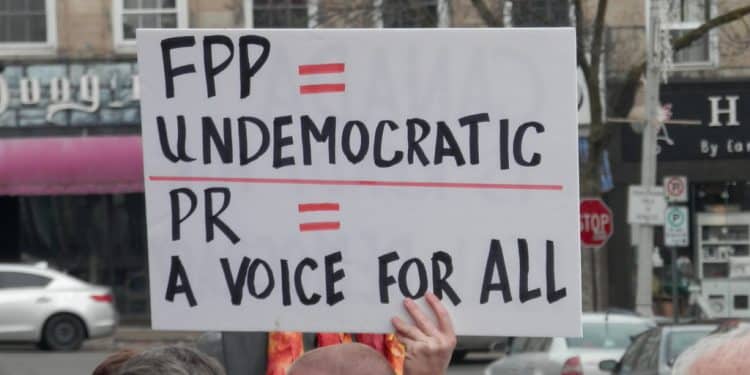
electoral reform
Politics

Breaking the duopoly: New Zealand’s move to proportional representation

by Hector McGillivray
30 October 2021 - Updated on 31 October 2021

An unruly and scandal-ridden party

Finally, years in power are starting to wear at the Liberal-National coalition. Just as the Conservatives in the UK have repeatedly ousted their leaders in recent years, so too have the Liberals been quick to replace unpopular prime ministers.

Moreover, both the Liberal and Nationals have been hit with a series of scandals over the past two years. In 2020, a ‘sports rorts’ scandal broke, in which the government was accused of funnelling money to sports’ programmes in target seats (Towns Fund, anybody?), which led to the resignation of the National Party’s deputy leader. Then, in early 2021, a historical allegation of rape was made against Attorney General Christian Porter, and Morrison’s response to the scandal was heavily criticised.

Meanwhile, Liberal MP Craig Kelly has been accused of intentionally spreading misinformation about covid vaccinations, while State Premier Gladys Berejiklian was pressured into resignation after she was accused of funnelling grants to the constituency of a Liberal MP with whom she was having a clandestine affair.

Similarities and differences

Much is different about Australian politics, particularly on cultural issues, where the country is often seen as more ‘small c’ conservative than its European counterparts. But observers in the UK would do well to look at how successful the Australian opposition is at attacking Morrison’s credibility.

The crucial question for the Australian election may well be: can a ruling party’s unpopularity alone be enough for it to fall out of power? Without a distinct identity, the ALP are riding high in the polls, but whether this lead will translate into votes is yet to be seen.


Sign up for the Yorkshire Bylines newsletter

* indicates required

Consent for having Bylines Network store my submitted information

You can unsubscribe at any time by clicking the link in the footer of our emails. For information about our privacy practices, please visit our website.

We use Mailchimp as our marketing platform. By clicking below to subscribe, you acknowledge that your information will be transferred to Mailchimp for processing. Learn more about Mailchimp's privacy practices.

Alex Toal

Alex Toal

A graduate of the University of York and Balliol College, Oxford, Alex is a passionate devolutionist, and an active campaigner to solve the housing crisis.

Related Posts

Wooden blocks painted with the European Union EU flag placed on a Europe map, symbolizing European unity, integration, politics, and economy
Politics

Embracing EU free movement should hold no terrors for the UK

by Richard Corbett
6 November 2026
A flock of sheep in front of a night sky lit up with many fireworks
Culture

A bang too far: isn’t it high time we rethought fireworks?

by Kay Johnstone
4 November 2026
Chelmsford, Essex, United Kingdom - May 08th 2026: Reform UK Leader Nigel Farage speaks at Chelmsford Race Track after sweeping local election victories for his party. Credit: Will Colebourne
Home Affairs

‘Reforming’ Britain? A window to the past

by Dr Pam Jarvis
30 October 2026
Flag of county Yorkshire, UK at cloudy sky background on sunset, panoramic view. County of United kingdom of Great Britain and Northern Ireland, England.
Opinion

Who scrutinises Yorkshire-wide decisions?

by John Hall
29 October 2026
Barack Obama and Donald Trump face one another at the US Capitol during the presidential handover in January 2017. Obama rests his hands on Trump's arms as the two men exchange words.
Opinion

J’Accuse: how Obama’s triumph helped fuel Trump’s rise

by J 'Masharubu' Strauss
26 October 2026
Next Post
Johnson alone at PMQs, Cartoon by Stan

Johnson’s “disciplined and deluded collection of stooges” is turning on him

PLEASE SUPPORT OUR CROWDFUNDER

BROWSE BY TAGS

Art Books Boris Johnson Bradford Charity Climate Change Cost of Living Covid-19 Creative Industries Crime Democracy Devolution Donald Trump Environment Equality Experience Farming Festival Gaza Conflict General Election History Human Rights Immigration Iran Journalism Keir Starmer Labour Leeds Media Mental Health NHS Northern Ireland Protocol Pollution Poverty Recipe Refugees and Asylum Seekers Restaurants Retained EU Law Review Rishi Sunak Sheffield Theatre Travel Ukraine USA
Yorkshire Bylines

We are a not-for-profit citizen journalism publication. Our aim is to publish well-written, fact-based articles and opinion pieces on subjects that are of interest to people in Yorkshire and beyond.

Yorkshire Bylines is a trading brand of Bylines Networks Limited which is separate to, but allied with, Byline Times.

Learn more about us

No Result
View All Result
  • About
  • Authors and editors
  • Complaints
  • Contact
  • Donate
  • Letters
  • Privacy
  • Network Map
  • Network RSS Feeds
  • Submission Guidelines
  • Download the Bylines Network App

© 2020-2026 Yorkshire Bylines. Powerful Citizen Journalism. ISSN 3049-9720

No Result
View All Result
  • News
    • Brexit
    • Education
    • Environment
    • Health
    • Home Affairs
    • Transport
    • World
  • Politics
  • Opinion
  • Society
    • Culture
    • Dance
    • Food
    • Music
    • Poetry
    • Recipes
    • Sport
  • Business
    • Economy
    • Science and Technology
    • Trade
  • Region
  • The Davis Downside Dossier
  • The Digby Jones Index
  • Cartoons by Stan
  • Authors and editors

Newsletter sign up

CROWDFUNDER

© 2020-2026 Yorkshire Bylines. Powerful Citizen Journalism. ISSN 3049-9720



