
• Contact
  • About
  • ISSN 3049-9720
  • Authors and editors
NEWSLETTER SIGN UP
Yorkshire Bylines
Advertisement
  • Home
  • News
    • Brexit
    • Culture
    • Education
    • Environment
    • Home Affairs
    • Transport
    • World
  • Politics
  • Opinion
  • Society
    • Food
    • Music
    • Poetry
    • Sport
  • Business
    • Economy
    • Science and Technology
    • Trade
  • Region
No Result
View All Result
Yorkshire Bylines
Home Society

The coffee house: a brief history

A brief history of the coffee house including origins, rise in popularity, women's petition against coffee and the rise of tea over coffee

John Heywood by John Heywood
13-08-2021 15:59 - Updated on 21-10-2024 16:35
in Society
Reading Time: 5 mins read
A A
Interior of a London Coffee House, 17th Century. Image by Anonymous for Wikipedia Commons

Interior of a London Coffee House, 17th Century. Image by Anonymous for Wikipedia Commons

Share on Bluesky

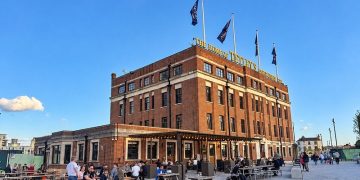
The opening of a coffee roasting business, Recent Beans, at Queen’s Mill several months ago made me think a little more about the beverage I drink far too much of, and in particular where we consume it. Here therefore, is a very concise history of the coffeehouse. Enjoy it with your morning espresso! 

Origins of the coffeehouse

The late 17th and 18th centuries saw a new fashion sweep the nation: the coffee house. These were public and very social spaces where conversation and debate were the order of the day. They were also a place where business was conducted and deals concluded; an alternative to the usual places of business in the bustling cities and towns.

European travellers and traders to Turkey and the Middle East had been familiar with the drinking of coffee from at least the late 15th century, its introduction into Europe occurring due to its perceived, often very dubious, health benefits such as cures for ‘head-melancholy, gout, scurvy, smallpox and excessive drunkenness’.

The mid-17th century saw coffee’s appeal change from medicinal applications to a drink to be enjoyed. The first coffeehouse to open was at the Angel Coaching Inn in Oxford around 1650, quickly followed by several more. These early establishments in Oxford were known as penny universities, as they offered an alternative to the formal academic learning of the colleges themselves. They were though, the preserve of the well-educated and the wealthy.

Coffeehouses as a source of news, views and business

The coffeehouses soon spread to London and after a somewhat slow start, they quickly grew in number. By the end of the century, there were over 3,000 in the capital alone. The penny coffee was drunk to a background of political, philosophical, and scientific discussions and the ever-turning wheels of business. Indeed, Lloyds of London was founded by Edward Lloyd at his coffeehouse, which was frequented by sailors, merchants, and ship owners. 

The sale of coffee was, like so many popular items, heavily taxed and brought in significant revenue. Even so, King Charles II attempted to ban coffeehouses, claiming that they were “places where the disaffected met, and spread scandalous reports concerning the conduct of his Majesty and his Ministers”. 

The coffeehouses though, were a major source of news and views, with their owners providing a supply of newspapers and pamphlets. There is no doubt this was sometimes anti the monarchy. By 1702, London’s first true daily newspaper, the London Courant was operating. Between each publication runners were employed to visit the coffee houses to spread important news ‘flashes’ that could not wait for the next edition. 

Egalitarian and democratic

Women objected to the amount of time their husbands spent in such establishments. In 1674, the ‘Women’s petition against coffee’ was launched, stating in a pamphlet that coffee, “made men as unfruitful as the deserts whence that unhappy berry is said to be brought”. But whilst it’s true that many visitors to coffeehouses were male, in most women were not banned and they were frequently owned and run by women.   

By the early 18th century, the coffeehouses were especially known for their “egalitarian and democratic character … where people from all walks of life came to sip from a bowl of coffee and chat with their neighbours, free from the social conventions of class and deference that were usually extended to social superiors in other settings”.

The coffeehouses also spread more widely geographically. At one time, York could also boast over 30 such establishments such as Farnhill’s on the corner of Ousegate, Harrison’s, first in Petergate and later on Nessgate corner, Iveson’s, in Petergate, and Duke’s, near the Ouse Bridge.

Coffeehouse premises were also often locations for clubs such as The Good Humour Club, which met at Sunton’s Coffeehouse on Coney Street, in York. “It celebrated the twin virtues of companionship and conviviality with its members comprising clergymen, doctors, masons, booksellers, mercers and drapers.” In 1724, coffee was so popular that permission was sought in York for a roasting house.

The decline of coffee and the rise of tea

By the end of the 18th century though, coffeehouses had almost completely disappeared from England, due in part to an increased demand for tea created when the British East India Company had a far greater interest in the tea trade than in coffee.

The government offered various inducements to increase the sale and consumption of the beverage. This, coupled with a much wider access to newspapers, theatres, concerts, and other entertainment, guaranteed that the heyday of the coffeehouse was well and truly over.

Tags: History

Sign up for the Yorkshire Bylines newsletter

* indicates required

Consent for having Bylines Network store my submitted information

You can unsubscribe at any time by clicking the link in the footer of our emails. For information about our privacy practices, please visit our website.

We use Mailchimp as our marketing platform. By clicking below to subscribe, you acknowledge that your information will be transferred to Mailchimp for processing. Learn more about Mailchimp's privacy practices.

John Heywood

John Heywood

John is a Yorkshire historian, writer and broadcaster and formerly programme manager at the historic Queens Mill in Castleford. He is passionate about combining heritage and community in order to regenerate forgotten towns and cities. He is also the curator of the popular History and Heritage Yorkshire account on X and BlueSky. Follow him on Bluesky

Related Posts

The Tricolor team standing outside their storefront on Church Street
Economy

Is York’s flagship business incubator still working?

by Gabriel Macarthur
7 November 2026
Outside The Tetley in Leeds
Culture

Discovering Leeds: A Walk Through History, Pubs and Hidden Streets

by Scott Spencer
7 November 2026
Bylines Network Logo on a background of an early morning sky with the text Local News Fund
Society

Bylines Network has big plans to transform local journalism – and now the backing to make them happen

by Dr Mike Galsworthy
5 November 2026
A flock of sheep in front of a night sky lit up with many fireworks
Culture

A bang too far: isn’t it high time we rethought fireworks?

by Kay Johnstone
4 November 2026
Todmorden Book Festival Logo
Culture

Todmorden Book Festival welcomes literary heavyweights

by Kay Johnstone
4 November 2026
Next Post
Hands holding a glass globe, image by Bill Oxford on Unsplash

The costs and benefits of acting on the climate emergency

PLEASE SUPPORT OUR CROWDFUNDER

BROWSE BY TAGS

Art Books Boris Johnson Bradford Charity Climate Change Cost of Living Covid-19 Creative Industries Crime Democracy Devolution Donald Trump Environment Equality Experience Farming Festival Gaza Conflict General Election History Human Rights Immigration Iran Journalism Keir Starmer Labour Leeds Media Mental Health NHS Northern Ireland Protocol Pollution Poverty Recipe Refugees and Asylum Seekers Restaurants Retained EU Law Review Rishi Sunak Sheffield Theatre Travel Ukraine USA
Yorkshire Bylines

We are a not-for-profit citizen journalism publication. Our aim is to publish well-written, fact-based articles and opinion pieces on subjects that are of interest to people in Yorkshire and beyond.

Yorkshire Bylines is a trading brand of Bylines Networks Limited which is separate to, but allied with, Byline Times.

Learn more about us

No Result
View All Result
  • About
  • Authors and editors
  • Complaints
  • Contact
  • Donate
  • Letters
  • Privacy
  • Network Map
  • Network RSS Feeds
  • Submission Guidelines
  • Download the Bylines Network App

© 2020-2026 Yorkshire Bylines. Powerful Citizen Journalism. ISSN 3049-9720

No Result
View All Result
  • News
    • Brexit
    • Education
    • Environment
    • Health
    • Home Affairs
    • Transport
    • World
  • Politics
  • Opinion
  • Society
    • Culture
    • Dance
    • Food
    • Music
    • Poetry
    • Recipes
    • Sport
  • Business
    • Economy
    • Science and Technology
    • Trade
  • Region
  • The Davis Downside Dossier
  • The Digby Jones Index
  • Cartoons by Stan
  • Authors and editors

Newsletter sign up

CROWDFUNDER

© 2020-2026 Yorkshire Bylines. Powerful Citizen Journalism. ISSN 3049-9720