
As dim as a NAAFI candle or as dim as a Toc H lamp, were derogatory terms to describe someone who wasn’t very bright. I think you’ll have to be my sort of age (79) to remember either saying, not to mention the Toc H lamp itself.
The NAAFI, or Navy, Army and Air Force Institute is a long-established British organization that provides catering, retail, and leisure services to UK armed forces personnel and their families globally. It operates on military bases, on Royal Navy ships, and on operations to boost morale, with all surplus profits returned to support military communities.
Rightly or wrongly, it had a reputation of providing mediocre quality goods, and their candles were only capable of producing a dim light, a reputation shared by the Toc H lamp. But the WW1 origins of the lamp are fascinating. To learn about these, we have to travel to Poperinge, a historic city in Belgium, about ten miles west of Ypres.

Poperinge: a staging post for the horrors of Ypres
Poperinge was of very strategic importance during WW1. It was within easy reach of the port of Calais and was the nearest railway station for the allied forces who were being taken to the front lines of the “Ypres Salient”.
Poperinge was just out of range of the German artillery but still too close for many of the locals who evacuated further west, leaving the town as a forward military headquarters and administrative centre for the Allies. It was also where the soldiers rested after their tour of duty in the trenches. A tour usually lasted between four and eight days, depending on circumstances, followed by four days in support trenches and four days’ rest. Although they were not continually on the front lines, it was still a horrendous existence. Even if they were lucky enough to survive the German artillery, gas attacks or their snipers, their continuous unwanted companions were rats and lice.

A refuge for soldiers at Poperinge’s Talbot House – “Toc H”
In Poperinge, there was a large house at 43, Gasthuisstraat with an adjoining hop warehouse which was owned by a wealthy brewer, Monsieur Coevoet-Camerlynck. In the early summer of 1915, after some German shrapnel shells had landed in the garden and damaged the rear of the house, Coevoet-Camerlynck thought it prudent to move himself and his family further west. He offered the empty building for rent to the British Army for 150 francs a month, on condition that the house would be made weatherproof and a large safe would be removed from the front room. (I have been unable to find out what was in the safe.)
Two army chaplains, “Tubby” Clayton and Neville Talbot, saw a use for the property as a soldier’s club. It opened its doors as a Christian soldiers’ rest and recreation centre in December 1915 and became a rare place where soldiers could meet and relax regardless of rank, in effect an Every-Man’s Club. A notice was hung by the front door bearing the message: “All rank abandon, ye who enter here.” It was named Talbot House, in honour of Lieutenant Gilbert Talbot, Neville Talbot’s brother, who was killed at Hooge in the Ypres Salient on 30 July 1915. Using the phonetic alphabet of the time – ‘toc’ for ‘t’ – Talbot House became known by its nickname “Toc H”.
The lighting of Toc H, was provided by oil lamps – the Toc H lamp. The one in the photo, now in the museum, is probably a decorative symbolic version, but during WW1 they would have been much more basic.
Toc H grew into a global fellowship focused on reconciliation, community service, and fostering equality among people. It continues to operate today, though on a much smaller scale than in its mid-century heyday.
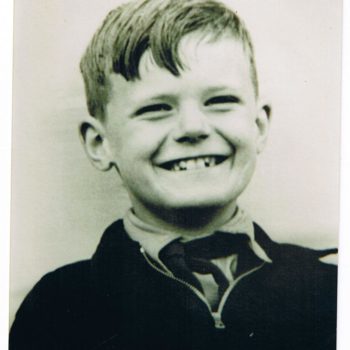
This very handsome chap (I’m sure you will agree) is stood by the entrance to Talbot House Museum.

Court martials and executions in Poperinge
Poperinge was an administrative area for the army, and a city where court martials took place. Many soldiers were tried, convicted and shot by a firing squad formed from their own regiment.
There were 346 British and Commonwealth soldiers shot at dawn and so there was a good chance that the soldiers in the firing squad and the ones being shot knew each other. The offences that could result in a soldier being shot included desertion – which was by far the majority (266 out of the 346) – cowardice, sleeping at their post, casting away arms, striking a senior officer, disobedience, and civil offences. Many of those shot were teenagers. In 2006, 306 men were officially pardoned (that’s alright then …). The remaining 40 were not pardoned, because they were convicted of a crime that would carry the death sentence in peacetime, such as mutiny or murder.
On the plaque alongside the shooting post in the town hall courtyard is an extract from “The Coward” by Rudyard Kipling: “I could not look on death, which being known, Men led me to him, blindfold and alone”.

A courtyard with a poignant history
The plaque in the tiny jail, also in Poperinge’s town hall courtyard, reads: “Between 1916 and 1919 several British soldiers were executed in this courtyard; most of them were sentenced for desertion”. Today their fate remains one of the most poignant symbols of the inhumanity of war. It’s unknown how many soldiers died here. There is firm evidence of five men being shot, but circumstantial evidence suggests this is an underestimate.

The shooting post that has been preserved was probably only used for the last execution, which took place on May 1919, six months after the end of WW1. The person shot at dawn was Wang Jungzhi, a member of the Chinese Labour Corps. He was executed by a British firing squad at 4:24 am on 8 May 1919. His offence was the murder of a fellow Chinese labourer in the camp at De Klijte, near Poperinge, in February 1919. As a convicted murderer, he was not eligible for a pardon.

The Shot at Dawn Memorial at the National Memorial Arboretum in Staffordshire depicts a boy, Private Herbert Burdon, who was 16 when he first volunteered but lied about his age to join the Northumberland Fusiliers. There is much confusion concerning his military record, but it is generally understood that he was ill disciplined and often left his post. He was eventually found guilty of desertion and executed on the 21 July 1915. He was 17 years old.
Natural reactions to trauma branded as cowardice
Wars and battles had never been fought in conditions that soldiers found themselves in during WW1. Previous battles may have lasted just a few hours, or on rare occasions all day, and so the effect of trench warfare and constant bombardment that became common in WW1 was little understood. All that was absolute was that strict discipline still had to be kept at all costs. And there was a cost.
Modern warfare is incredibly noisy. To a degree this is deliberate, as it is good (or bad depending how one looks at it) at affecting the morale of anyone at the receiving end of a bombardment. In the static warfare of WW1 this went on and on.
In his podcast entitled “Did battle fatigue affect soldiers in the ancient world”, Nikolas Lloyd (Lindybeige) said that there have been many opportunities to study how modern warfare affects the individual, and it seems that after 60 days of constant bombardment 98% will have developed a serious mental disorder often described as battle fatigue, battle stress, shell shock or post-traumatic stress disorder (PTSD). There is little in their training that can show how an individual soldier will react in these situations. The study also went on to describe why 100% are not affected and the suggested answer was that the remaining 2% are psychopaths. It seems that this is because PTSD or shell shock is an emotional response to extreme fear, and psychopaths do not have an emotional response to anything and therefore do not suffer extreme fear.
Shell shock was not fully, or deliberately not fully, recognized in WWI because military and medical authorities initially viewed it as a sign of cowardice. And because the medical care of the time lacked the psychiatric framework to understand severe psychological trauma, the military suppressed diagnoses to maintain troop morale and probably avoid pension payouts.
A civilised response to soldiers’ experience
In other cultures, and at other times, for example the ancient Hebrews and during the Crusades, soldiers returning from combat were required to undergo intense periods of cleansing, confession, and penance, called Rituals of Purification. This practice was used to wash away the “blood guilt” of battle, easing feelings of shame and culpability. A civilised response to the trauma of war that was sadly not adopted by the British generals of WW1.
In part two of this series, we will follow in the footsteps of the soldiers heading to the battlefields of Ypres.

Bylines Network Gazette is out!
The latest Bylines Network Gazette is out now. Become a Friend of Bylines Network or upgrade to a paid Substack subscription, and you will get access to a vital collection of citizen articles and stories.
Journalism by the people, for the people.