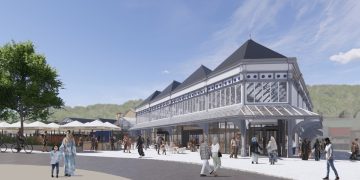
A proposed £6mn expansion of Ripon Cathedral to build a new two-storey annexe containing a refectory, shop, toilets and choir school, continues to meet fierce local opposition. Over 1,100 people have now signed a petition objecting to the plans, which will see the felling of 11 trees in the public green space, to accommodate the 1000m2 annexe.
Community response to the plan
As objections continue to pour in, local petition organiser, Jenni Holman told me:
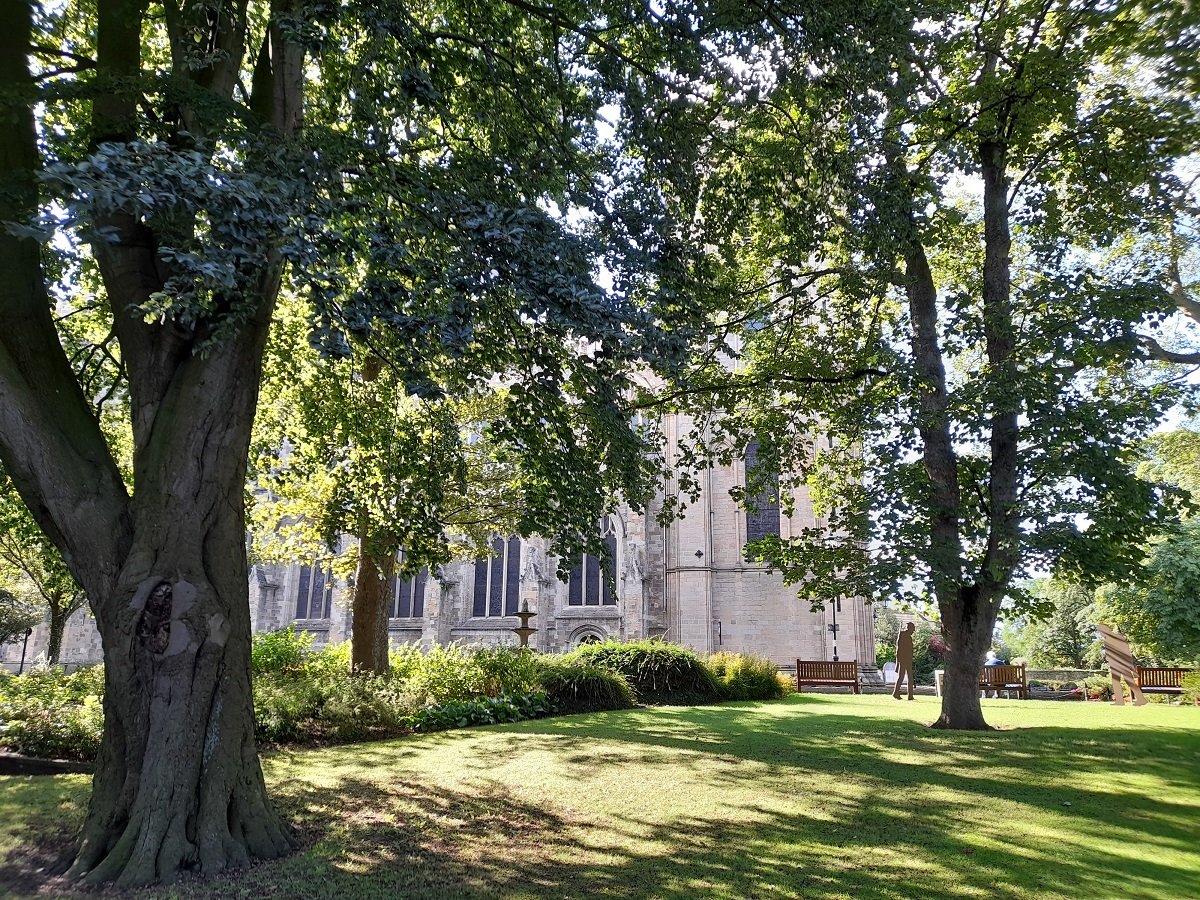
“I organised the petition with the help of others, because there didn’t seem to be any other way to protest about the Cathedral’s plans to build an annexe on Minster Gardens other than emailing the planning office which I had already done. This new build would involve the felling of 11 mature trees; one of these trees is a beech tree with veteran status.
“There are other issues involved, but I want to reinforce that this petition is purely objecting to the felling of mature trees, and the loss of that area of green space, a public park. There may be more trees planted, but any number of saplings does not compensate for the loss of mature trees.”
Holman highlighted the usage of the space and memorial garden:
“The area in question is a beautiful and peaceful green space in a built-up area. The park is used by people who just like to sit and quietly enjoy it – some sit in the remembrance corner which was created not many years ago. This land is actually owned by NYCC and it is unclear how allowing the felling of these trees comes within their environmental policy. I am surprised that the Church of England isn’t showing more care for the environment and all our futures, rather than just the future of the cathedral.”
It is unfortunate, perhaps, that earlier this year during a radio interview on BBC Radio York, the dean of Ripon Cathedral, John Dobson, described the council-owned green space – the space where the new annexe would be built on – as a ‘place of doom and gloom’ and claimed that the light couldn’t penetrate through the tree cover.
Conservation concerns
With any proposal that includes tree felling, there needs to be careful consideration on national policy. It is notable that the Woodland Trust objects to the application:
“We note the submission of new documentation, however, the proposed loss of a veteran tree and other important trees remains unacceptable and contrary to national policy. As such, the Trust maintains its objection to this application.”
The Woodland Trust’s annual award shortlist for this year does focus on urban trees, supporting its position of protection. Its lead campaigner, Naomi Tilley was recently quoted in the Guardian as arguing, “Ancient trees in towns and cities are vital for the health of nature, people and planet”.
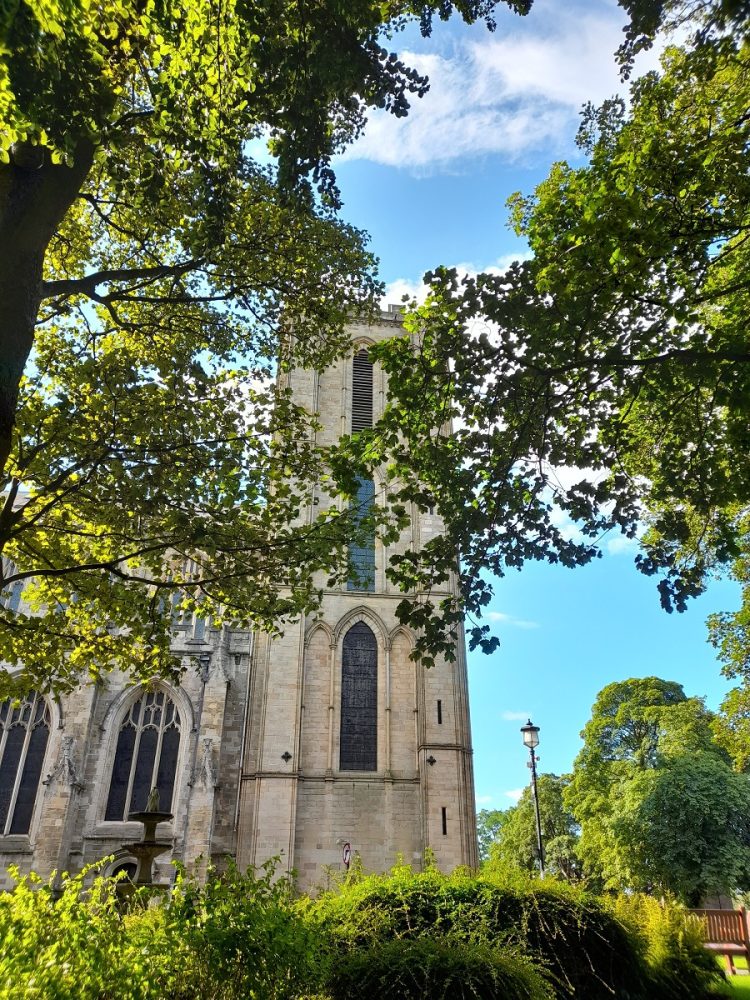
This is countered in the Cathedral’s planning statement, which appears to imply that the tree cover should be viewed as a negative, as it prevents views of the cathedral – that trees have no intrinsic value by themselves, and if they partially obscure a human-made structure, then this lessens any value that they might have had. “It is also possible to argue that although trees are a part of the character of the Conservation Area, the current tree cover in this area actually detracts from its overall significance, preventing or screening views of the cathedral from the north.”
Offsetting the tree loss
The Cathedral argues that the loss of the mature trees could be mitigated by new planting. As part compensation for the loss of the 11 trees, 21 new trees will be planted within the grounds of the cathedral. Dean John also argued in the BBC Radio York interview that 300 new saplings would be planted ‘off site’ at Studley Royal, though submitted mitigation plans reflect that this number is actually closer to 60 trees: “In addition to the 21 trees planted within the cathedral grounds a further 61 trees will be planted on the compensatory offsite area.”
Planting new trees, however, to offset the loss or felling of other trees, is not a straightforward solution. Trees take time to grow and new saplings need to be protected as they grow. The new on-site trees will also have additional tree cover, which confusingly is presently being used as a reason to fell the existing trees.

A sustainable future for Ripon Cathedral?
As part of the justification report for this proposed annexe, it was claimed that, “Securing the future of the cathedral is a significant benefit to the people of Ripon and North Yorkshire. The facilities to be provided within the building are considered to be crucial for its future.” Another claimed positive to the proposal was that visitors to the cathedral would increase by a third and that this would generate more income for the cathedral.
“It is conservatively estimated that the cathedral footfall should increase by around 30% from the c. 90,000 visitors in the latest year, to 120,000 within two years of completion, as a result of this development. The impact of the new facilities planned, particularly the refectory and larger shop will also drive spending by the increased visitor footfall. Such increased spending power will contribute to local employment and the general wellbeing of the community.”
A Historic England spokesperson told Yorkshire Bylines that they also supported the proposal, but added that ultimately any decision would lie with North Yorkshire County Council (NYCC):
“Ripon is a place of exceptionally rich heritage, at the heart of which is the majestic Ripon Cathedral. We are in support of the proposed development as it represents an opportunity for Ripon Cathedral to enhance its important role as a key asset to the town, providing community facilities as well as helping to sustain Ripon’s choral tradition and attract visitors to the cathedral and city. It is now for North Yorkshire Council to weigh-up all the relevant issues and come to a decision on the current application.”
Fears from local business owners
However, the local business owners I spoke to had fears over a loss of business, as well as the tree conservation element of the plans. They felt that attempts to rebuild their businesses after the global pandemic would be significantly impacted by the creation of a café in the proposed annexe, commenting that visitors by bus to Ripon would be ‘funnelled’ past the annex onto the cathedral and with time pressures would not explore the rest of the city, but instead simply visit the café in the annex before re-boarding the bus.
With over eight cafés and eateries on Kirkgate, the main street leading to the cathedral from the city centre, their fears are understandable, especially when read in conjunction with the design and access statement which describes movement of visitors for day events and evening events.
This is particularly pertinent when the usage of the Old Deanery is considered, especially with its future intentions of acting as more than just as an events venue, but as a hotel and restaurant. As their law firm, LCF Law, states:
“Our client is concerned at the harm that the current application will cause both to their business and to the Old Deanery itself…The scale of the proposed building, so close to the OD, will also cause harm to the setting of this much-loved listed building as well as to the cathedral itself, which is the most important building in the ancient City of Ripon.”
The Cathedral’s vision
The Dean of Ripon Cathedral, the Very Reverend John Dobson, responded to Yorkshire Bylines, saying:
“The Ripon Cathedral Renewed project has been over a decade in development, following many decades in which the cathedral’s needs for new facilities have been obvious to the thousands of people who visit and use the cathedral. The need for these facilities has become more obvious in recent years as the cathedral has enjoyed a period of growth and development, attracting more people to Ripon as well as the cathedral.
“Of course, the Cathedral has no desire to fell trees. Any decision to do so would result from the judgement of those in authority that the advantages brought by the project would justify what would be regarded as undesirable – a true dilemma. Ultimately, this is not a decision that the Cathedral will make.”
He concluded by again emphasising the benefits of the proposal and by highlighting that the development could be undermined by those objecting. “Those who are objecting are risking undermining a development which hugely enhances both the city and its cathedral and which is supported by both Historic England and the Cathedrals Fabric Commission for England, as well as the city council, Ripon Together Partnership and many individuals and organisations in Ripon and across the region. The cathedral exists to service the city and the wider region.”
A presumption in favour of preservation?
With the opportunity still remaining to voice comments both in support and in objection to the proposal, campaigners believe that this could be a powerful signal to end the presumption in favour of development and instead have a presumption in favour of preservation and conservation.
Either way, it seems ironic that the Church of England has become embroiled in a controversy over trees, with the attached symbolism of trees to the Christian faith.