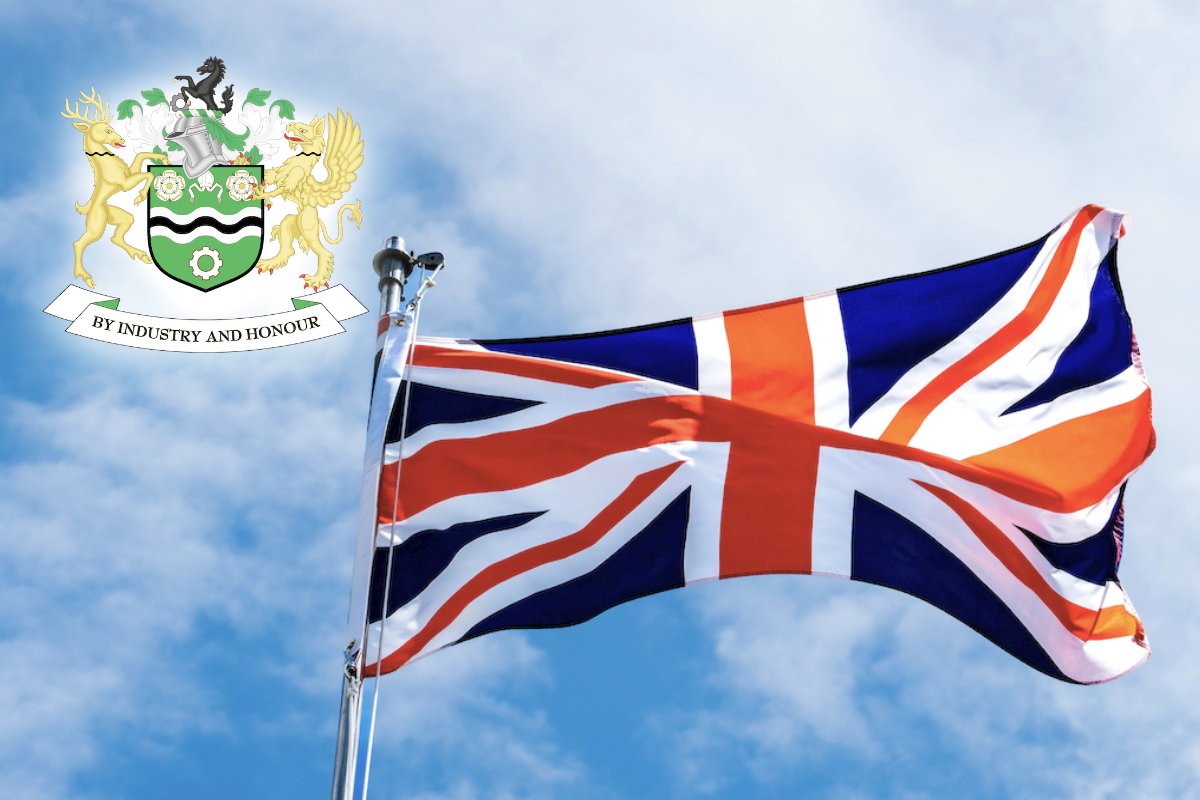
Considering the unrelenting news cycle of the past year, you might think the ‘flags on lamp posts’ debate had been all but forgotten. However, this thorny issue continues to make headlines. Such was the case when Rotherham Council launched a small grants scheme in February 2026, offering to reimburse local community groups up to £500 if they bought a Union Jack and/or St George’s flag and flagpole.
The Guardian reported on the concerns of some local groups in Rotherham, including Jawad Hussain of Stand Up To Racism Rotherham who said this scheme would embolden the far-right. Others argued it encouraged “nationalism and anti-human rhetoric”.
If you cast your mind back to the summer of 2025, you may remember that individuals across the UK adorned lamp posts with the St George and Union Jack flags. Many local councils responded by taking the flags down, suggesting that they were being used to “perpetrate acts of hate” and “cause division”. Robert Jenrick, who at the time was a Conservative MP and has since defected to Reform UK Limited, called those councils “self-loathing” and “Britain-hating”.
Tensions in Rotherham
The council launched a consultation asking the people of Rotherham what they thought about the flags. 800 people responded and the results showed that the majority “liked seeing the flags”. Following this, the council launched its scheme offering small grants to fund the flags, which is running until 30 June 2026.
But Rotherham also has a background of racial tension. There was unrest in 2024 when demonstrators tried to set fire to a hotel housing asylum seekers. It was also home to one of the biggest grooming gangs in the UK in which at least 1,400 children were abused. Considering this difficult history, the flag scheme seemed like a risky choice, and a sure-fire way for the council to open itself to criticism. the flag scheme seemed like a risky choice, and a sure-fire way for the council to open itself to criticism.
To explain the reasoning behind the scheme, the Leader of Rotherham Council, Chris Read agreed to an interview with Yorkshire Bylines.
Defending the scheme
Councillor Read seemed surprised that the scheme had grabbed headlines at all. He suggested it was only a small scheme issuing a handful of grants (a Freedom of Information request showed that only four grants had been issued since the scheme started in February). He was insistent that he did not wake up one morning and think that Rotherham Council had too much money: not a mistake anyone would be likely to make, considering the council was in £677mn of debt at the end of 2024/25.
When some councils were deciding to take the flags down, why had Rotherham Council started this scheme? Read suggested that the consultation showed that most people who replied (from different communities across the borough) didn’t want them to come down.
He stated that “among lots of ordinary, very reasonable, normal people there’s a sense that they are being judged for thinking it’s nice to have a flag … and they shouldn’t be judged for that”.
One flag for all?
But what about people like Jawad Hussain, who fear what the flag has come to represent? After the hotel riot in 2024, his mosque was defaced with a St George’s flag. Is it possible to distinguish between a flag raised by the council symbolising pride and a flag raised by the far-right symbolising xenophobia?
Read suggested that a relatively small number of people out of the 70 million who live in Britain have used the flags for abhorrent purposes. If we surrender the flag to those people “we’ve surrendered something quite fundamental about who we are as a people … That leaves a great big hole, for lots of just ordinary right-thinking people.” He emphasised that this scheme is one of many measures implemented by the council to unite the community.

A community united?
Not everyone believes community integration was the purpose of the scheme.
The local group Action for Maltby is in favour of seeing flags on lamp posts and often promotes meetups on Facebook for people to put flags up. The group might have been expected to support the scheme, but a spokesperson expressed the belief that the council only launched the scheme because it “fear[s] the backlash at the next elections if [it] turn[s] on the voters”, while suggesting also that “we don’t need the council because the community has been strong by itself”.
Désirée Reynolds, artist in residence at Sheffield City Archives, was also sceptical of the scheme. Quoted in The Guardian, she suggested that Rotherham’s Labour-led council “think moving towards the far-right is the only way to keep power”.
It seems that members of the community, on both sides of the flag-flying debate, believe that the scheme was about chasing votes.
Councillor Read did not accept this framing, reiterating that it’s about hearing and understanding what people have to say – it’s certainly not a slide to the right. He also suggested that a lot can happen in two years (when the next elections for Rotherham council come around). However, he stated that if Rotherham council seems to say “if you’re proud of your country and proud of your flag, then Labour’s not a home for you – then that is a dangerous place to be.”
A long time in politics
Rotherham council has been a Labour council since 1973 “and before that”, Read adds. So, if past performance is any indication of future performance (in these unprecedented times) it seems unlikely that this will change any time soon. Having said that, Barnsley council (previously a Labour council for 50 years), was taken by Reform UK in the last local elections.
For now, the Labour council is standing by its flag scheme and trying to “meet voters where they are at”. To echo Chris Read’s sentiment, a lot can happen in two years.

Bylines Network Gazette is out!
The latest Bylines Network Gazette is out now. Become a Friend of Bylines Network or upgrade to a paid Substack subscription, and you will get access to a vital collection of citizen articles and stories.
Journalism by the people, for the people.