John Pullinger, chair of the Electoral Commission, recently cautioned that the stringent voter ID measures proposed by the Conservatives for this year’s general election could exclude certain voter demographics. Speaking to the Financial Times, Pullinger emphasised the disproportionate impact of photo ID requirements on different groups. I don’t drive, so do not possess a driving licence. My passport ran out during the pandemic and have yet to renew it. These measures are in stark contrast to a movement which, 200 years ago, aimed to expand the franchise in the face of significant challenges.
In the early 19th century, Britain was in the midst of significant social and economic transformation. The Industrial Revolution had ushered in a new era, marked by the growth of bustling urban centres and a rapidly expanding working-class population. However, despite these sweeping changes, political power remained tightly controlled by the landed aristocracy and the wealthy elite, leaving the working class without representation in parliament and fomenting widespread frustration.
Yorkshire, a region at the heart of industrialisation, felt this frustration acutely. Cities such as Leeds, Sheffield, Bradford and Hull saw working-class communities grappling with deplorable working conditions, meagre wages and overcrowded housing. Against this backdrop, the Chartism movement emerged, offering a glimmer of hope for those seeking political representation and social justice.
The birth of the People’s Charter
The London Working Men’s Association, founded in 1836 and led by figures such as William Lovett and Francis Place, played a pivotal role in drafting the People’s Charter in 1838. This groundbreaking document outlined six key demands for political reform aimed at empowering the working class. The demands included universal male suffrage; equal-sized electoral districts; secret ballots; the removal of property qualifications for members of parliament; payment for MPs; and annual parliaments.
The People’s Charter quickly garnered support across Britain, resonating deeply with the working-class population in Yorkshire. It became a symbol of their aspirations for political representation and social justice.
The first Chartist petition (1839)
In 1838, Chartists began collecting signatures for the People’s Charter. The first Chartist petition, submitted to parliament in 1839, contained over 1.2 million signatures, with significant backing from Yorkshire. However, Parliament rejected the petition, leading to widespread disappointment and frustration among Chartists.
The Newport Rising (1839)
November 1839 witnessed the Newport Rising in Wales, led by Chartist figure John Frost. The event resulted in a violent confrontation with authorities. The rebellion was swiftly suppressed, and Frost and other leaders were arrested and later sentenced to transportation. This event underscored the government’s willingness to employ force against Chartists, casting a shadow over the movement.
The second Chartist petition (1842)
Economic hardship and social unrest in the early 1840s rekindled Chartism. The movement experienced a resurgence, culminating in the presentation of the second Chartist petition to parliament in 1842. This petition, containing an astounding three million signatures, was met with another rejection, deepening the disillusionment and frustration among Chartists.
Chartism’s stronghold in Yorkshire
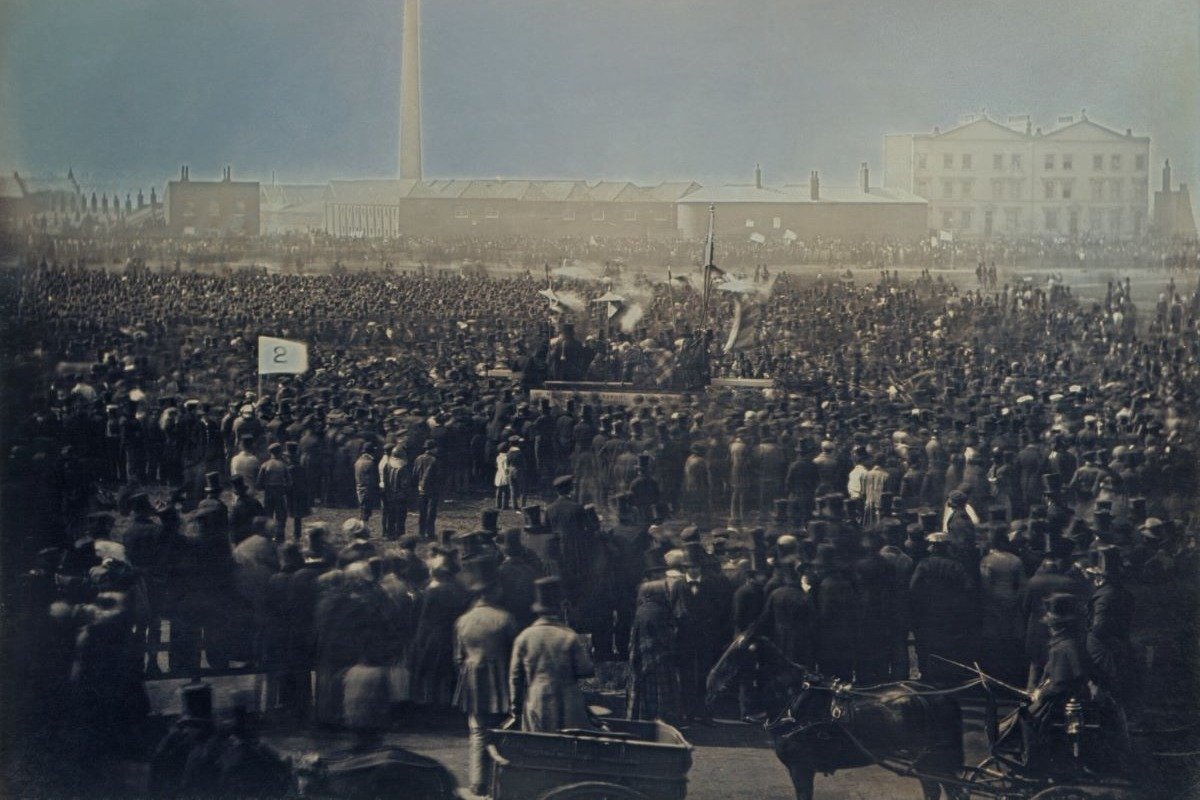
Yorkshire emerged as a prominent stronghold of Chartism. Leeds and Bradford, in particular, were hotbeds of Chartist activity, hosting numerous Chartist lodges and gatherings. Feargus O’Connor, the editor of The Northern Star, a significant Chartist newspaper, was based in Leeds. The newspaper played a vital role in disseminating Chartist ideals and organising supporters.
The Plug Plot Riots (1842)
One of the most notable episodes of Chartism in Yorkshire was what became collectively known as the Plug Plot Riots of August 1842. During this period, widespread strikes and protests erupted in various industrial towns across Yorkshire, and other manufacturing areas. Workers, in a bold act of defiance, removed the plugs from steam engines, effectively bringing factories to a standstill. These riots were a response to economic hardships, including wage cuts and unemployment, compounded by the rejection of the second Chartist petition.

The Skelmanthorpe Flag of Freedom
Within the broader context of Chartism, the Skelmanthorpe Flag of Freedom stands out as a remarkable testament to the struggle for electoral reform and suffrage. Crafted from cotton in 1819, this banner is a rare survivor of the thousands of similar banners carried at meetings advocating for political change. Its origin lies in a solemn purpose: to honour the victims of the infamous Peterloo Massacre in Manchester.
Throughout the 19th century, the flag was mounted on poles and prominently displayed at various meetings and gatherings. Its journey began with a reform meeting at Almondbury Bank in November 1819 and extended to significant events, including the momentous reform gathering at Roberttown, near Mirfield, in 1837, attended by an astonishing 250,000 people. The banner also made appearances at meetings celebrating the end of the Crimean War in 1856 and the conclusion of the American Civil War in 1865. In 1884, it was once again paraded at a reform meeting in St George’s Square, Huddersfield.
Protecting the flag
The custodians of the flag had to take extraordinary precautions between meetings. Discovery of the flag would have led to arrests and its destruction. At times, it was concealed in unlikely places, such as a flour wagon, during transit. Immediately after meetings, it was carefully removed from its poles and placed in a specially crafted box.
Today, this historic ‘flag’ endures and is under the care of Huddersfield Museum and Galleries. It holds a place of honour at the Tolson Museum, showcased as a vital part of its captivating textile heritage exhibit.
Legacy and continuing influence
Chartism, despite its initial setbacks, left an enduring legacy. Many of the Chartist demands, such as secret ballots and universal suffrage, eventually came to fruition in the late 19th and early 20th centuries. Furthermore, the movement inspired subsequent generations of political activists and contributed to the ongoing struggle for workers’ rights and political reform.
In Yorkshire, the legacy of Chartism continued to shape labour and political movements throughout the 19th and 20th centuries. The region remained a hub of political activism and trade union activity, with the Chartist movement serving as a symbol of working-class resistance and the pursuit of social and political justice.
Chartism in Yorkshire: Catalyst for Democratic Evolution
In summary, Chartism was a significant political and social movement that profoundly impacted Yorkshire, reflecting the region’s industrialisation and the yearning of the working classes for political representation and social reform. The Skelmanthorpe Flag of Freedom, with its poignant history, serves as a reminder of the enduring struggle for electoral reform and suffrage within this broader context. Despite initial setbacks, Chartism’s demands and principles ultimately contributed to the evolution of British democracy and the ongoing fight for social and political justice.
This is a slightly amended article of one that was first published in History and Heritage Yorkshire Magazine in November 2023.