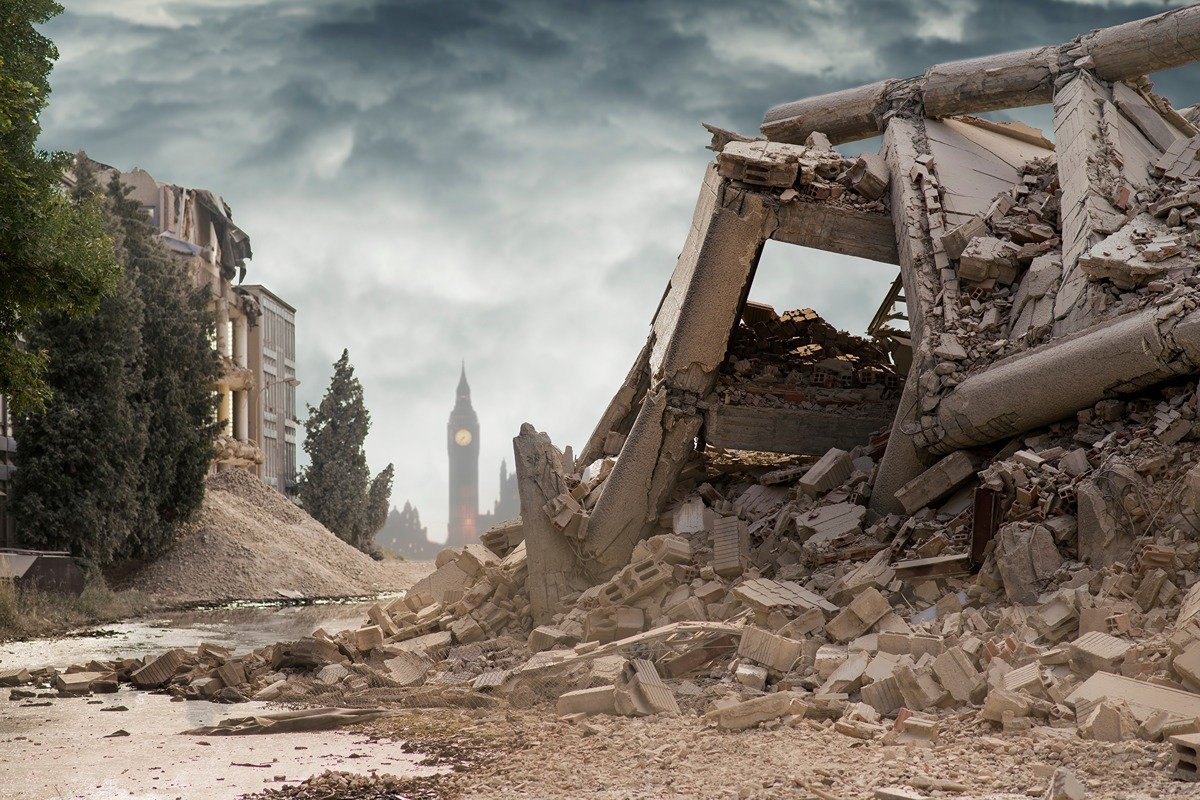
Britain needs to come to terms with its mistakes and put in place a bold intervention equivalent to Franklin D Roosevelt’s 100 days to correct a disastrous trajectory.
The austerity policy was based on a spreadsheet error
In 2010, an economic report containing a spreadsheet error was seized upon by conservatives in the UK (and the US) to justify the ‘starve the beast’ policies since imposed on the country. Using a generic excel spreadsheet, data by two economists was misrepresented to show that countries with 90% debt to GDP ratios are subject to economic shrinkage of 0.1% rather than the correct outcome of 2.2% growth.
This same method of presenting data recommended collateralised mortgage obligations which ultimately led to the global financial crisis of 2008 making an elite few, such as our current prime minister, very rich. But for the country as a whole it has led to a heartbreaking struggle of Dickensian proportions and harsh government policy dictated by faulty data. The errors were revealed in 2013, but the policy didn’t change to reflect that fact.
Some 14 years later, the health service is on its knees, our infrastructure a national disgrace, home ownership a far-away dream for too many, and the potholes navigated by a tired populace on a daily basis are a sad metaphor for the general state of our nation.
Unparalleled poverty in the UK
This data error known as ‘austerity’ has been identified as being directly responsible for between 148,000 and one million deaths since 2010. An eye-watering 22% of the population is on the poverty line and last year our poverty levels were cited as violating international law by the United Nations.
Meanwhile, we are told by the government in no uncertain terms that the problem is us, we are a ‘sick note’ society, there is no ‘magic money tree’, that the country simply had to endure austerity, and that times are still hard. The same people saying all of this are amongst the upper echelons of society, unaffected by the negative effects of their policies as they trumpet how we are the sixth largest economy in the world, the fourth largest exporter, and ‘world-beating’ in every arena from science to services.
Unsurprisingly, this narrative is falling on deaf ears, as evidence contradicts it at every turn. What made Britain seemingly great, has been filleted, sold off or derided. Our NHS, our railways, our BBC. Our reputation as a just and fair nation of calm pragmatism – in reassuring comparison to American trigger-happy brashness and European tendencies toward impulsiveness with occasional forays into authoritarianism – has been diminished, as at every turn we seem to be attempting to outdo the less appealing sides of our friends and allies.
To accompany the acceleration of poverty over the same period, in 2010 the UK had 53 billionaires, in 2022 there were 171. Something is very wrong.
Nationalism and Brexit
The argument that financial hardship can push a struggling population to nationalism is completely logical: the aftermath of the 1929 financial crash was particularly hard on Germany due to the recall of US loans. Looking at current politics on a national and international scale, what followed should serve as a warning of the potential consequences of allowing poverty and hardship to develop in the aftermath of a global financial collapse.
The causes of Brexit have been and will continue to be scrutinised but we need to believe that the Labour Party, once in power, will openly question the wisdom of such a dramatic and appallingly handled constitutional event. It may be harsh, but we know that the 2% of septuagenarians who pushed the result over the line are no longer with us, and many of those who still are, have shuffled into the Reform UK Party and are not electorally significant.
The majority of Britons now support rejoining the single market, even though it would involve restoring freedom of movement; we need party leaders to reflect that fact. The world is plausibly on the brink of conflict, the level of which we have not seen since 1939. We can no longer rely on the USA to protect us as it flirts with the prospect of a returning president with isolationist and authoritarian intentions.
We need to be with others in a power bloc and to work with our direct neighbours. The EU is no more protected from the march of the extreme right than we in the UK, but the range of parties neuters their power. As such, they remain firmly in the minority.
Offer the people hope, financial relief and tangible life improvements in exchange for closer links with the EU and I am convinced there would be little kick-back.
This is not merely a matter of economics, but of national security.
Democratise the fourth estate
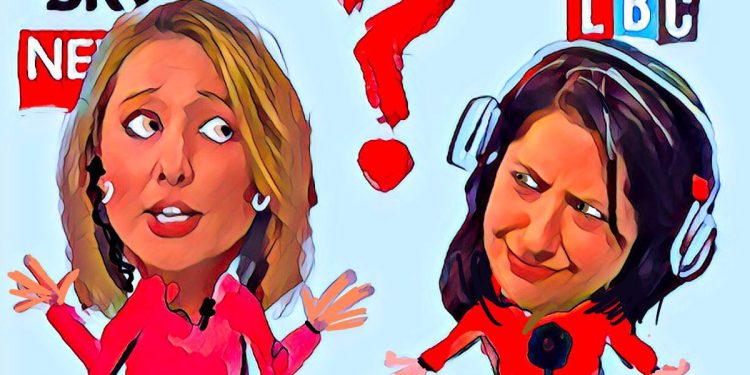
Controlling the national discourse is invaluable to those who seek to influence policy in their favour. One leader of the opposition railed against Lords Beaverbrook and Rothermere and their ‘engines of propaganda’. That was Conservative leader Stanley Baldwin in 1931 but you would be forgiven for believing it was just last week. Billionaires and multi-millionaires have for too long controlled the press in Britain. The Daily Mirror, the Guardian and its sister publication, the Observer, are exceptions. The former, now being a PLC with no direct owners and the latter, a not-for-profit organisation owned by a Trust, not an individual.
The rest are the playthings of rich families. The Murdochs own the Times, Sunday Times and the Sun, the Lebedevs own the Independent and the Standard, Lord Rothermere, the Daily Mail and Sunday Mail, Metro and the ‘I’, and the Daily Telegraph has gone from the billionaire Barclay Brothers into as yet unknown hands, but very possibly those of multi-millionaire Paul Marshall, formerly of GB News.
The news outlet belonging to us, the people, is the BBC. It is under unprecedented attack. As an intern at ABC News, the journalists would speak to me in reverential terms about the soft power of a BBC press card and the respect it carried in all corners of the globe; allowing singular access to informed and privileged information as it was trusted to be uniquely independent and professional. This is an institution of which we should be extremely proud. However, the current government has extended Margaret Thatcher’s efforts to neuter the BBC by capturing the news departments and therefore its editorial policy.
An incoming government needs to address this situation as a matter of urgency. It needs to reboot Ofcom to deal with the diminished standards of some corners of our media, and to guarantee a secure future for our public service broadcaster. Some 100 years of experience in broadcasting and, in many ways, the unifying mirror of our civilization, can never be recovered if the BBC is mindlessly reduced to yet another subscription model.
An economy that works for the people, not the other way around
Assuming there will be a change of government, we need big, bold and brave initiatives on an almost unprecedented scale to get us out of our current trajectory. Forget the simplistic white noise around boats and the ECHR,we all know that people feel poor, that the NHS needs to be reinvigorated, the same with social care, education, transport, housing, and local government funding.
If we are to have any hope for the future and for retaining our standing in the world, we need to locate the money that puts us at number six in the list of global economies and use it for the people of this nation. We need to free ourselves from the ideological shackles of private sector superiority. That model has failed us.
We need to be a managing partner to the private sector, not a subordinate. The state has to have a strong presence to represent the people and to fairly distribute our collective wealth. We also need to address the democratic drawbacks of our voting system to ensure that vested interests can never again sink their claws into our legislature to such a crippling degree.
The money is there, but it’s taken from us and siphoned into the private sector who then send it offshore, having first bunged a bit back to the governing party in exchange for tax cuts and lucrative contracts. It’s the nation that pays as it loses its health system, its education system, its transport infrastructure and its hopes for the future. What use is a high GDP if it’s all offshore?
There is an alternative
If, in the aftermath of two world wars, the likes of which humanity has never known, we were capable of taking bold decisions to change the direction of society, to create the welfare state, then there is no reason we cannot find the means to do so again.
Advocating a small state is lacking in ambition. Never forget that if Thatcherism had existed in 1945, the NHS would never have been born.