At times it’s beginning to feel like this is a bad election to win. Indeed, there are days when it seems like the Conservatives are deliberately trying to hand Labour a hospital pass. Everywhere you look there are serious problems that won’t be quick to solve and the legitimate demands for additional spending seem genuinely intimidating.
Internationally it’s been a long time since the world faced such an array of problems as the war in Ukraine and the horrible loss of life in the Gaza strip, the West Bank and Israel. The secure dominance of the wealthy Western nations is being eaten away by the challenge of economies such as China. Global warming is happening much faster than experts expected and is starting to have chaotic impacts that are only going to get worse whilst we trash the environment at a truly frightening pace. And we are moving into a new era of artificial intelligence and manipulated biology with little understanding of the consequences.
Cautious moves from the Opposition
Instead of facing up to those challenges and recognising the degree of change that’s needed, there are dark forces gathering that seek to obtain power, influence and wealth by persuading the gullible that it’s possible to wish all their worries away by chanting ‘Make America Great’, by ‘taking back control’ of Britain, or by restoring the power and influence of ‘Mother Russia’.
Some seem to feel that the way to deal with such times is to reign back on radicalism. They seek to gain power by moving slowly and cautiously. They are avoiding rocking the boat by being too extreme about any policies. And they’re sticking to the knitting of trying to make the UK function rather more efficiently. They worry that even the smallest bit of radicalism will upset the right-wing press and lose an election that’s there for the winning.
A string of policies has been announced by the government in waiting that are designed to reassure voters that there won’t be too much change. Keir Starmer has already committed his party to stick to the spending limits set by the current Conservative government, increase defence spending to 2.5% of GDP, keep Britain firmly out of the EU and its single market, limit spending on net zero, and to hold real-term wages in the NHS to current low levels whilst increasing the use of private providers.
Fortune favours the brave
It is of course possible that the pursuit of such policies by reasonably honest politicians will provide us with such a pleasant change from the current sleaze and incompetence that the public will be satisfied. Anyone hoping for that might like to take a look at the opinion polls in the States. The ‘caution and slow change’ approach doesn’t always produce popularity. Sometimes it simply creates an environment that provides the extreme right with an opportunity to latch onto public concerns and drag us further towards the abyss.
Fortune tends to favour the brave not the ultra-cautious. It isn’t always wise to respond to times of great crisis by moving slowly in expected directions. There is an alternative approach to rebuilding Britain and restoring confidence in the future. It is to recognise that it necessary to adopt new approaches and embrace radical change.
A new approach to the housing crisis
For example, it’s worth considering the approach to Britain’s housing crisis. There’s never been a time when it was harder for people starting out in life to buy their first home. Nor has it ever been harder to find secure, good-quality rental accommodation at reasonable prices. Yet the solution to this is not to accept the building industry’s lobbyists solution of removing pesky planning regulations.
It doesn’t matter how much of the green belt we build on or how many new houses we put up if we let the private sector decide where and what to construct based on their best profit margins. All we will end up with is more ugly executive homes on former farmland which are way beyond the pocket of those in need. It is going to take planned action to build mixes of council houses and homes that are genuinely affordable to buy.
More significantly it is going to take a shift in thinking away from the focus on building and onto ensuring what has already been built is available more easily to those who need it. Up and down the country there are thousands of good-quality homes sitting empty or being used as occasional holiday residences whilst those who have lived in these areas are unable to find a home. The only serious way of discouraging that is hefty taxes.
New investment programme needed
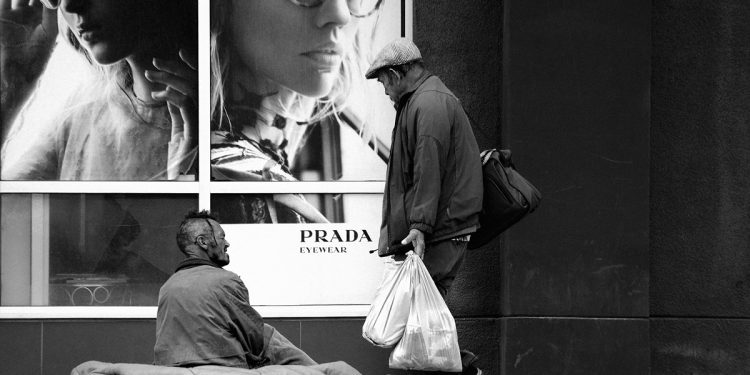
On top of that, there are huge areas of our inner cities where housing stock is crumbling from neglect and crying out for investment. What is needed is a massive programme focusing on transforming the neglected parts of our towns and cities so that run-down properties in run-down areas become attractive propositions. Doing that requires coordinated action across government departments so that homes are improved at the same time as schools, doctors’ surgeries and other community services. That involves a transfer of resources from the wealthiest to the poorest. And that will be fiercely resisted.
It simply isn’t possible to make the changes that are necessary on the scale that is necessary without challenging some of the smug assumptions of the free-market philosophers who have led us into this mess. Britain has lost its network of widely available council houses. Many people in working class areas are in despair, convinced that no one cares about them. Fixing that requires taking on some very powerful vested interests.
In order to pay for improvements for those who have been left behind, taxes will have to go up on people who insist on owning more properties than they need. And those who’ve squirrelled a lot of wealth abroad into bitcoins and offshore tax havens will have to face substantial increases in property taxes.
There are options
Imagine two futures. Under one, a grey safe-pair-of-hands government has done a reasonably competent job of trying to run business as usual. Then it goes to the electorate and discovers that the red wall is still convinced no one cares about it and has been exposed to a continuous string of well-funded propaganda from the radical right. What happens under those circumstances? Under the other future, a government that has launched the biggest transformative programme of the inner cities in several generations is being seen to deliver genuine improvements on the ground.
The outcome of cautious middle-of-the-road policies isn’t always a secure future for middle-of-the-road political parties. Sometimes it’s necessary to face down criticism and tell people the truth.
- Britain is most unlikely to secure a prosperous economic future if it insists on placing major trading barriers between itself and its closest markets and sources of materials. We have to rejoin the EU sooner or later, so why not sooner before too much more damage is done?
- Britain also can’t secure its economic future by sticking with the industries and the business practices of the past. The future lies with an economy focused on low-carbon environmentally sensitive knowledge economy businesses. That requires easy access to internationally mobile highly trained labour, not obsessions with shutting out migrants. It requires investments in genuinely green industry that will pay back in the long term far more than the upfront headline costs of £28bn a year.
We need brave and transformative change
The problem with promising too much caution before an election is that it becomes difficult to justify what really needs to be done after it. Few governments get braver and more determined once they are in the eye of the storm of office. Almost always they find themselves buffeted into reducing their ambitions and lowering their expectations.
Too many people are telling themselves that all that we need to focus on right now is getting rid of the Tories. That simply isn’t enough. It is necessary to come to power with a programme for office that is sufficiently transformative for the change to be felt on the ground. I leave readers to decide for themselves whether that is where we look to be heading.