The headlines were sensational when, on 15 February 2024, Labour overturned two massive majorities in Conservative-held seats. In Wellingborough, the swing against the government amounted to 28.7%, the second largest since the second world war. There was a 15.4% swing in Kingswood. The Conservatives, shouted Metro, the paper handed out at London’s tube stations, were facing a “wipe-out”.
The BBC’s Chris Mason, the geek in the glasses, called these results “extraordinary”; while the mournful academic, Sir John Curtice, concluded that they left the Conservatives with “a mountain to climb” before the soon-to-come general election.
“They’re not laughing now!” cheered Richard Tice, the leader of the hard-right Reform Party, which came third in both by-elections with 13% and 10%. This, he claimed, was a defining moment. Had they broken the mould?
From another perspective, the results were more enigmatic. If, in an old-fashioned way, we simply count the number of those who voted for Labour, the party actually lost more votes than it gained.
Reluctant voters
At the 2019 general election, 13,737 voted for Labour in Wellingborough; in 2024, the total was 13,844, an increase of 107 votes. In 2019 in Kingswood, however, 16,492 voted for Labour, whereas in 2024 only 11,176 did – so overall there was a decrease of 5,319. Keir Starmer’s boast that he had transformed the party to make it more electable seems somewhat premature.
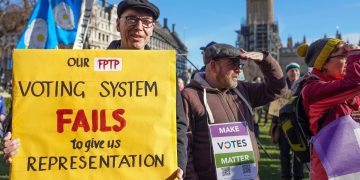
In both constituencies the turnout was low: 37% of the electorate in Wellingborough, 38% in Kingswood. That’s about half of those who registered their ballots at the 2019 general election. The results could be expressed in a different way. More people did not want to vote Conservative than did not want to vote for the other parties.
In by-elections, the response is often lower than in general elections. As Mason explained, parties are reluctant to spend £100,000 in advertising for a by-election which may or may not change the balance in the Commons. Electors are aware of this too, which is why they are reluctant to trundle down to the polling stations. Whether this is primarily laziness or common sense, the fact is that the British are reluctant by-electioneers.
Yet apathy is not a word that I would choose to describe the current mood of the country. Fury might be a better one. While the votes were being counted, there were pro- and anti-Palestinian rallies in the streets around Westminster. These preceded the debate about whether we should call for a Gaza ceasefire, which in the event did not take place on 21 February.
The speaker took a Labour motion instead of one tabled by the SNP, saying he felt all options should be heard and also wanting to protect MPs from possible threats to their lives. The result was chaos and confusion, and much against the normal rules of the Chamber. (Would the Israeli prime minister, Benjamin Netanyahu, have listened anyway?)
Government in crisis
Parliament seems to be bringing the nation into disrepute. The system is not working. There are numerous examples of this: the continuing scandal of the sub-post office managers, the incompetence of the Royal Mail’s privatisation, the mixed messages of the Covid pandemic and the needless death toll, the corruption of the VIP purchasing system for PPE, Partygate, Rwanda, Brexit – the list goes on.
Rarely in Britain’s history have the shortcomings of its government been so blatantly exposed. Vast sums of money are being made somewhere else and left in tax havens, while their affluent owners have been granted seats among the Lords. And all the time, the growing struggle against poverty has sapped the energy from working and middle-class lives. The trickle-down effect did not seem to be working.
Against that background, both major parties have made promises of growth, modernisation and levelling up, as if these benefits could be achieved by lowering or raising taxation. Which party, they ask, do you trust to be the safer pair of hands? ‘Neither’ came the answer from the by-elections.
It’s been hard to avoid the sense of a national mudslide. Rivers are increasingly polluted. In our more chaotic climate, flood defences have been swamped and buildings have collapsed into the sea. The RAAC concrete of the 60s turned out to be porous and liable to collapse without warning. Social housing is most vulnerable, while schools shut classrooms, hospitals lost wards, and shops have been boarded up.

Decline and fall?
In Europe, we have much experience of what happens when great empires decline. They rarely go quietly. Amongst the populace, there are rising levels of resentment. At first, foreigners and immigrants are blamed. They are the easy targets. Then, the mating habits of the young arouse moral disapproval. A popular opinion says they need a taste of army discipline.
Then a hero emerges to rouse the people, promising to restore the glories of the past – a Napoleon, Hitler, or Putin – and, after a short burst of optimism, the wars of conquest and carnage start again. We do not, of course, have dictators in the democratic West, only staunch ‘patriots’ like Trump or Farage, but they can stir up plenty of trouble. How do we break this cycle?
Those who did not turn out to vote in Wellingborough and Kingswood belong to the voice of the nation as much as anyone else, and are not to be despised – they have the right to be cautious. In Britain, we are fortunate in that our select committees, public enquiries and TV docudramas can still expose the errors of our leaders. We have the option of learning from our mistakes.
What have we learnt so far? One seemingly self-evident fact is that our system of government is far too centralised. The amount of work piled on the shoulders of any prime minister defies credibility. How can they afford the time to visit a building site, before holding a cabinet meeting, answering questions in the Commons, and flying to Davos?
One former MP, Rory Stewart, has described how he as a junior minister was first given the task of looking after our parks and wildlife, and later of being responsible for our prisons. He had no previous experience in either role, though he wanted to make a difference. He stood at the despatch box and read out statements prepared by his civil servants but in the end his crowning success was – a small tax on plastic carrier bags to discourage their use.
De-centralise government
Local authorities are constrained by what happens in Westminster, and Westminster is held back by the needs of the constituencies. The late Sir Clement Freud pointed out that how a politician gets into parliament is at odds with the decisions that he must make when he sits on the green benches. Parochial, regional, and national interests are rarely aligned.
Why do we not de-centralise large sectors of government? Different administrations, Conservative and Labour, have promised to do so and partially succeeded. But failing governments like our current administration go in the opposite direction and become more authoritarian day by day, as they try to crack down on dissent. Demonstrations are ‘mob rule’, immigrants are invaders and terrorists.
Politicians dislike giving up power. They fight for it, betray for it, and measure success by it. This may be their weakness, but it is not always their fault. For historical reasons, we have substituted the rule of a dynastic monarchy for an elected authority with a similar remit. As Harold Wilson once said, the British public expect their governments to govern.
Our rulers may be elected, but they are still our rulers – Westminster holds the reins of power. If we think about it more democratically, however, we are the ones who own the national estate, not anyone else. Members of Parliament are our estate managers. We should be benign with our instructions, tolerant with mishaps, but ruthless with arrogant behaviour. Madcap promises are there to be shredded.
We the people, the missing millions, must write our own manifesto. The day has come.