Much has changed politically in Wakefield since the 2019 election. In the run-up to that election, the Corbyn-era push for sitting Labour candidates to undergo re-selection was hardly the ideal preparation for a battle dominated by Brexit. In addition, Labour’s Mary Creagh had voted with her principles on opposing Brexit legislation, which proved unpopular with Leave voters. And some key figures at Wakefield Council, including then-leader Peter Box, had privately expressed concern at Creagh’s stance.
As the newly-elected MP, Imran Ahmad Khan, (currently awaiting sentencing after being found guilty of a sexual assault on a 15-year-old child), attacked what he called “Islington Remainers” as branding Leave voters “stupid, uneducated, racist, or wrong”. Speaking to Channel 4 News he said:
“I hope that the Conservative Party will reorient itself entirely to the people, to the strivers and the aspirational. What the people of Wakefield want is a party that is going to be with them every step of the way, as they improve their lives, as they provide first class services, both in education and the health service.”
After his election win, Khan pledged to restore trust in politicians, and to bring investment and jobs to Wakefield, with the Northern Powerhouse scheme.
Since the 2019 election, Wakefield has had a Conservative MP and a Conservative majority government to deliver for it. So, what actually happened?
Funds for Wakefield
Wakefield Council, like all local authorities, has had to bid for a number of funding pots by the government. These have consisted of:
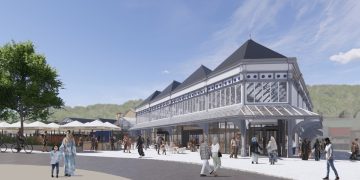
- An allocation of £20m from the levelling up fund, £12m to be spent on refurbishing the BHS building to house a museum, gallery and café, and the rest on finalising the re-development of Rutland Mills to house state of the art media production facilities in Tileyard North.
- £24.9m from the towns fund to build high-quality houses in the Kirkgate area.
- £10m under the shared prosperity fund (although this has yet to be allocated).
This money comes up to a total of £168 per person across Wakefield’s population of 325,837 for this year only. These monies are not recurring, they are one-offs. While these funds are welcome, they still represent a significant shortfall compared to what was in place when Britain was eligible for EU funding.
Analysis by the Northern Powerhouse Partnership showed that ‘Leeds City Region’, to which Wakefield belongs, is one of the biggest losers from the new funding arrangements, losing £77.6m in comparison to previous EU funding. The 12 years of austerity cuts amounts to about 60 percent of Wakefield Council’s spending in 2010; in 2012, the council was required to save £77m in that year alone. Wakefield’s current projected spend is £234m.
Northern power-down in transport
Meanwhile, Wakefield has been at the losing end of many of the government’s transport decisions. Recent fare rises have seen journeys from Wakefield to Leeds and Sheffield cut, with nothing in place still to link Wakefield and Huddersfield. Wakefield was previously in line to be one of the main losers from HS2, with journeys to London expected to lengthen from the city. The news of the cancellation of HS2’s eastern leg was thus welcomed by local leaders, but little in the government’s Integrated Rail plan seems to help the region.
Meanwhile, bus services in Wakefield were labelled as being at “crisis point”, as local operator Arriva is set to cut several routes in and out of the town from 25 April. This decision has been made directly as a result of the suspension of government grants designed to help service providers weather pandemic-related disruption. What this means in practice is that, on a route like the 110 (once featured by Jonathan Ross on his Radio 2 show!), people going to work on the bus now find themselves faced with two or three of the four buses an hour not turning up.
A piece highlighting this by the Daily Mirror’s Paul Routledge has exposed the disruption to the local economy, as the £3bn figure promised by the government was retrospectively slashed to £1.2bn.

Repeated betrayal
The Conservative government and Wakefield’s Conservative MPs have also worked actively to make the people of Wakefield poorer time after time. This has included voting to not extend free school meals to nearly 10,000 children in Wakefield over the school holidays, and making 30,000 recipients of universal credit in Wakefield poorer by £1,000 a year.
Meanwhile, reports have shown that the north-south divide has grown under this government, and new figures have shown that a third of children in the district are living in families facing “real financial hardship”.
Whose priorities?
While the government has been getting on with what it repeatedly claims are the people’s priorities in Parliament, it is unsure how much these match up with the actual priorities of Wakefield residents. While Wakefield’s transport network has lain in crisis, and its people have got poorer, the government has had time to pass:
- A bill to stop speakers being uninvited to university society events;
- A bill to make it easier for soldiers to commit war crimes overseas;
- A bill to give Boris Johnson the power to call an election without consent of MPs.
Whether or not these measures are of any value, they are hardly addressing the country’s most pressing needs, and time spent on this vanity legislation is time taken away from taking real action on levelling up or on the cost-of-living crisis.
Wakefield deserves better
Wakefield is hardly without its merits. Its economy was as recently as 2018 among the fastest growing in the country, including a burgeoning green energy sector, and booming education and tourism sectors. It is home to New College Pontefract, the third-best sixth form in the country for achievement. It is the home of TV presenter Jane MacDonald, birthplace of writers David Peace, David Story and Stan Barstow, scientist John Radcliffe, playwright John Godber and Coronation Street’s Helen Worth.
It has a rich cultural heritage that includes its Grade-I listed cathedral, the annual long division music festival, and the ever-popular rhubarb festival. The district’s ‘sculpture triangle’ includes the Hepworth Gallery, which attracts about half a million visitors a year, and the nationally-acclaimed Yorkshire Sculpture Park. The National Coal Mining Museum is also part of the constituency. The CAPA College building, right next to Wakefield One and Westgate station, will be the county’s first purpose-built performing arts academy when it opens next year.
What Wakefield deserves is a government willing to invest the necessary amount to support it in its mission to take back control. As politicians from all parties converge on the constituency, promising to listen and register concerns, now is the opportunity to tell those in power exactly what Wakefield needs, and that it will settle for no less.