



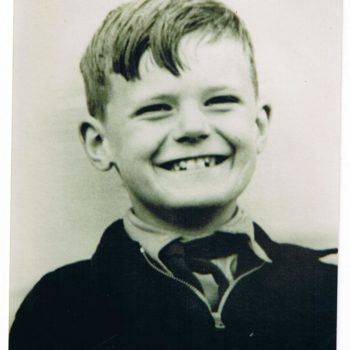
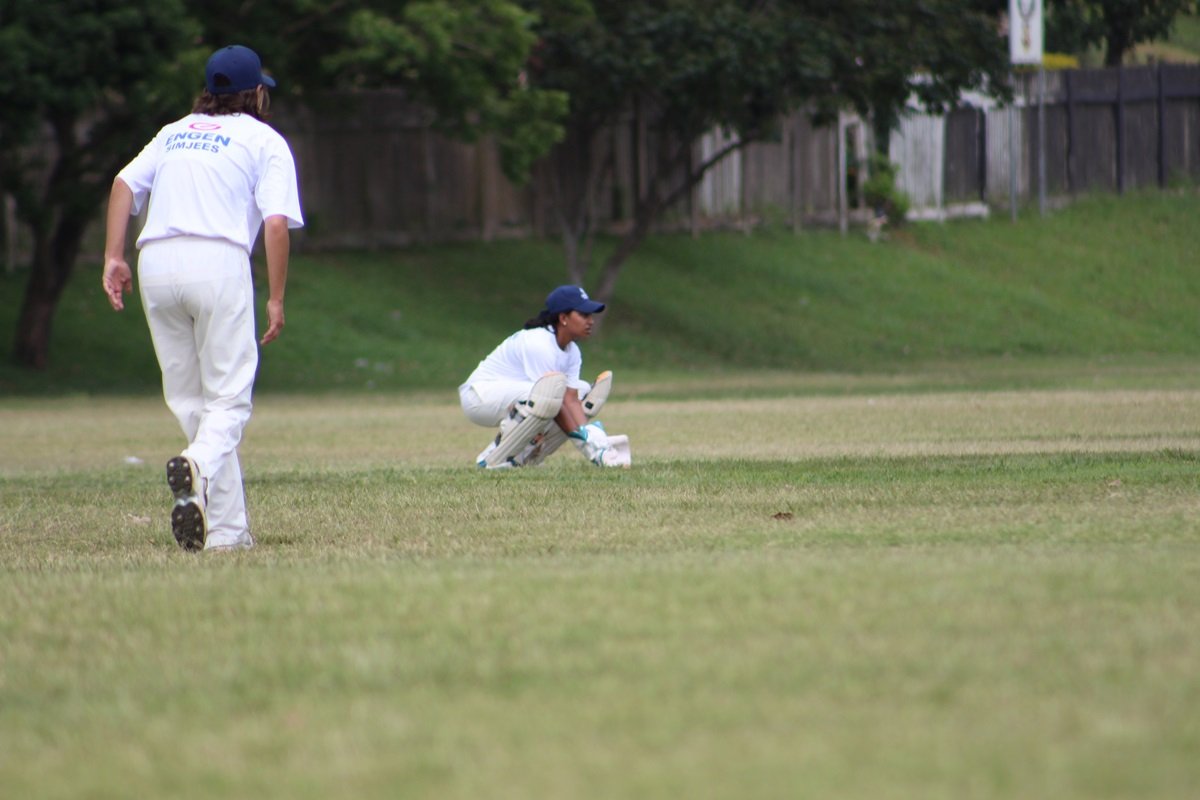
I had a dream the other day. In the dream I was a young lad and my mother, who was concerned about putting at risk the possibility of me producing her future grandchild, had forbidden me to field at silly point. In my dream I had started to write a poem entitled ‘Mi muther won’t let me field at silly point’. That was as far as the poem went, but I think it was a promising start and has a certain intriguing ring to it.
I woke soon after this dream but, whilst still in my semi-dream/semi-conscious state, I began to think of all the other sporting phrases, rules and equipment required to carry out some of our very popular sporting activities. An oddity that immediately comes to mind is the scoring system in one particular sport, where ‘love’ means zero and a score of fifteen love is followed either by fifteen all or thirty love. More on this below.
What’s the point of the stick?
There are several sports such as snooker, billiards, pool and golf that require a small, hard ball to be knocked into a hole with the aid of a stick. Surely it would be much easier and far less trouble just to pick the ball up and walk to the hole and place the ball in the hole. There would be a certain amount of exercise involved, particularly with golf, without all this stick malarkey.
More sticks are required for hockey and ice hockey, but it seems to me that the stick in these cases is there to render some sort of minor injury to the opponent, which is fair enough, I suppose. Lacrosse and field lacrosse have similar rules using a similar stick resulting in similar injuries, but the sport boasting the longest stick with which to hit a ball must be polo. This sport has an added complication: the need for a horse that understands the rules required to get a ball through the opponents’ goal posts.
The stick: a wealth-related concept
There is surely a common denominator here underlying the early development of sports requiring lots of different shaped sticks, a horse, a posh school, a very expensive table and special-coloured balls that explode occasionally. Also, a field or pitch, and in the case of golf several fields, and often a mobile first aid station. The common denominator in the wonderings of my mind following my dream was money.
All of the sports mentioned above were out of reach of the common man, for whom sticks were to aid walking after years of toil and strain brought on by a 12 or 14-hour working day down the pit, in the field or factory.
When I was a lad, sticks were very popular for the game ‘whip and top’. A length of thin string or leather was pinned to the end of a stick. It was then wound around the ‘top’ – a bobbin or upside-down cone about three inches tall – which was then spun on the ground, continuously using the whip to keep the bobbin spinning. Hours of fun. ‘Hoop and stick’ was another simple game whereby a hoop similar to a hula hoop (but probably made from cane) was propelled down the street using the stick while running alongside. This was the only friend that several of the lads I knew had at that time.

Sports jargon explained
It is perhaps time to explain some of the terms used in the above ramble.
‘Silly point’ is a position that one of the team members of the fielding side in cricket may take up that is so close to the batter that they could touch them if pointing straight out. And if the batter decides to hit the ball hard in their direction, it soon becomes obvious how silly it is to stand there and how vulnerable it is for any tender parts of the fielder’s body.
The scoring system in tennis appears to come from French – medieval French. It has something to do with a clock face, eggs and the French phrase ‘deux de jeux’. Being French, there is no logic involved in any of this, and certainly no time should be wasted in trying to understand it.
The exploding billiard ball remark comes from their early design whereby the ball was made of celluloid, which was combustible, and on a few rare occasions a collision of the balls would result in a mild explosion. Wood and ivory were first used, but keeping the shape of anything made of wood is very difficult because it thinks it’s still a tree and will always want to twist and grow. And when the posh folk in their posh stately homes were concerned about the availability of ivory, a new material had to be found. Celluloid was one of the very first plastics; what could possibly go wrong?
The origins of polo and golf
Polo must be the ultimate in posh folk’s sport. The requirements are at least one horse, (called a pony when playing polo), preferably several, in case one or more gets tired out with all this running about; a big field (polo requires the biggest pitch in any sport); and, of course, a stick with a mallet at the end with which to propel the ball through the opponents’ goal.
The sport originated in Asia. The tea planters and British soldiers took up the sport in India to show off their horse-riding skills, eventually bringing the game to England. The first recorded match played in England was in 1871 between the 9th Lancers and the 10th Hussars. It had to be, I suppose.
The game of golf originated on the east coast of Scotland. In his infinite wisdom, Scotland’s King James II banned it in 1457; however, the ban was largely ignored and eventually it was introduced into England by King Charles 1. No wonder he was executed.
And now for a proper sport: rugby
In my humble opinion, the only sport fit for serious consideration is rugby. The invention of the game has been credited to William Webb Ellis, who, while playing the game of football during his time studying at Rugby School in 1823, reputedly “picked up the ball and ran”, thus inventing rugby.
This of course is rubbish. A game whereby a player would carry or kick the ball had been around for generations. The rules, such as they were, also allowed for kicking and carrying the opponents. Injuries resulted and the need arose to introduce more civilised rules; thus, rugby was invented.
The division of the sport came about when some players required payment for missed wages known as ‘broken time payments’. These were banned by the RFU (Rugby Football Union) in 1896, with the aim, it has been suggested, of controlling the growing working-class influence within the game. During a meeting held at the George Hotel, Huddersfield, in 1895 a breakaway group of teams from the north of England started their own league with their own rules. They were named the Northern Union, eventually becoming Rugby League.
Both forms of rugby have their merits. I prefer league for its simplicity, while others prefer union for its complexity. Ya pays yer money and ya takes ya choice.







