Devolution is suddenly back on the government’s agenda. Within a few days of taking office Sir Keir Starmer had a face-to-face meeting with England’s 12 directly elected metro mayors, offering warm words of support and proposing close cooperation and further delegation of powers and resources. And on 31 July the Big Conversation II will bring together interested parties in Yorkshire to discuss how and where regional, rather than sub-regional, action is needed.
The new government has also given a clear indication that the 2022 report of the Commission on Britain’s Future, which was chaired by Gordon Brown, A New Britain – Renewing our Democracy and Rebuilding our Economy is going to be implemented. A further encouraging bit of news is that the government’s own Offices for the Regions, in each of the English regions, may soon reopen to encourage regional economic growth and development. These offices were summarily closed down in 2012 by Cameron and Osborne as an ‘austerity’ measure.
Limited devolution at present
Welcome as the government’s initial suggestions are, the powers to be delegated, as reported so far, are limited to a few key areas: transport, energy and skills.
Transport, in particular, is a burning issue given its importance to the region’s economy, and especially given the scandalous lack of new infrastructure in the North. But it is also evident that much more needs to be done in many other areas if we are to transform the English regions and release the latent energy and thwarted ambitions of people outside the favoured home counties.
Some people are suggesting that there are actually eight, albeit overlapping areas, where there needs to be close region-wide cooperation and joint action, in which the new mayors can pay a critical part. These are:
1. The regional economy – business, farming and industry, including strategic infrastructure planning, inward investment and regional banks
2. Climate emergency mitigation and nature recovery
3. Health, social care and wellbeing
4. Transport and accessibility
5. The arts and creative industries
6. Heritage and tourism promotion
7. Sport and sport participation
8. Higher, further education and reskilling
These are crucial areas which need to be handled strategically, not at the sub-regional level of metro mayors and combined authorities, but under the umbrella of a wider united region and also on an inter-regional basis.
Striking the right balance of power
As has been rightly pointed out by Dr Stewart Arnold of Hull University, based on evidence worldwide, effective governance needs to strike a balance between the critical mass of scale and avoiding an over-centralised bureaucratic mega-state where central government is out of touch with its outlying populations and regions.
The regions of England – with populations varying between five and nine million – correspond closely in size to many highly successful modern democracies such as Norway, Denmark, Austria, Slovenia, New Zealand, and the Republic of Ireland. Another model could be the semi-autonomous European Régions, Länder or Cantons of France, Germany, Austria and Switzerland.
Regionalism needs to work across all levels
To make a real difference to our lives, regionalism needs to work at several different levels, from grassroot voluntary groups and parish councils in villages, towns and wards, through locally elected district and county representatives, to the sub-regional metro mayors. But equally important are the enterprising and energetic regional and sub-regional non-governmental organisations, such as the Yorkshire Wildlife Trust, Yorkshire and Humber Association of Civic Societies, The Yorkshire Society and business-orientated groups such as the Yorkshire Agricultural Society.
Encouragingly Yorkshire’s three Yorkshire mayors, Tracy Brabin, West Yorkshire; Oliver Coppard, South Yorkshire; David Skaith York and North Yorkshire, and hopefully soon a fourth in Hull & East Riding, have indicated a willingness to work together when the occasion determines for the common benefit of Yorkshire – the so-called ‘White Rose Pact’.
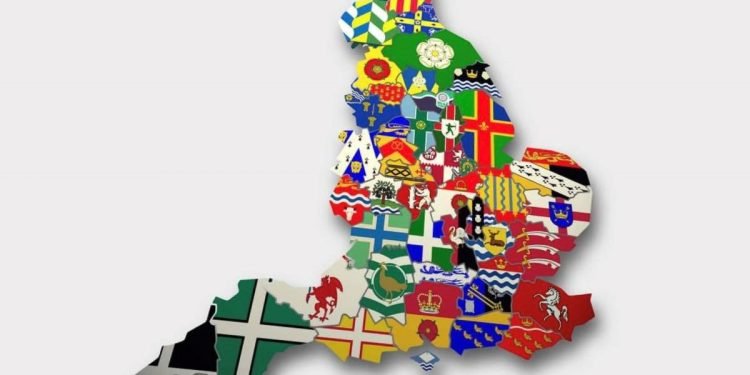
Yorkshire as a pilot for regionalism in England
This also supports the idea that Yorkshire could be the perfect national pilot for the English regions – a test case to demonstrate to other parts of England how it can work. What is clear from looking at countries such as Germany, is that not one size fits all. German Länder vary in size from the cities of Bremen and Hamburg to the larger, formerly independent, state of Bavaria.
To some extent Yorkshire is England’s Bavaria. In both rural and urban Yorkshire, we share a powerful, rich and proud identity, with roots stretching back through history to a pre-Norman Conquest Anglo-Viking kingdom within the Danelaw. This history is still evident in place names, Norse-influenced dialect, and in the ‘Scandinavian’ DNA of much of the present population – despite welcoming successive waves of immigrants from the European mainland, the Caribbean and South East Asia. We in Yorkshire retain that fierce pride in being a very different, beautiful and distinctive part of England.
The Big Yorkshire Conversation
This pride continues to the present day. In April 2021 the Yorkshire Society, in partnership with the University of Hull, launched the Big Yorkshire Conversation – a wide-ranging survey to ask people in Yorkshire what they thought about Yorkshire’s image, identity and sense of belonging. The survey, which was widely reported in the national press, on the BBC and elsewhere, gave that sense of identity a massive boost. More than 5,000 respondents all gave strongly positive reactions to the concept of Yorkshire and Yorkshireness.
On 1 April, marking 50 years since the abolition of the historic Three Ridings of Yorkshire, 100 Yorkshire citizens signed the Yorkshire Declaration at the Eye of York. Now, a few short weeks on, and with the election of a new government with devolution on its agenda, this is the perfect time to ask the people of Yorkshire again about the future for the region of England they so love.
The Big Conversation II
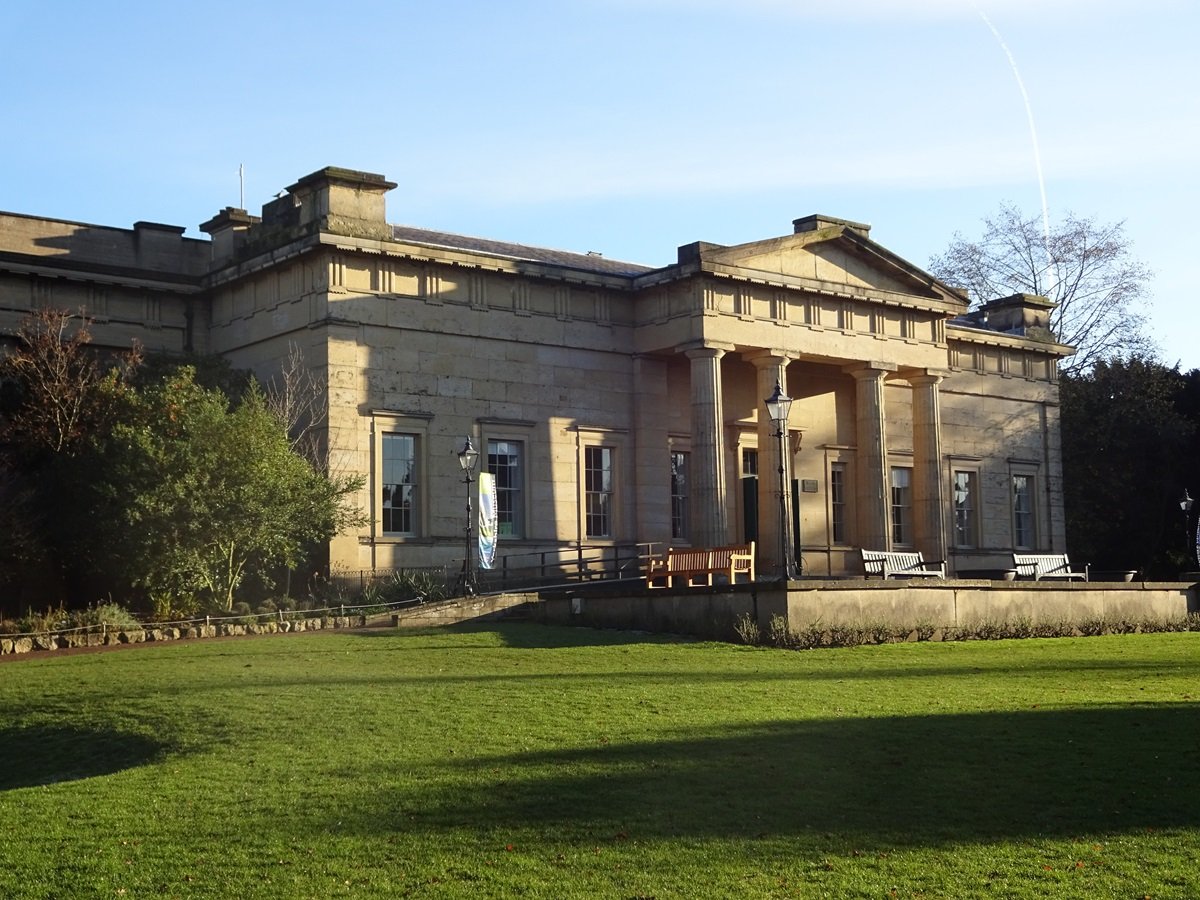
On 31 July, significantly on the eve of Yorkshire Day (1 August) there will be an event taking place in York to do just that. A forum on the future governance of Yorkshire – the Big Conversation II will be held at the Yorkshire Museum, close to the city centre, from 6pm-8pm. York was the ancient capital of the Anglo-Viking Kingdom of Jorvik and for around a thousand years was Britain’s second city.
Five keynote speakers have been invited, each offering different insight into various aspects of regional devolution:
- Dr Tiffany Holloman, Leeds University on The importance of Regional Devolution.
- Sir Stephen Houghton, Leader of Barnsley Metropolitan Borough Council and chair of the Yorkshire Leaders Board, on Where we are in Yorkshire and what we might expect from a Labour Government.
- Ben Crick, leading Yorkshire composer and conductor, Director of the Yorkshire Symphony Orchestra on The importance of Devolved Powers for the Arts in Yorkshire.
- Rachel Bice CEO of Yorkshire Wildlife Trust and member of the Yorkshire Climate Commission on The importance of devolved powers for the environment and combating climate change in Yorkshire.
- Dr Stewart Arnold University of Hull on The importance of size and identity when it comes to devolution in Yorkshire.
- Lord Timothy Kirkhope, former MEP for North Yorkshire will be the chair.
After the presentations, audience members will be invited to ask questions or make comments. It is intended that both the presentations and comments will be recorded, and a report produced by the University of Hull. This will be widely circulated to government, local MPs and other agencies in the region as well as to press and media outlets. This could therefore be a unique opportunity to help shape and influence the future of Yorkshire.
The event is free of charge, but attendees are asked to register. Full details at Forum on the future governance of Yorkshire – The Yorkshire Society.