
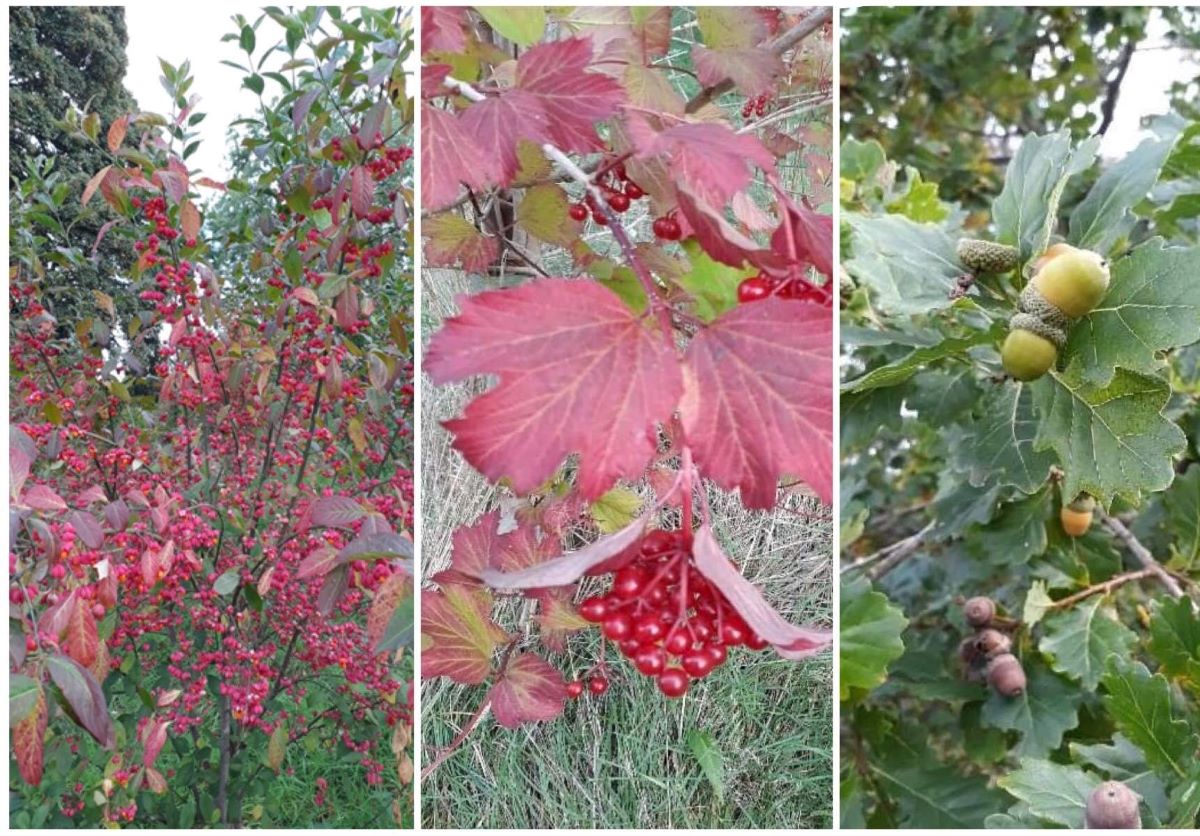
Nights draw in and the daytime changes its green to multi-coloured sights of many colours and shapes. Also changing are the night-time activities in the fields. Every season brings delights and surprises as we learn what nature is really up to at night.
The summer evening owl patrol
Through summer the land nurtures the trees and shrubs, and the longer grass areas allow many inhabitants who enjoy secluded living, like the field voles, to take up residence in carefully woven grass nests or carefully concealed holes. Runways or tracks run through these long grass areas and so it’s no surprise when the barn owl and the young tawny fledglings take to field patrols at dusk.
The tawny owls commence their patrol with a fly in, then pause, perched on a post or side branch of the oak tree or even the garage outdoor light bracket. They look, listen, listen, look and call, eliciting a reply from across the fields. With location mapping of the sounds exchanged now complete, the tawny owl has sorted its visiting card places for the night.
The barn owl quarters east and west up and down the hilly land, and, dropping with speed and accuracy, the vole is dispatched, and supper’s main course taken. Dusk means moments of vulnerability for the voles, shrews and other small mammals in the long grass to owl eyes and ears. Then the little owl screeches from the west side of the fields and the night long hunting festival is truly off.
Just leaving the grass long in many places and planting a mixture of native trees and shrubs allows nature to have space to nurture itself. It means owl hunting time is “big time” as there are plenty of food sources in the diverse habitat.

Hedgehogs make the most of blackberry season
The hedge seems a little noisy as midnight approaches- some scuffling maybe, and then some snorting and scurrying. Rats, cat, or maybe hedgehog? Suddenly there they are: male and female hedgehog in tender conversation, co-creating a new partnership in the last of summer.
The scurry of the two hedgehogs towards the birdfeeders means another well-fed creature or two as the seed spill is a perfect nighttime snack. The night-time visitors leave their scat calling card, purple in colour from the fallen blackberry fruits that offer a delicious morsel. Scats cover a large area, around an acre or so, showing lots of nocturnal activity from the hogs!!! It is thrilling that the range of meadow sweet, field and devil bits scabious provide perfect cover for their antics. We planted these with hope that nature would feel safer and it responded.
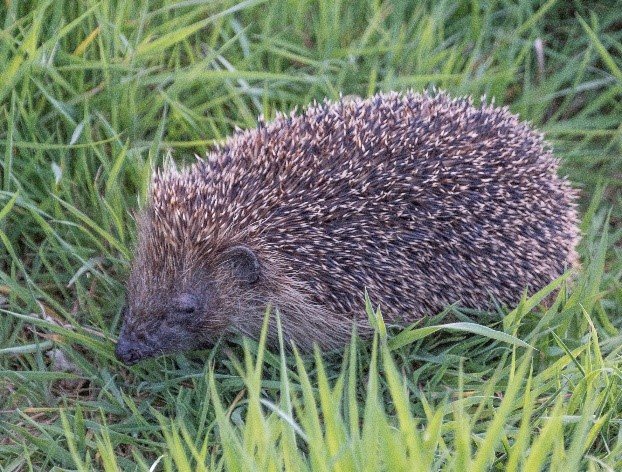
The blackberries arrived in the last two years and are growing over the old hedge of ivy, hawthorn and recently planted hazel and guelder rose, to fill in and increase the variety in the hedge gaps. The blackberries have now covered this old hedge area, although we were concerned about the lack of them in the first three years of wilding. Now they provide the most favourite cover for nesting birds and midnight feasts for hedgehogs and a decent forage for us.
Nocturnal herons and a new bat species
After dark we discovered the night-time feeding on the field scrape using a camera trap, which brought the realisation that birds do not always sleep through the dark nights. The two herons that visit all year turn out to visit at all times of the day and night! Caught on camera trap at 3am, a heron was pictured eating frogs and maybe newts – very crafty!! Apparently, both the early and the late bird get the worm (or frog in this case)! So, the difference between what we think we know and what nature is actually about is at times very surprising.
We have to duck down because – wow! – the bats are out for night-time activities. Initially we only noticed pipstrelle bats emerging at dusk – such a pretty fluttering flight over the ponds and scrapes. Then, following a barn restoration, we spotted more flying bats at dusk. The restoration had involved a simple reinstallation of the collapsing roof beams and stabilizing the walls, weather proofing the building but also leaving gaps and places for wildlife.
Above the recent plantings of trees and shrubs, now thriving and up to six metres tall, we saw these new bats with a different flight pattern, wing shape and overall size. Certainly not woodcock or sadly not even the nightjars that had been seen within five miles. They turned out to be noctule bats. We were thrilled to see large numbers of these flying and swooping almost swift-like across the tops of planted areas, catching some of the 256 species of moth and mayflies now recorded in the Ten for Nature area.
Moth traps reveal the beauty and creativity of a September night
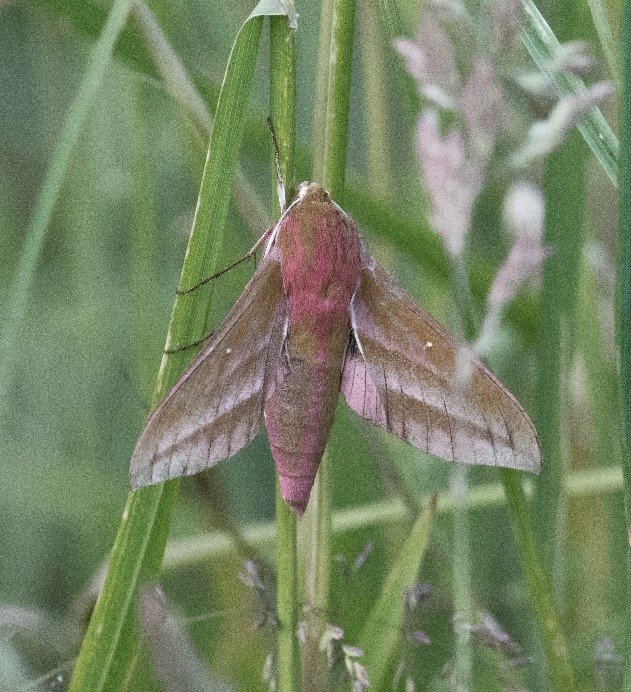
It is 5am in early September and the alarm sounds time to get up and see what the night-time moth trapping had brought. We climb the hill through dew-wet grass to switch off moth trap lights and cover the trap to prevent escapees. At around 7am, over cooked breakfast, the moth count begins, with the local moth recorder and numerous interested or curious participants. Five moth traps, opened one by one.
It’s like opening presents at Christmas – endless surprises accompanied by “oohs” and “ahs” and then a “wow” on finding a poplar hawkmoth and a hummingbird hawk moth. Beauty in the night unseen and then revealed through trapping. The colour, the camouflage, the shape would win prizes in any fashion catwalk for beauty and creativity.
The nights have their own particular and often unexpected beauty and action, proving that Ten for Nature is definitely a 24-hour experience!