

In the heart of Sheffield, a remarkable transformation is taking place, breathing new life into the historic Leah’s Yard on Cambridge Street. Recently, this heritage site reached a significant construction milestone as its new extension proudly soared to its highest point.
Leah’s Yard is the jewel in the crown of the ‘Heart of the City’ project – an urban development initiative spearheaded by Sheffield City Council in partnership with Queensberry, their strategic development partner. This former enclave of small-scale industrial workshops is undergoing a metamorphosis, poised to become a thriving social hub for a community of creative, independent businesses.

Preserving a legacy in Sheffield
This Grade II listed building, once languishing on Historic England’s ‘Heritage at Risk’ register, as the image above dating back to 2010 clearly shows, has experienced a remarkable revival. Thanks to meticulous structural and roof restoration work, Leah’s Yard has been restored to a condition that allows for productive use once more. Its history, dating back to the early 19th century, is a tale of evolution and adaptation typical of small-scale industrial works of its era. Over the years, the yard played host to a diverse array of trades, each of which has left their indelible marks through various alterations and additions.
Throughout the 19th century, Leah’s Yard served as a haven for industries ranging from horn dealing to Sheffield plating, from knife manufacturing to silver stamping. By the 1880s, it had earned the name ‘Cambridge Street Horn Works’. It was in 1892 that Henry Leah assumed control of the premises, focusing on the production of die stamps for silverware, a legacy that endures in the building’s name today. Coexisting alongside and eventually incorporated into the business was Walter Walker & Co Ltd. Engaged in piercing and stamping activities, it alternatively christened the place as the ‘Cambridge Stamping Works’.
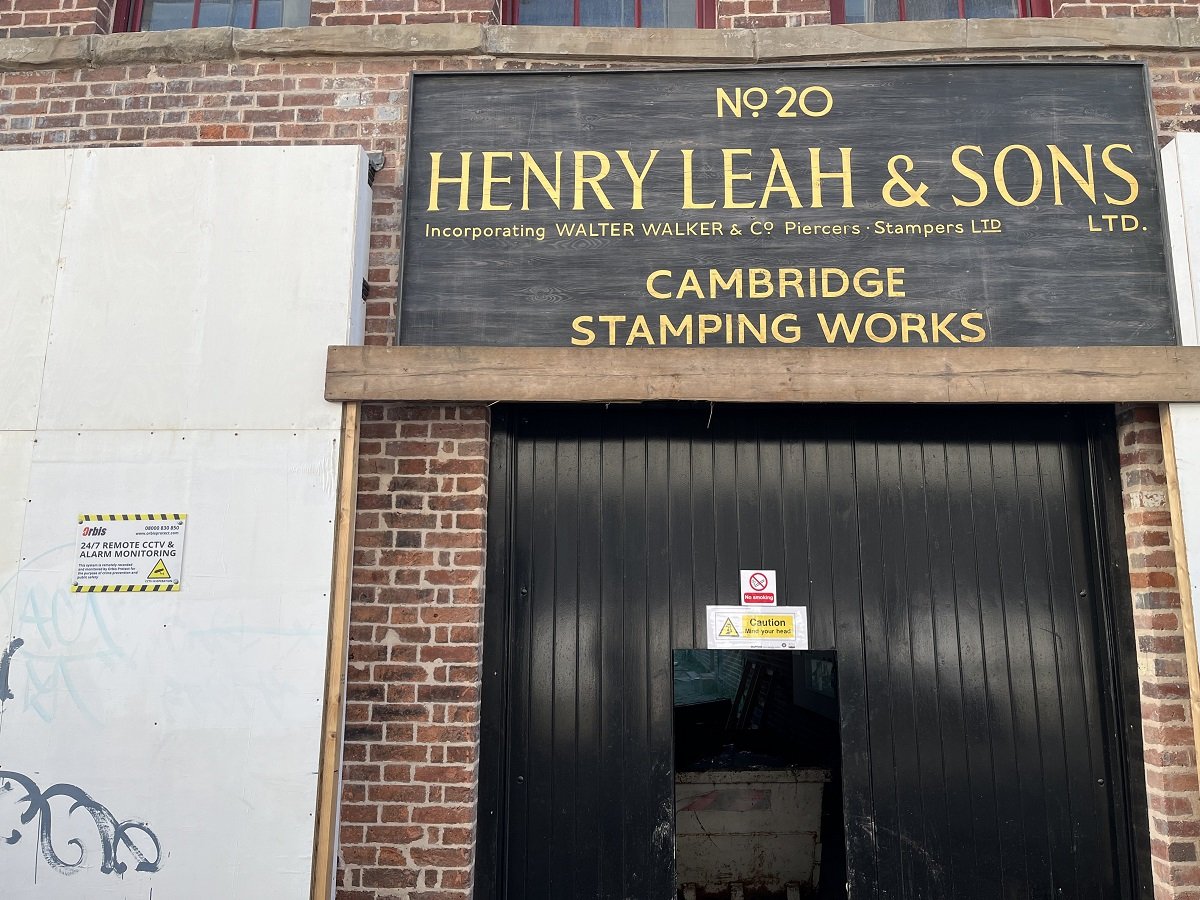
Evolution of Leah’s Yard
Towards the end of the 19th century, the introduction of steam power revolutionised the operations, powering grinding mills and drop hammers within a silver die-stamping shop. Leah’s Yard’s success lay in its adaptability, providing affordable workspace that accommodated a multitude of metal industry trades within its confines. By 1905, the courtyard of Leah’s Yard buzzed with 18 ‘little mesters’, each specialising in a diverse range of trades:
- Dram flask manufacturer
- Hollow ware and silver buffers
- Palette knife makers
- Steel fork manufacturer
- Silver ferrule maker
- Brass and nickel silver turners
- Electroplate producer
- Cutler
The front of Leah’s Yard, facing Cambridge Street, boasts a carriage entrance that opens into a quaint rear courtyard encircled by two- and three-storey brick workshops. Wooden external staircases and generous casement windows punctuate the architecture, ensuring ample natural light for the industrious souls within.

A glimpse into the future
Looking ahead to the spring of 2024, when the restoration is slated for completion, Councillor Ben Miskell, chair of the transport, regeneration, and climate policy committee at Sheffield City Council, expressed his delight:
“We are thrilled to witness Leah’s Yard achieve this significant milestone. The redevelopment of this treasured heritage ensures that it will remain a focal point in our city centre for generations to come. This new hub for independent retailers and creative workshops promises to be a modern, vibrant reflection of Sheffield’s essence – a testament to our city’s enduring spirit.”