
The other day I joined a history walk around Slawit (Slaithwaite, three miles west of Huddersfield), the speaker was the chairman of the local history society and he entitles the walk ’local radicals’, and what an interesting walk it was.
Up until recent years, perhaps one hundred years ago (and probably greatly influenced by the First World War), acceptable behaviour, or to be more accurate – unacceptable behaviour – was greatly dictated by the whim of the Lord of the Manor.
Human nature as it is, rightly or wrongly, will eventually find a way of changing the direction of the accepted view. Anybody who has been a member of a committee will have witnessed this on many occasions. Usually, it is of little importance whether to wear blue or white rugby shirts next season, or even a combination of both. And whether to fit flood lights around the bowling green or not isn’t something that is likely to change society.
However, imagine if someone in the seventeenth century was unsatisfied with the Church of England or someone in the nineteenth century wanted to introduce another political party. These people would now be regarded as cranks or eccentrics, and I suppose some may regard them as visionaries, but I’m sure they would rarely be regarded by today’s establishment as radical subversives, but they most definitely were at the time.
That unfortunate time Henry fell out with the parish committee
When Henry VIII decided to fall out with Pope because he couldn’t get his own way and established The Church of England, he had unpredictably opened the door to other people also thinking that they could introduce their own ideas for their own reasons, often I suspect because they fell out with someone in their committee. Never let it be said that I have ever fallen out with a committee.
The list of religious breakaways is almost endless, amongst others are Baptist Evangelism, Wesleyan Methodism, Quakerism, Episcopalianism, Christadelphianism, Spiritualism, Lutheranism, Calvinism, Adventism, Restorationism, Anabaptism, Pescatarianism, Vegetarianism, Veganism and of course Weightwatcherism. Many of the above may not be mainstream religions, but they will have had gatherings of like-minded people and probably a committee. To a casual observer, the beliefs of many of these would be so close to another as to be indistinguishable, but somebody will have fallen out over something.

As sure as eggs is eggs
Vicars used to be very powerful people and the local community would look to them not only for religious guidance but also as arbitrators of local disputes. There is one group within the Colne Valley who fell out with the other because the local vicar judged in a particular favour over whether an egg laid by a stray chicken is owned by the landowner where the chicken laid the egg – or the owner of the chicken. This dispute resulted in one of the above churches forming/joining another and no doubt sticking two fingers up at the original congregation while building their new church nearby.
In another example of the two-fingered salute developed during the early establishment of these breakaway chapels, during the 16th and 17th centuries, our local Lord of the Manor – the Earl of Dartmouth – refused to allow the building of any church other than The Church of England on his estate. This resulted in many chapels being defiantly built on the very edge looking into, and in many cases, deliberately looking down onto the Dartmouth estate.
Whigs, Tories and changing the story
All of the instigators of these breakaway radical groups were looked upon by the establishment as subversives and as such had to be watched and were not to be trusted. Another breakaway group that were certainly not to be trusted were the political agitators.
The Whigs who later became known as the Liberals were a group from within the aristocracy who were opposed to the power of the crown during the reign of Charles II, King of England, Scotland and Ireland from 1660 to 1685. Then in the early eighteenth century, another dissatisfied group broke away to form the Tories who later became the Conservatives. Both these parties were formed from the established aristocracy, which of course was alright then. However, changes were afoot in Slawit.
The three reform acts of 1832, 1867 and 1884 gave the vote to men who occupied property with an annual value of £10. Which still excluded about 84% of men from the voting process. This seemed to have satisfied the reformers but not the radicals, who saw these so-called reform acts as a way of pitting the power of the establishment of the towns and cities against the working masses. The working masses pressed for more.
Chartists and vanishing MPs – a spy in the ointment
The Chartist movement was becoming established around this time, they were formed from groups of the dissatisfied working classes, originally from the textile workers of Manchester. These groups were of course bitterly opposed by the establishment. It is said that the Chartist movement was the closest Britain has come to a revolution, unfortunately for the Chartists, they had been infiltrated by establishment spies and every time a riot, uprising or demonstration was organised in the northern cities, the militia was ready, and eventually the movement was beaten and fizzled out.
Luckily the suffrage (meaning a right to vote, not just a right to vote for women) movement could not be stopped, resulting in more and more men being allowed the vote and in 1918 women over 30 years old could also vote. At long last, the workers were allowed to decide a small part of their destiny.

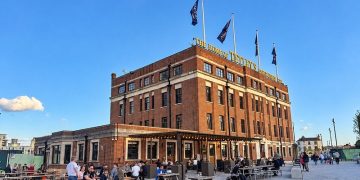
This is the house not far from the centre of Slawit where the first Independent Labour Party meetings were held in 1891. They were of course held in secret, keen to avoid the fate of the Chartist. But they eventually became established and even managed to get their candidate Victor Grayson elected to parliament in 1907, he served for the Colne Valley as an MP until 1910. His mysterious demise in 1920 has become a part of our local legend. Just as Grayson was trying to re-establish his popularity, on his way to a political meeting he vanished, never to be seen again.
The courage that carries us forward
Artisan industries were everywhere before the industrial revolution, from local blacksmiths in their small sheds, textile workers in their upstairs bedrooms, householders opening up their front rooms for meeting places and brewing beer in their back garden. All stopped when big landowners, factory owners and industrialists began to centralise this trade in factories and sweatshops, exploiting the common man and making vast profits on the sweat of the worker’s brow.
Interestingly, many of these front rooms were where the breakaway groups from within the church and politics were started, and of course, the more they drank, the braver they would talk. Even more surprising, it was in these same front rooms that the early temperance meetings took place. I’m sure a cover would have been thrown over the beer barrels during these meetings.
In many ways we are nearing a full circle. Thanks to the brave men and women of our past, all adults are now allowed the vote, we can join any peaceful group we choose, and workers have much better working conditions thanks to elf and safety.
Small artisan businesses are again cropping up everywhere. Just in the small area of the Colne Valley independent bakeries, breweries, coffee roasters and blenders, musical instrument repairers, garden centres, cafés galore and many small charities catering for and supporting the underprivileged, defenceless and vulnerable. Many of these are making use of the old weaving sheds, mill office blocks and old chapels.
The suffragists, Chartists, Luddites and many more activists have often died for beliefs that were at odds with the establishment – their steely courage and sacrifice has greatly benefited our generation and we must remember them well. Others continue to do the same throughout the world and will hopefully benefit future generations. It is with an ever-cautious optimism and a hearty sense of gratitude that this is what we may call ‘progress’.