We attended our first panto of the year last weekend. Oh, no we didn’t. It was at one of our local village halls performed by entertainers whose ages ranged between six and 90. The 90-year-old stayed mainly in the background, sang along with the chorus, and spoke a few lines. He definitely did not join in with the dancing.
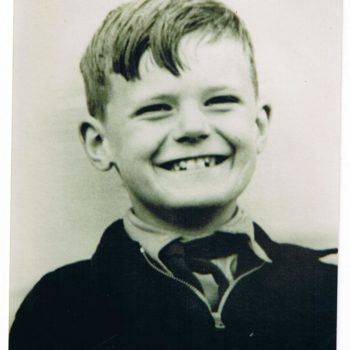
That was left to everyone else, including the six-year-old who couldn’t remember the words nor the dance. He went left while everyone else was going right, started his turn when everyone else had finished theirs, and was bounced about like a pin ball – that is when he wasn’t tripping over his own feet! But he was having a fantastic time. He had a permanent infectious grin on his face and was constantly looking down at his mum in the front row for approval, who of course was more than happy to oblige.
A part for everyone and talent in abundance
He was not the only one to forget their lines or the choreography, but this is what makes these local village productions so comforting and homely. Not only was there a great age range but there was talent in abundance. Even the young lad will find a part that will suit his talents as soon as he sorts his feet out. It was a sell-out, and we all had a great time.
The pantomime was Jack and the Beanstalk. All the main characters were girls, some wearing stick-on beards and moustaches to give the audience a clue of their character’s gender. It may be too obvious to say, but the main characters were where the talent could be found, and what talent there was.
I spoke to one young woman who stood out. I asked if she was with a theatre group or was planning to join one. But the surprising and somewhat disappointing answer to both was no – she was happy to perform at the local pantos and concentrate on her studies. Which of course is a fairy called Nuff: fair enough.
Essential components of a good panto – the more amateur the better!
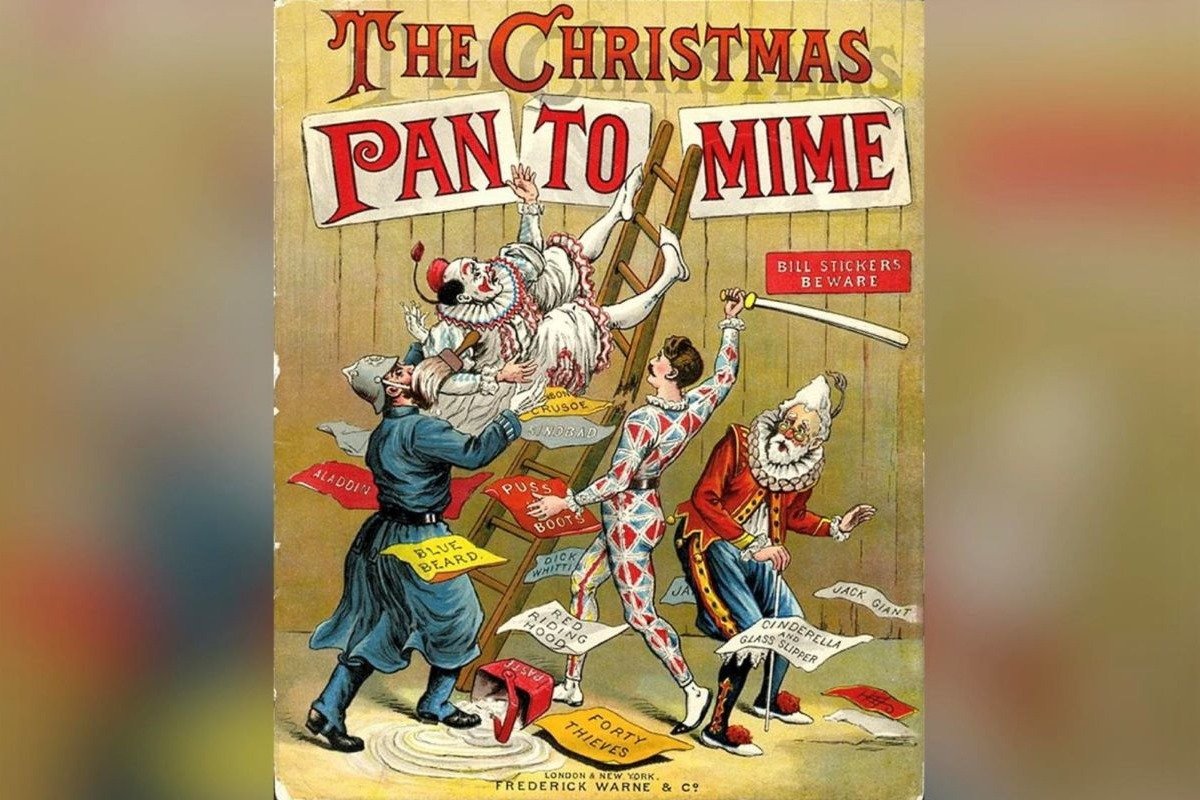
The origins of Jack and the Beanstalk seem to be from a story published in London and written by J Roberts in 1734 called Jack Spriggins and the Enchanted Bean. However, the origin of pantomime itself has its roots in ancient Greece via the 16th century Italian Commedia dell’Arte. This included song, dance and acrobatics and the cast were recognisable mischievous characters like Pantaloon and Harlequin, very much like the stock characters we expect to see in our modern pantos.
There will always be the grumpy baddy that all the young at heart can boo at when they enter the stage. There should always be a Dame, played by the local primary school headmistress; a downtrodden dad played by her husband; two ugly sisters played by the receptionists at the doctor’s surgery; a pretty maiden, played by the arranger and dance choreographer; and a handsome man that she can cuddle up to, played by the new village GP.
I prefer the amateur village pantos where things often go wrong: characters missing their entry by being too early or too late putting the rest of the cast in a complete fuddle; or a section of scenery falling over revealing one of the stage hands having a crafty fag at the back; or the backend of the cow getting stuck in the door, leaving a two-legged cow to do all the acting on its own. The more professional big theatre productions are better rehearsed by people who tend to know what they’re doing. They’re arranged well and often include great entertainers, but all too often seem to feel obliged to be smutty, and definitely lack the unpretentious, homely feel.

Cinderella: the classic pantomime
Some of the well-known British pantomimes include Dick Whittington, Aladdin and Puss in Boots. But the one panto that has all the classic characters mentioned above must be Cinderella: triumph over evil, which is a must for all pantomimes; ugly mean sisters; an equally mean stepmum; a nagged, gentle, kind father; a downtrodden pretty young girl whose job seems to be permanently cleaning out the fireplace – hence the name – but who luckily turns out to have the correct-sized feet; a kindly young lad named Buttons who just wants to be friends (sure he does); a prince, a fairy godmother and magic. What more could anyone want in a panto?
The origins of Cinderella can again be traced back to ancient Greece. There have been hundreds of variations, but the one that we in Britain would widely recognise was originally published in French by Charles Perrault in 1697 under the title Cendrillon. The name Cendrillon is a French girl’s name meaning ‘Little Ashes’. Other variations can be found in Grimms’ Fairy Tales published in 1812.
The phrase ‘a Cinderella story’, has come into use, mostly in the USA, to mean a virtuous and kind person attaining happiness and success.
The origins of nursery rhymes: gruesome and morbid
Like many nursery rhymes and fairy tales, Grimms’ Fairy Tales were not all sweet and comforting for children – in fact, some are downright gruesome. Standard nursery rhymes that we sang as kids had equally gruesome origins.
Ring a Ring of Roses has its roots in the symptoms and eventual demise of people suffering from the plague.
Three Blind Mice refers to three archbishops who were accused of plotting against Queen Mary (1516-1558 – nicknamed ‘Bloody Mary’) and burnt at the stake.
Rock a Bye Baby refers to a death wish on the young son of King James II, born in 1688. The King had earlier converted to Catholicism and the hope was if the son died, a Protestant king would replace him.
The Humpty of Humpty Dumpty was a huge cannon that was mounted on a high boundary wall of Colchester. During the second English Civil War of 1648, the parliamentarians bombarded the city, causing the wall to collapse and the cannon to be destroyed.
The Grand Old Duke of York is another military exercise gone wrong, this time during the Wars of the Roses 1455 to 1487. The rhyme immortalises Richard Duke of York (1411-1460) who laid claim to the English throne but was defeated and killed at the battle of Wakefield.
Rub a dub dub is a story set in the 14th century about a butcher, baker and candlestick maker spying on a young lady in a bathtub; or the same lecherous gentlemen attending a fairground peep show, where the act is a young lady in a bath rub. There was no internet in those days.
There are different accounts to many of these stories but the ones that I have outlined above seem to be the most popular or at least the descriptions that I like the best.
There are many more gruesome fairy tales, probably meant either as a warning or, in their morbid way, to prepare children for their likely prospects in those days – a life of sickness, death and unhappiness.
And on that cheerful note, the funniest Christmas card we have received this year included the following poem attributed to Shel Siverstein 1930-1999. It is called Snowball.
I made myself a snowball,
As perfect as can be,
I thought I’d keep it as a pet,
And let it sleep with me,
I made it some pajamas,
And a pillow for its head,
Then Last night it ran away,
But first it wet the bed.