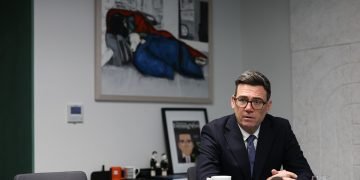




The Conservative MP for Keighley, Robbie Moore, has called for a ‘Rotherham style’ public enquiry into the sexual abuse of young girls by ‘grooming gangs’ in the Bradford and Keighley area. He is supported by two other local Conservative MPs: Philip Davies (Shipley) and Lee Anderson (Ashfield).
Bradford council review into CSE
In July 2021, Bradford City Council published an independent review by Clare Hyde into child sexual exploitation (CSE) in the city. It was commissioned by the multi-agency safeguarding board and followed the conviction in 2019 of nine men for 22 sexual offences, including rape, of two girls aged 14 who were in a care home in Bradford in 2008. The women came forward in 2014 following publication of the report by Alexis Jay into the abuse of girls in Rotherham.
The review found that some processes (identifying concerns, recording and plans for action) have improved. There was also some improvement in recognising the risks of CSE, although much day-to-day practice remained poor and was hampered by staff turnover and shortages.
The report found that the focus of work remained primarily on the child’s circumstances and behaviour (rather than the perpetrator) and the victims were deemed by professionals to be “to be making [bad] choices” or families had “failed to protect” their children. It identified weaknesses in understanding and responding to children with mental health or behavioural problems or who were misusing alcohol or drugs.
The report did not consider the characteristics of the perpetrators and gave little attention to actions taken by criminal justice agencies to bring them to justice (in part this reflects the remit of the review, but is a weakness in the report). Race and ethnicity, in respect of the victims or perpetrators, is not mentioned in the report although in places it is apparent that some victims and some perpetrators were other than ‘white British’.
Keighley MP calls for public inquiry into grooming gang
In calling for an independent public inquiry, Robbie Moore dismissed the report as “light” and “limited”. His dismissal of it appears to be based on the absence of race as a topic or a finding. He has argued that we should “call this problem out for what it is: predominantly a small minority of largely Pakistani Muslim men, in West Yorkshire including I’m sad to say in Keighley and across the Bradford district, that have been sexually exploiting young children for far too long”.
He argued that his call was justified on the basis that, “the Pakistani community are quite rightly outraged that the entire community is being branded with the same accusation. It is not fair and it is deeply offensive … This isn’t about race or pitching communities against each other, it’s about looking at the facts so we can address them head-on and move forward”.
The council responded by noting there have been 57 reports into CSE over the past six years. It argued that councils are under considerable pressure and a public inquiry would be a poor use of resources. It also said that it has sufficient information on which to make improvements to try to ensure these incidents are in the past. Moore’s predecessor Anne Cryer, who first raised concerns about CSE in Bradford, agrees with the council that the focus should be on what is happening now.
CSE and race: the evidence
A Home Office review of the research literature, Characteristics of group-based child sexual exploitation in the community, published in December 2020, found that the majority of those engaged in group-based offending in the UK were white and there was no evidence to indicate that Asian or Pakistani men were over-represented amongst offenders.
Most of the victims were also white, but this may reflect reporting constraints for girls from other ethnicities. The ‘peak’ age for victimisation was 15 with most cases occurring between ages 14 to 17. Victims tended to be looked after by the local authority, had a disability, or had a history of running away.
Most of the initial contacts and offences were locality based, and most of those offending were connected through pre-existing social networks; they did not come together for the purpose of abuse. In some cases, the motivation was financial (‘prostitution’), but misogyny and power featured more than a sexual pre-disposition towards adolescents.

International evidence on CSE and race
The Home Office paper looked only at the UK. A review commissioned by the Department for Education, published in 2015, undertook a review of the term ‘child sexual exploitation’, and how it manifested in different countries. The countries chosen were from the predominantly white Anglosphere or Scandinavia.
The report clearly shows that CSE and trafficking (in this case, the movement of people from outside or within a country for the purposes of abusive sex) is a problem in all countries and that, often-vulnerable ethnic minority girls were trafficked to countries for local white men. Similarly, white Europeans have a long history of travelling as ‘sex tourists’ to destinations such as Thailand for the specific purpose of abusing children.
However, as both studies show, interracial abuse is rarely an indication of sexual proclivity or racism, though some people consider other races less worthy of the respect and consideration they would give their own. It is a feature of power relationships, child vulnerability and opportunity. Care home staff chased away men from the gates of local authority care homes long before the Asian population in the UK was of a significant size. It is only a decade or so ago when girls under 16 were prosecuted for prostitution offences, rather than their abusers.
Grooming gangs
In Rotherham, and in other UK cities where the gangs have been from an ethnic minority, the night-time economy – primarily take-away food and taxi services – often provided the link between abusers and abused. At the other extreme, Jeffrey Epstein’s ‘grooming gang’ comprised an international network of white millionaires engaged in philanthropy and business, yet the methods used to groom and abuse vulnerable girls were identical to those used by men in Rotherham. They identified vulnerable girls, plied them with drink or drugs, established a relationship prior to passing them onto others in the network to rape, and ensured their enduring silence with violence or threats of violence.
The term ‘grooming gang’ has become synonymous with Asian men in the UK. This is not an accident. When Asian men are convicted, their race or nationality is noted in the press, while cases of ‘white British’ men are rarely remarked upon. This distorts the public’s perception of the problem and feeds into the racist trope that there is something especially bad about Muslim men.
Racism and the far right
Far-right groups that promote racism and antisemitism have been shown to hold strongly misogynist views – views that are the most dominant characteristic of those engaged in grooming gang activities. In other words, the far right and grooming gangs share a similar attitude to women and girls.
These groups may purport to be concerned about the victims of CSE but are also content to promote and support the views on which it is based. Much of the far and centre right has appropriated the suffering of victims of sexual abuse in order to create conflict and promote a culture war.
Moore may say that the issue is not about race, but it most clearly is. He says:
“I want to make the point that this is not about race or pitting communities against each other … Of course it is about looking at that common denominator, but it is no different from identifying other common denominators … the Catholic Church, for example. The reality is that we must understand the complexities that relate to a community so that we can move forward.”
The common denominator is misogyny, not race
Those “complexities that relate to a community” are not of race or nationality but of gender and misogyny, the only common denominator across all of these cases. By constructing the problem as one of Pakistani men rather than a problem of men, Moore is, perhaps unknowingly, feeding into erroneous and racist stereotypes.
It is clear that Moore anticipates that an inquiry would confirm his pre-ordained view and find that ‘political correctness’ or fears of being called a ‘racist’ will have been a major reason for agency inactivity, as it was in Rotherham. He has shown no interest in understanding the situation now or what work has been undertaken by the council, other agencies or the Pakistani community over the intervening years. His dismissal of Hyde’s review suggests he sees no political mileage in the details of a report that does not focus on race.
A public enquiry may or may not be helpful. It would be costly, lengthy and may reveal nothing new – as is often the way. Mostly, inquiries are called because of the weight of public support for voices to be heard or because people are not confident the actions taken since the event have met the seriousness of the challenge – and this may be the case in Bradford.
My concern is that Moore has already pre-determined that the ethnicity of the offenders is the common denominator in this case and should be the focus of an inquiry. This call therefore, intentionally or not, perpetuates the myth of CSE as a racial problem and the Pakistani or Muslim ‘culture’ as problematic.