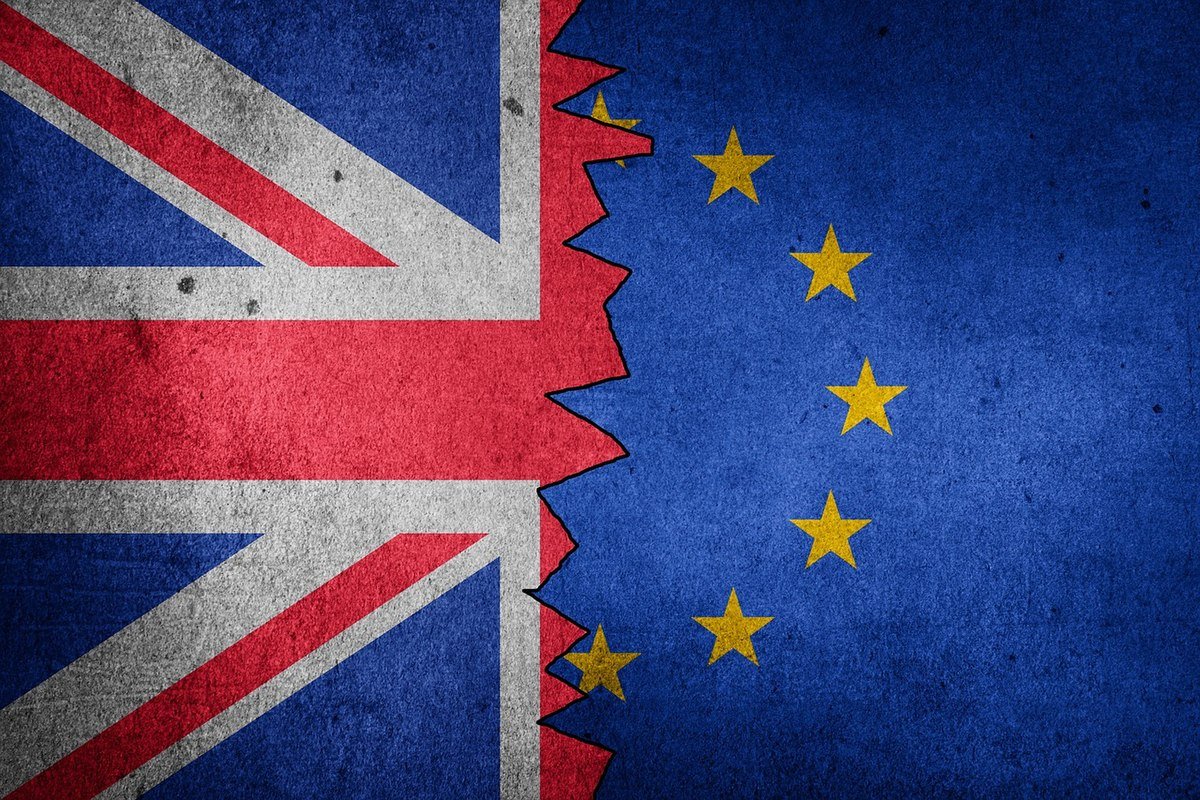
There is a grain of truth in the idea that Europe wants Sir Keir Starmer to be prime minister. With few exceptions, just about the world and his dog want the UK to be led by someone who can be trusted to uphold international law and not threaten to dump anything vaguely inconvenient, like the European Convention on Human Rights (ECHR), on the altar of political dogma.
All governments across the world prefer to deal with predictable leaders who honour the great offices of state they temporarily hold; ones they can rely on to honour international agreements and uphold the law. Doubts in UK trustworthiness have grown and the (non-EU) European Court of Human Rights, has given the UK until April to answer questions regarding credible claims of it being in breach of the ECHR.
So, what can we make of the claim that there is no political case for the UK being in Europe? The statement implies that politics and economics are separable. And that they are separable in the minds of our allies and the international community.
Economics and politics: separate or linked?
Since 1945, the UK has acted as though economics and politics are separable, especially where Europe is concerned. Starmer echoed this at Davos by suggesting that there is no political case for the UK to rejoin ‘Europe’, or in a far more limited sense to rejoin the EU, but that there is every case for sectoral, pragmatic, economic ‘allegiances and compromises’. Lammy confirmed this at the international affairs research institute Chatham House last week. There is a compelling economic case for us to be close to Europe, in a customs union, and preferably the EU’s single market which has added over 8% to the EU’s GDP. The evidence of the exponential rise in Brexit damage to us is irrefutable.
Arguably, there is no need to make any case about the UK being politically part of Europe. Politically, it is already aligned with Europe more broadly on Ukraine and defence. It took the political choice to be a founder member of the Council of Europe, aiming to be the guardian of human rights and the rule of law for 700 million people; of the European Space Agency (remember Tom Peake), of the OECD and NATO. The UK chooses to be part of European efforts to combat terrorism and cross-border crime.
In 1950, the UK took a highly political step to be a founding member of the European Broadcasting Union (hello Sam Ryder and the European Song contest), and accordingly benefit from that status by getting a guaranteed place in the contest annually.
By contrast, removing the UK from great European institutions and initiatives, like the EU and like its Copernicus satellite programme, the European Chemicals Agency and European Medicines Agency, was a political choice with politico-economic consequences.
ETIAS
Next year, the EU will implement its ETIAS electronic travel authorisation system requiring visitors to the EU and to Schengen countries to gain an electronic travel authorisation before travelling. Valid for three years, it is something that British citizens (as citizens of a third country ) will have to buy.
The UK intends to implement a similar system at the end of this year. More interestingly, Rishi Sunak is believed to want to relieve pressure at the EU‘s borders by negotiating an arrangement with the EU to allow British citizens‘ passports to be treated like they used to be, meaning like they were when we were EU citizens.
This would mean no more stamping of our passports at airports‘ border controls and speed things up. The situation at the ports, like Dover, will differ and passports will still have to be stamped and biometrics taken from all non-EU travellers. Why? because there isn’t the space or manpower or technology available at the ports to do so. Therefore, lengthy delays are likely to continue there.
Brexit was a political decision that has had a hugely disadvantageous impact on British citizens going to Europe. Reverting to the smoother arrangements we all enjoyed inside the EU would be practical and a boon. To get to that point, however, the UK must negotiate with them in a spirit of mutual respect and cooperation. No doubt, EU visitors to Britain will need the same ease of travel across the UK borders as Sunak now wants for us.

In a political web but not at its centre?
Our relationship with Europe (as opposed to just the EU) is complicated. It is irresponsible and misleading to pretend that the UK is not part of a complex web of political relationships with Europe.
Our local governments have offices in Europe because cooperation across borders brings economic, trade, cultural and sporting advantages. The UK has over 400 town twinning arrangements with Germany alone, and Yorkshire enjoys a great many others.
Mayors formed a mayors of Europe group sharing good practice across Europe on smart cities and digital transformation, democracy, clean energy and mobility, age diversity, inclusion, education, reskilling, and the green transition. Some 3.5 billion people live in cities and face similar problems.
Our universities, colleges and schools have extensive links with European counterparts which, since Brexit, have lost the EU funding – like Erasmus+ – that made visits and much else viable for ordinary people. UK professional and voluntary associations, medical groups, sports clubs and cultural groups cooperate and are members of European associations that do good for their members. Those links remain even though we have lost opportunities to inform future policies, such as key initiatives on inclusion policies for the disabled underpinning EU policies.
Our trade unions continue to have also close ties with Europe. In 2019, the European Trade Union Council (ETUC) general secretary Luca Visentini said, somewhat prophetically, that there was no form of Brexit that would improve the lives of working people. ETUC vice president Ester Lynch said that the ETUC would have to deal with the consequent disruption and monitor the needs of the workers in its affiliated members, the British TUC and the Irish ICTU.
Vikings and Celts
Politics has driven allegiances since well before the EU’s creation. While the idea of some form of a celtic union dates back to before the Romans invaded Britain, it continues to be propelled by politics and economics, as well as culture, religion and trade. Brexit spurred more recent interest in it for economic reasons, but culture and politics have sustained links across the centuries.
Baltic and maritime North Sea trade links have developed over hundreds of years, as the buildings of Baltic wharves on the east coast ports of England show. Hull’s main trading links with Scandinavia, the Baltics, Scotland and northern Europe go back to medieval times. But it was politics in 1688 and the arrival of William of Orange from Holland that shaped its future. His statue still faces the thoroughfare to the docks.
In short, our European political heritage is entrenched in the UK. We take it for granted. It seems to be an issue only for those politicians keen to reap electoral advantage by whipping up something we rarely, if ever, think about. May be the time will come when we want to savour what we have, and get back to the centre of a web of political relations we helped create.