




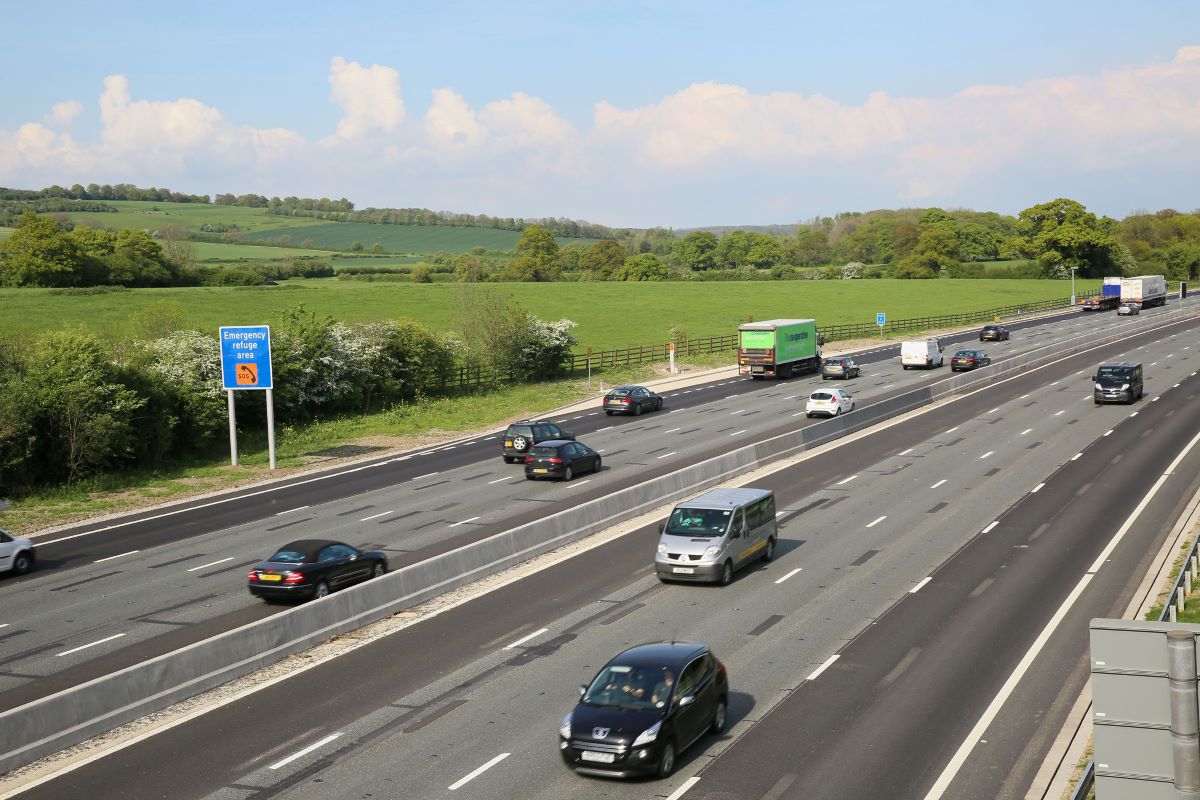
The government’s ambition to improve traffic flow and reduce congestion has not only backfired but also led to a significant loss of public confidence in the country’s transport infrastructure. In the five years to 2020, there have been 38 deaths on smart motorways, highlighting the human cost of this failed experiment.
Smart motorways were introduced with the promise of increased safety and efficiency, but they have fallen short on both counts. The removal of hard shoulders and reliance on technology to detect incidents only created dangerous situations for motorists that have led to multiple fatalities. A study in 2020 found that 91% of motorists did not feel safe on smart motorways.
Earlier this month, a coroner ruled that the deaths of Derek Jacobs, 83, and Charles Scripps, 78, in March 2019 on a section of the M1 could have been prevented had there been a hard shoulder. The series of families who suffered bereavements have put significant pressure on the government to end the scheme, including Meera Naran whose eight-year-old son Dev died after a lorry hit his grandfather’s car on the M6 in May 2018.

Inadequate planning and flawed implementation
The implementation of smart motorways was not without its flaws. Inadequate planning and underinvestment in the necessary technology contributed to poor performance and safety risks. In 2021, it was revealed that the government was warned in 2013 that smart motorways would lead to more deaths, despite the letter from David Crompton, the former chief constable in South Yorkshire Police, setting out nine reasons why the M1 should keep its hard shoulder, the plans were approved.
Smart motorways truly proved to be the litmus test of just how little the government listened to people. They were not introduced because they offered some type of superior driving experience but because they offered the government a way to extend capacity on congested motorways on the cheap. The extent of this mismanagement has been clear from the start, despite it taking the government years to acknowledge that there was a problem.
A lack of proper preparation and training further compounded the issue, leading to delays in response times and inadequate support for stranded motorists. The cost of such a failed experiment is set to cost the public purse billions of pounds. Last year the Department for Transport committed £900mn to safety improvements.
Insufficient data with disastrous consequences
Ultimately, the decision to roll out smart motorways was based on insufficient data and a lack of thorough safety analysis. It is now evident that the risks associated with the removal of hard shoulders and the reliance on technology were not fully understood. The consequence is a dangerous transportation system that has put lives at risk.
The introduction of smart motorways in the UK has been a tragic mistake, resulting in significant loss of life and public trust. The government’s desire to improve traffic flow and reduce congestion may have been well-intentioned, but the flaws in planning, implementation, and safety analysis have led to disastrous consequences.
The lessons learned from this costly experiment must be used to ensure that whilst Britain needs more motorway capacity, building it on the cheap is a dumb idea. If there is one thing, we can be sure of – there was nothing “smart” about it, nor the people who designed and approved it.


