



England’s chalk aquifers are increasingly recognised as strategic national assets. They provide drinking water, support agriculture and businesses, sustain globally rare chalk streams, and contribute to drought resilience, biodiversity and climate adaptation. Yet a question is emerging: Has the planning system kept pace with the growing scientific and environmental recognition of the importance of chalk groundwater systems?
Historically, development proposals affecting chalk aquifers have often been assessed through mitigation and risk management. Today, the Climate Change Committee (CCC), the UK government’s independent climate advisers, argue that water security should be treated with the same seriousness as other national security risks. The government itself is clear that aquifers should be viewed as critical natural infrastructure whose long-term protection may warrant a stronger precautionary approach.
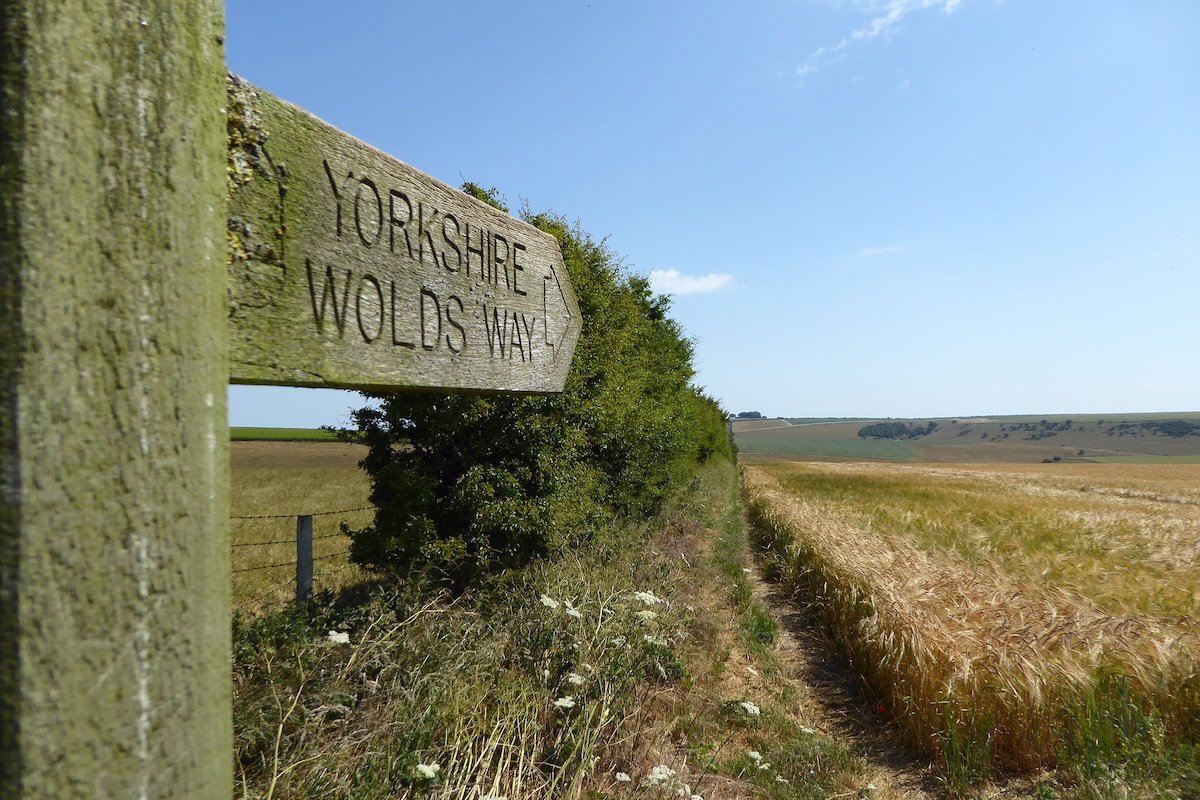
As a focus to explore that question, the Yorkshire Wolds chalk aquifer provides a contemporary example.
The Yorkshire Wolds chalk aquifer: a strategic resource
Designated a ‘principal aquifer’ by the Environment Agency (EA), the Yorkshire Wolds chalk forms one of the most important groundwater resources in northern England.
It supplies drinking water, supports agriculture and business, and sustains groundwater-dependent ecosystems, including the internationally rare chalk-stream system, the Gypsey Race.
Like chalk aquifers elsewhere in England, the Yorkshire Wolds chalk is characterised by fractures and fissures through which groundwater can move rapidly. This makes such systems productive water resources but can also increase vulnerability to pollutants entering groundwater pathways.
As concerns around water scarcity, drought resilience, climate adaptation and environmental protection grow, the strategic importance of groundwater resources has become increasingly recognised.
A changing national understanding of chalk systems
Across southern England, chalk streams have become a national conservation priority. Water companies, environmental organisations and government agencies increasingly describe chalk streams not simply as watercourses but as globally rare ecosystems requiring active restoration and protection.
Water companies such as Affinity Water routinely emphasise the close relationship between groundwater levels, river flows, ecological health and long-term resilience. Restoration projects increasingly focus on reducing environmental pressures, restoring natural processes and improving climate resilience.
This reflects a wider shift in thinking. Chalk aquifers are no longer viewed solely as water resources. They are increasingly recognised as environmental assets whose ecological, economic and social value extends far beyond water supply alone.
The question is whether that changing understanding is being fully reflected in planning and development decisions.
Yorkshire Water and the Yorkshire Wolds chalk
The Yorkshire Wolds chalk aquifer has also received increasing scientific and institutional attention. In 2025, Yorkshire Water partnered with the British Geological Survey and the EA to improve geological mapping and groundwater modelling of the Yorkshire Wolds chalk. The project was explicitly designed to improve understanding of groundwater flow, abstraction pressures, drought resilience, water quality and environmental protection.
The aquifer was described as East Yorkshire’s primary drinking water source, and the project was justified on the basis of improving future management and protection of this strategically important resource.
This investment reflects growing recognition that understanding groundwater systems is essential for future water security. Yet it also raises an important question. If the aquifer is sufficiently important to warrant enhanced scientific understanding, how should that influence decisions regarding industrial development within the same groundwater system?
An evolving approach to risk
The issue is not whether development automatically results in environmental harm. Nor is it whether risks can be reduced through engineering controls, monitoring and regulation. The more fundamental question concerns how risk is approached.
Historically, Yorkshire Water objected to proposals involving drilling within the Yorkshire Wolds chalk on groundwater protection grounds. More recent consultation responses have generally accepted that risks may be managed through conditions, monitoring and mitigation measures.
Similarly, regulatory bodies increasingly focus on risk management through permitting systems, groundwater monitoring, containment measures and environmental controls. This reflects a shift in emphasis from risk avoidance towards risk management.
The question therefore becomes: has our understanding of the aquifer changed, or has our threshold for acceptable risk changed?
From water resource to heritage asset
Recognition of the importance of the Yorkshire Wolds chalk is no longer limited to water resource management. In April 2026, East Riding councillors supported efforts to seek UNESCO recognition for the region’s rare chalk streams and called for stronger protections against pollution and over-abstraction.
This reflects a broader trend in which chalk streams are increasingly recognised as nationally and internationally significant environmental assets.
Taken together, scientific investment, groundwater modelling, environmental campaigns and calls for enhanced protection point towards a common conclusion: the Yorkshire Wolds chalk aquifer is increasingly viewed as a resource of exceptional long-term importance.
Mitigation or precaution?
A notable pattern emerges when consultation responses are viewed alongside wider public policy objectives. The EA regulates risk. Water companies seek to manage risk. Planning authorities frequently rely upon mitigation measures and planning conditions to reduce risk.
What is discussed less often is whether certain forms of development are appropriate within strategically important groundwater systems in the first place. Illustrative in this regard is the EA’s consultation response of 4 September 2025 to a current gas drilling application at Foxholes, in the Yorkshire Wolds. It explicitly states:
“Groundwater is particularly sensitive in this location because the proposed development site is within the source protection zone 3 of a Yorkshire Water drinking water supply borehole and is located upon the Chalk Principal Aquifer.”
The strategic importance of the aquifer is clearly recognised. The EA goes on to state:
“The proposed development involves deep gas exploration and well site which presents a risk to groundwater resources.”
The EA does not say there is no risk; the risk is clearly acknowledged. But the EA position throughout the consultation response is that despite the importance and sensitivities of the aquifer, they believe a mitigation-based response can reduce the risks to an “acceptable” level. Key within the EA response is the passage:
“Without this condition we would object to the proposed development … because it cannot be guaranteed that the development will not present unacceptable risks to groundwater resources.”
In other words, the EA considers groundwater risk sufficiently serious that it would object without safeguards, but that objection disappears if suitable mitigation is imposed. This is a clear indication of a risk-management rather than risk-avoidance approach.
Even where a strategic chalk aquifer and drinking water resource are acknowledged, the regulatory system remains focused on managing risk through conditions and permits, rather than asking whether the activity is appropriate in principle. This distinction is material and significant.
A question of consistency
England’s understanding of chalk aquifers is evolving. Once viewed primarily as water supply resources, they are now increasingly recognised as critical natural infrastructure supporting drinking water, food production, biodiversity, climate resilience and environmental recovery.
Public bodies are investing in scientific research, groundwater modelling and habitat restoration because these systems are considered increasingly important for future generations. Since planning frameworks appear not to be evolving at the same pace, answering the following questions is an urgent, national issue:
- If strategic chalk aquifers are regarded as nationally important assets worthy of enhanced protection, should development proposals affecting them continue to be assessed primarily through mitigation and risk management, or on whether they increase long term vulnerability in an already stressed system?
- If these systems are becoming more important in a changing climate, should planning decisions affecting them be viewed through a stronger precautionary lens?
The debate is not simply about individual development proposals. It is about how society values and protects some of England’s most important groundwater resources in an era of increasing environmental and water security challenges. As the CCC said (May 2026):
“As climate change increases pressure on water resources, the strategic value of groundwater is rising, not falling.”

Bylines Network Gazette is out!
The latest Bylines Network Gazette is out now. Become a Friend of Bylines Network or upgrade to a paid Substack subscription, and you will get access to a vital collection of citizen articles and stories.
Journalism by the people, for the people.