




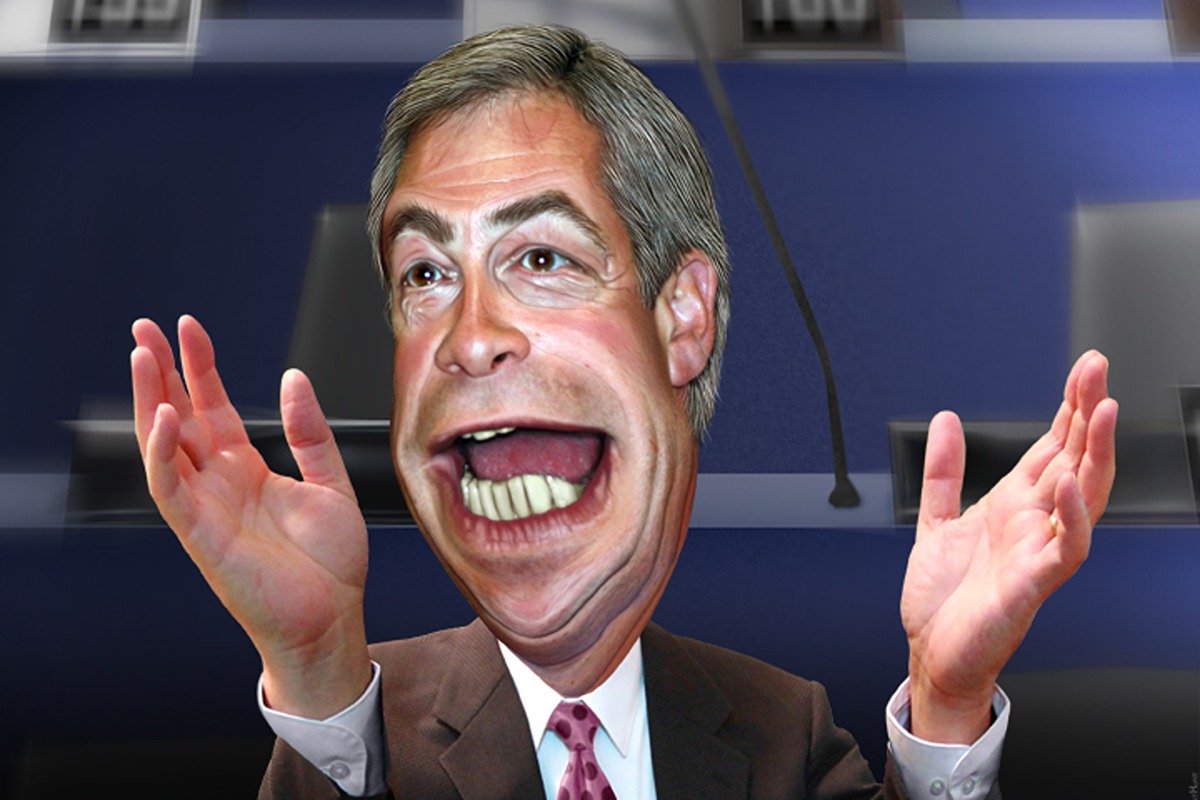
While last week’s gatherings of the Alliance for Responsible Citizenship (ARC) and Conservative Political Action Conference (CPAC) were both conservative in nature, dual-attendee Nigel Farage looked more comfortable among the Americans. At ARC in London, which loftily describes itself as a “conversation to re-lay the foundations of our civilization”, Farage had to endure Jordan Peterson probing him for his views on monogamy and the sanctity of child-centered matrimony. Across the water, CPAC puts on more of a conservative mass-market entertainment event, where he was clearly more at ease.
Speaking to the American crowd, puffing up Donald Trump, JD Vance and Elon Musk, while talking down Britain and its “miserable” lifestyle, he was in his element. Farage is clearly at ease in the place where he can be his more authentic self.
Bringing US-style politics to Britain
Founded in 2023 by GB News owners Paul Marshall and Legatum, a Dubai based right-wing think tank, ARC is British in origin though the talking points and guest speakers are clearly designed to attract Transatlantic attention. Amongst its backers are American fossil fuel interests, whose investment enables ARC’s climate change denial and its attacks on net zero – whereby factually incorrect statements were cloaked in faux intellectual jargon.
Religion was everywhere at ARC, but discussion was carefully framed around the ‘Judeo-Christian’ variety, that is, around only two of the three Abrahamic faiths. One is tempted to ask if these organisations ever consider the fact that the Greek temples and Roman statues they see as representations of western culture were dedicated to pagan Gods and sculpted in a ‘Europe’ vastly different from the imagined one they idealise.
A lot of money had been spent to attract the likes of speaker of the House of Representatives Mike Johnson, JD Vance mentor, Palantir owner, and Silicon Valley tech bro Peter Thiel, and Heritage Foundation leader and Project 2025 author Kevin Roberts, all eager to bring the message of the American radical right to Britain.
ARC is essentially a culture war show. With long words.
Farage looked happier at CPAC
This is all too frilly for Farage. At CPAC, it’s much more fun. Much more dystopian. Musk was stomping around the stage wielding a chainsaw, Trump was grandad-dancing to a gay anthem and Steve Bannon was openly triaging which Jews were worthy of American support, while denying the odd Nazi salute.
Farage’s vague refutation of an adolescent flirtation with the Final Solution notwithstanding, not so long ago he was telling Trump that Putin isn’t the problem: it’s the Jews.
Nigel goes where even Le Pen fears to tread
Even the French far right saw the problem. Marine Le Pen’s representative and certain successor, Jordan Bardella, cancelled his appearance at CPAC following the sudden outbreak of ‘Roman’ salutes there. The French have had this before, and know where it leads. It’s a hard sell in France and aligning with it could be electorally costly.
Farage, however, judged the situation differently and far from eschewing fascist-adjacent provocateurs, he shared the stage with them and relished bloviating about elections, vaccines, lockdowns, foreign aid, deportations and, of course, ‘two-tier justice’ and ‘freedom’ of speech.
It’s an easy decision for him, of course. His attention-getting presence at CPAC will cost him nothing in terms of credibility at home. He has never been properly interrogated by a journalist here in the UK, meaning that, thus far at least, he has successfully avoided meaningful scrutiny.

The Russian question
Most significantly, Farage has never been properly called to answer questions concerning his past amplification of Russian talking points. He has been accused by Keir Starmer of fawning over Putin, by Ed Davey of being a Putin apologist, and by John Swinney of being an accomplice to the Russian agenda. There are serious issues to address over Farage’s relationship with what ought to be considered an enemy state.
However, the recent victory of Trump has shifted the tectonic plates of geopolitical alliances. For the first time the US is aligning itself with Russia, seemingly against the interests of former allies in the West. Rumours are rife that Trump was targeted by Russia as an asset, code named ‘Krasnov’, way back in the 1980s. The fact that these rumours are even vaguely plausible is cause enough for concern, yet Farage has placed himself firmly in Trump’s camp.
Like Trump, Farage has never spoken against Russian interests. He has previously praised Putin and suggested he was provoked into invading Ukraine. He was the most prolific contributor to Russian state-propaganda channel Russia Today until it got banned. He had secret meetings with the Russian ambassador, which he denied until a photo appeared confirming it, and now a former Reform UK leader in Wales has been arrested on charges of taking money in exchange for making statements beneficial to Russia in the European Parliament.
A thorn in the side
When social media is your political sounding board, rather than the local streets of your constituency, point-scoring is easy. When engagement on X becomes a source of revenue rather than a genuine conversation with voters, controversy becomes a close friend. But the closer Farage gets to power, the more he will have to engage with serious media outlets and the more acceptable to the mainstream he will have to become.
In turn the more his base will feel betrayed. Disavowing Stephen Yaxley-Lennon aka Tommy Robinson potentially cost him $100mn in donations from Musk. Being forced to admit, when absolutely pushed, that Volodymyr Zelenskyy is not a dictator, runs contrary to all the subtle dog-whistles he has given out. Being in power has its disadvantages. It’s much easier to remain a thorn in the side of those in charge (which is tellingly the name of his personal limited company). Whatever Farage plans for his future, the UK political media must start to do its job.
The media must do better
Until now Farage could seek refuge in his status as an outlier in British politics, portraying himself as a maverick standing up for the little man against all manner of elites. Being treated as a celebrity rather than as a politician protected him from substantive interrogation over his policies and influences. But he has been an MP for nine months now and is leader of a political party which he never stops announcing will win the next election.
The fact that, in contrast to France, standing in the shadows of Nazi salutes won’t put his popularity in the shade is something the UK media needs to ask itself serious questions about.
At some point the kid gloves must come off.






