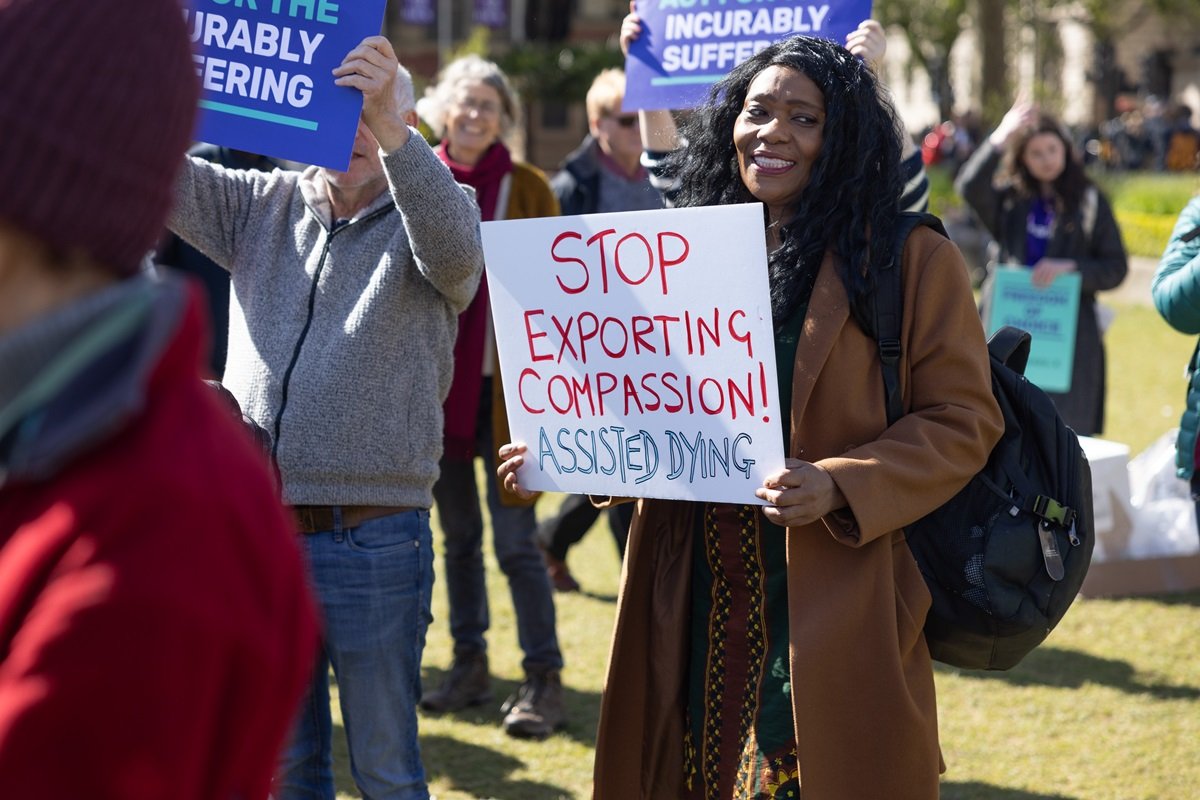
Kim Leadbeater MP has announced that she will introduce an assisted dying bill in the House of Commons. This is an historic opportunity for our country. At My Death, My Decision, we welcome this long-overdue step and celebrate the chance for real progress on an issue that has been stalled for far too long. But as we stand on the brink of meaningful reform, it’s crucial that we don’t make the same mistake we’ve seen in previous proposals.
Assisted dying bill
Kim Leadbeater has said that her law would only be for people who are terminally ill, although she says she is listening to people on all sides of the argument.
Limiting the law to only the terminally ill – those with fewer than six months to live – would fail to address the needs of countless people who suffer intolerably from incurable conditions but who do not meet the narrow definition of terminal.
When we talk about the right to die, we are talking about the right to dignity in the face of unbearable suffering. And that suffering is not exclusive to the terminally ill. Imagine living with multiple sclerosis, locked-in syndrome, or Huntington’s disease – conditions that may not claim your life within six months but make each day an agonising experience. The physical and psychological torment faced by individuals with these diseases can be just as profound.
Take the case of motor neurone disease, for example, a condition that relentlessly strips individuals of their ability to move, speak, and even breathe, yet can take years before the end is near. By the time a terminal diagnosis is declared, many patients will have already spent months or even years in agony. Is it compassionate to force someone to live through years of anguish, only to offer them a choice when they no longer have the faculties to decide for themselves?
Include more than the terminally ill
This is why I am urging Kim Leadbeater and her fellow MPs not to limit the debate or any subsequent law to the terminally ill. If we are truly committed to giving people control over the manner of their death, we must extend this right to those suffering unbearably from incurable but non-terminal conditions. To ignore this group is to deny them the same dignity and compassion that the proposed law seeks to provide.
Past bills have excluded this critical category of people. The narrow criteria, centred around the terminal diagnosis of less than six months, would not have helped more than half of the British citizens who travelled to Switzerland for an assisted death. The law as it stands in England and Wales fails them, forcing people to leave the country to seek the compassion that they are denied at home. This is not only unfair but deeply cruel.

Strong safeguards in place where assisted dying laws exist
The argument often used against expanding the scope of assisted dying is that it could lead to abuse, or that vulnerable people might feel pressured to end their lives prematurely. But these concerns are unfounded when strong safeguards are in place. Over 31 jurisdictions now across the world, representing nearly half a billion people, have successfully implemented safeguards to protect vulnerable people while respecting the autonomy of those who wish to end their suffering on their own terms.
Now is the time for England and Wales to join the ranks of compassionate nations that recognise the right to die with dignity should not be reserved for those on the brink of death. We are advocating for a law based on evidence, one that balances individual choice with the necessary safeguards, ensuring that mentally competent adults who are suffering intolerably, regardless of a terminal prognosis, can make a decision to end their lives with dignity.
Dignity at the end of life
This debate must include the voices of those who are intolerably suffering from incurable conditions. This is not just an issue of life and death; it’s about what kind of society we want to be. Do we want to be a society that prolongs suffering unnecessarily, or one that offers compassion, choice, and dignity at the end of life?
The introduction of this bill is the most important opportunity we’ve had in a decade to change the law. It’s time to show that we value human dignity enough to give people the right to choose when they’ve had enough suffering. It’s time to expand the assisted dying law beyond the terminally ill.
The voices of those with incurable, intolerable conditions must not be silenced any longer.