



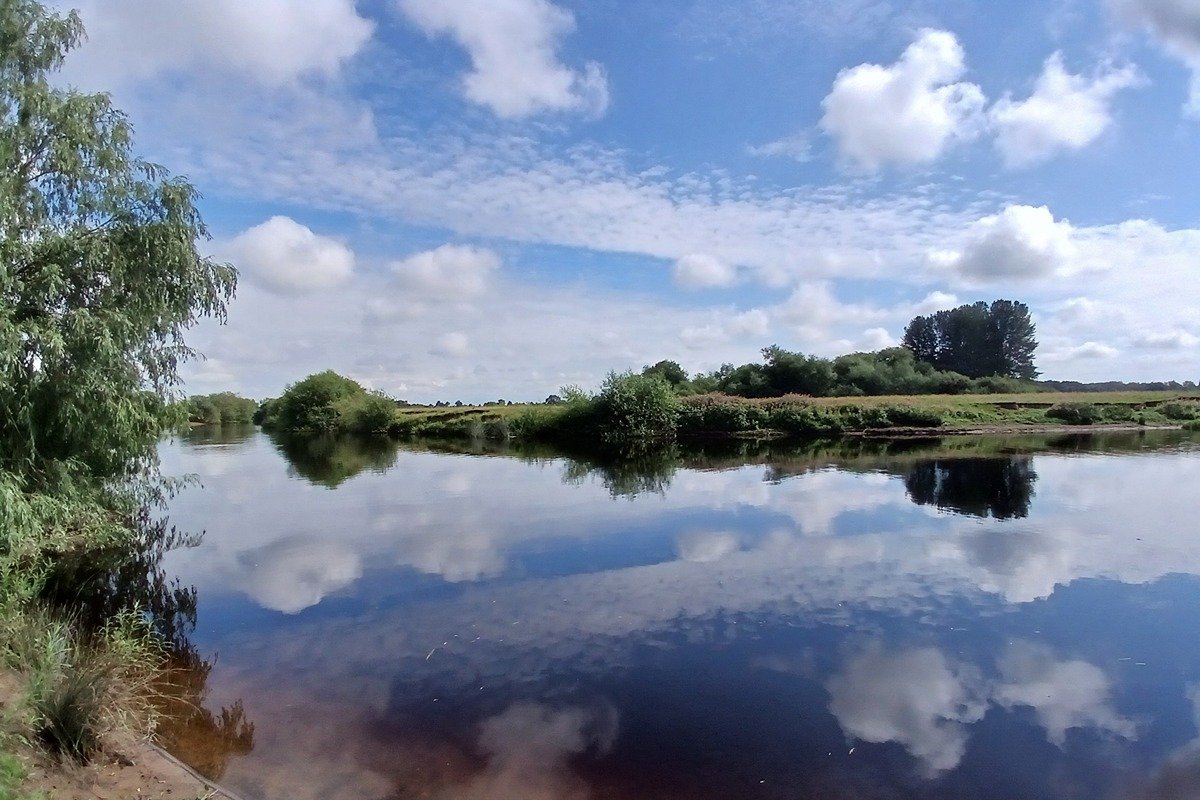
Sampling conducted by anglers and ‘citizen scientists’ at the start of 2024 painted a devastating picture of the state of UK rivers and waterways.
From July 2022 to July 2023, 83% of rivers monitored in the UK failed the phosphate standard for good ecological status in at least one test. On regular sampling, 163 rivers and 44% of site averages failed to meet the England-wide upper standard for good ecological status.
Yorkshire rivers have among the highest phosphate levels nationally
Yorkshire catchments with the highest average phosphate levels were the Swale, Ure, Nidd and Upper Ouse. The river Wharfe also recorded individual phosphate readings that were almost 20 times higher than the natural level of 0.1 milligrams per litre. Elevated levels of phosphates and nitrates in rivers cause eutrophication, where nutrients accumulate in a body of water leading to an excessive growth of microorganisms such as algae, which in turn leads to a depletion of oxygen and a harmful impact on marine life. Systematic pollution in riverways comes mainly from agricultural runoff and sewage spills by water companies.
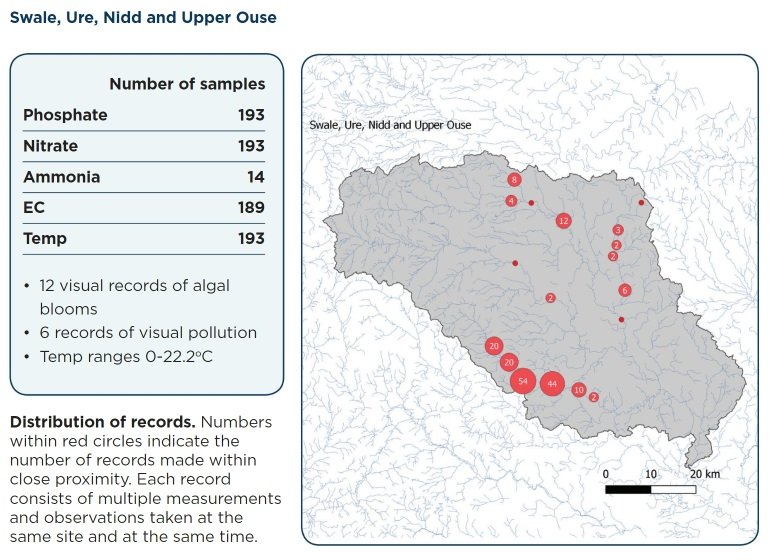
(EC stands for ‘electrical conductivity’. The higher the reading, the higher the concentration of dissolved charged chemicals in the water. Higher temperature can increase the toxicity of certain compounds.).
Many individual sites sampled in Yorkshire were 10 times higher than the official government guidance, (rivers should not exceed annual mean phosphate concentrations of 0.1mg per litre). Some samples were 20 times higher than that.
| River | Location | Phosphate concentration (mg/l) |
| Nidd | Darbys Pool | 1.04 |
| Nidd | Adjacent beach pool | 1.5 |
| Nidd | Beck below (multiple samples) | 1.91 |
| Nidd | Beck below (multiple samples) | 2.5 |
| Swale | Above Easby Sewage works bottom pipe | 2.2 |
| Swale | Below Easby sewage works bottom pipe (multiple samples) | 2 |
| Swale | Easby Sewage Works Bottom Pipe Below (multiple samples) | 2.2 |
| Wharfe | Arthington (multiple samples) | 1.29 |
| Wharfe | Arthington (multiple samples) | 2 |
A report from Angling Trust commented:
“We have faced obvious pollution issues, right across the country, yet there has been a hugely frustrating lack of information and transparency from regulators, the water industry and the agricultural sector.”
It also highlighted that ‘citizen scientists’ should not be viewed as a replacement for statutory monitoring by government bodies.
“This low-cost citizen science water quality monitoring is not intended as a replacement or rival for statutory monitoring which is the responsibility of the Environment Agency and Natural Resources Wales. Instead, it is a powerful complementary measure … Phosphorus is the main cause of eutrophication in freshwaters, and is recognised by EA and NRW as a significant cause of water quality failures.”
End the national scandal of river pollution
Pete Devery, the environment communications officer for the Angling Trust, told Yorkshire Bylines:
“With the lack of consistent water testing for pollution by the water regulators, it is due to the efforts of the citizen science volunteers of the Angling Trust Water Quality Monitoring Network (WQMN) that we know about the appalling conditions in our rivers. Across the Yorkshire rivers, there are over 30 hotspots that regularly record extremely damaging levels of phosphate – largely due to sewage pollution.
“The results of tests conducted by WQMN volunteers inform the Angling Trust and Fish Legal campaigns to hold polluters, and regulators to account and we continue to pressure the Environment Agency, industry regulator Ofwat, and the new government to clean up our rivers and end the national scandal of river pollution.”
Jamie Cook, chief executive of the Angling Trust said:
“The Angling Trust’s WQMN initiative harnesses the passion our members have for rivers and enables them with tools and training to create a rapidly expanding community of citizen scientists who monitor, understand, and actively contribute to the preservation of their local rivers.
“Due to regulatory failures, it often falls to the Angling Trust’s sister organisation, Fish Legal, to take legal action against polluters on behalf of anglers. The first annual WQMN report proves that across the country rivers are suffering from too much phosphate which is extremely damaging in freshwater. We need to see much more enforcement and an update of existing laws to tackle the scourge of river pollution and hold polluters to account.”
When rivers and waterways die: Lake Windermere
Sadly, we are witnessing the real-time collapse of England’s largest lake. There has been a national campaign to save Lake Windermere from the excessively high nutrient levels which are destroying it. Only recently, extensive algal bloom on the lake was reported. Cyanobacteria concentrations observed exceeded World Health Organization limits for recreational use of the lake.
Save Windermere has attracted prominent national celebrity support, but despite this, the campaign has had to turn to a statutory nuisance claim against United Utilities for their sewage discharges. The lead campaigner, Matt Staniek, commented on social media: “This analysis reaffirms our stance that the Environment Agency’s monitoring, warnings, and actions with regards to BGA [Blue Green Algae] on Windermere are woefully inadequate, not fit for purpose and pose a risk to public health.”
Is time running out for our rivers and waterways?
Back in Yorkshire, it is primarily volunteers and campaigners who are monitoring rivers and waterways, rather than extensive government agency engagement.
At present, volunteers from the Angling Trust take part in regular monthly sampling, which is then compiled into an annual report. The next report from the Angling Trust is due out at the end of the year, but it will likely contain no surprises, either regionally or nationally, only give more damning information regarding a woeful level of inaction from government bodies tasked with the job.
The strain on our rivers and waterways to ‘breathe’ is such that, by the time these reports are released, it may be too late.