

I think it fair to suggest that most people have an interest in something, this interest may develop into a love, passion, fascination or obsession. In my humble opinion, I think it also fair to suggest that these feelings can appear out of nowhere and can control our lives hopefully in a nice way, and in a way that does not harm ourselves or anyone else. Nevertheless, they can also be very difficult to explain, if explanation is necessary.
I was reminded of this during a recent conversation I was having with Moi about our many motorcycling tours around Britain and Europe. We often do this and remind ourselves about the fantastic places we visited and the wonderful friends we made on the way.
Ride of the Valkyries
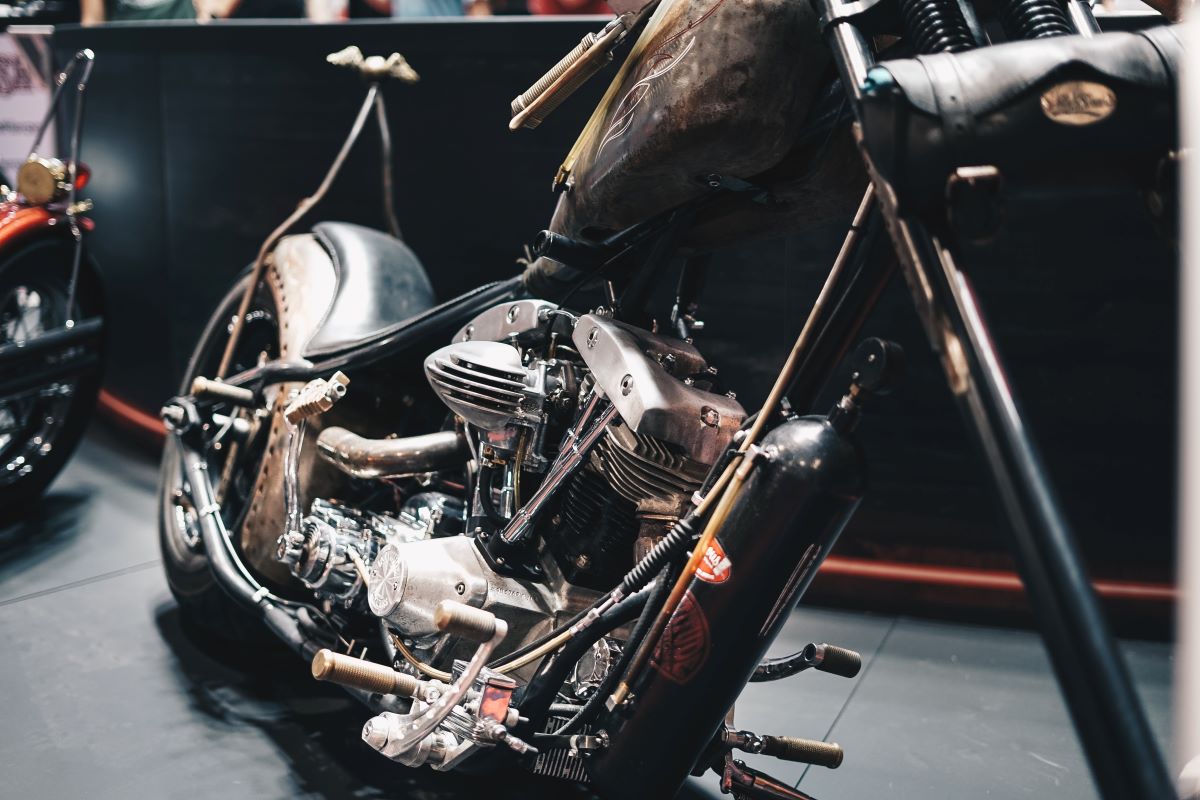
Our most recent bike was the Honda Goldwing 1500, probably the biggest and heaviest standard production motorcycle of the time. It had a 1500cc flat six-cylinder engine – about the same size as the largest petrol engine Ford Escort. Many bikers disparagingly describe the Goldwing as a two-wheeled car, because of its size and weight and because it also had a reverse gear.
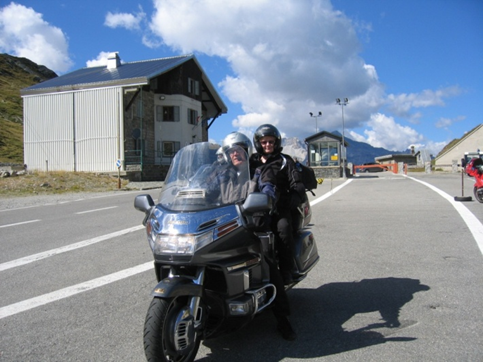
This photo was taken at the France-Italy border in 2008. As can be seen, the pillion passenger sat higher than the rider and had an armchair of a seat with armrest and back support. In the biking world this is a ‘queen seat’, Moi often described this as being sat up there like Lady Muck.
The bike also had an intercom and a radio cassette player, our favourite piece of music being extracts from Wagner’s Ring Cycle, particularly The Ride of the Valkyries and Siegfried’s Funeral March – rousing stirring stuff. Nothing better than riding along an empty European road on a warm, sunny day with a bit of Wagner blasting out, very apt in Germany of course. However, it wasn’t possible to sit back, relax and listen to anything while travelling at 120 mph on the German autobahn, all concentration was taken up by watching for anything flying up from behind doing another 50 mph faster.
The mystery of gears
One thing that often took Moi’s attention was the moments that could be described as a fascination that came out of nowhere and difficult to explain, if explanation is necessary, and that was watching me change gear.
Part of this fascination developed with the mystery surrounding why we have to change gear at all. It is a series of movements that do not, at first glance, appear to gain anything; a bit like patting your head and rubbing your belly then we go faster, and of course, there is a certain amount of logic to that thinking to a non-driving passenger.
Even to some drivers, this whole process appears to be a mystery, the t’internet is full of drivers who have forgotten the difference between left and right and arse and elbow.
The position of the brake and accelerator was standardised about 100 years ago. In a car, the accelerator is on the right and the brake is to the left of that. YouTube shows many people pressing hard on the right-hand pedal presumably thinking it’s the pedal to its left and continue doing so until they run into something, even then, in a panic, they press even harder … with the inevitable consequences.
The clutch and gear change arrangement is where things really get complicated. In manual gearbox cars the clutch pedal is on the far left and the gear lever is usually between the two front seats. In an automatic, the clutch pedal is missing and, ideally, to save confusion, so should your left leg.

Zen and the art of motorcycle clutches
All this is different on a motorcycle, although to satisfy the laws of nature, left and right are still in the same place. Each manufacturer of the smaller bikes and scooters sold in their millions in Asia and elsewhere have their own ideas where the accelerator, brake, clutch and gear change should be.
Many just have a go-and-stop system. The go method is the only standardised item on all motorcycles and scooters, that being the twist grip on the right-hand handlebar. On nearly all big bikes all four stop, go, go faster, and slow down quicker, are in the same place. The accelerator can still be found on the right-hand handlebar and that is where the front brake lever is found, possibly along with lights, horn, starter button, cruise control and all that malarkey. On the left handlebar is the clutch lever with possibly the turn signal and other bits and pieces.
The feet have less to think about, the rear brake is on the right and the gear change on the left, unless of course when it isn’t, and it isn’t on older British bikes. Sense eventually prevailed and the newer British motorcycle manufacturers followed the rest of the world, so now all big bikes are standard as in the gear lever is definitely on the left. The only confusion that is then left is which way to press down or lift up the gear lever to engage first and subsequent gears.
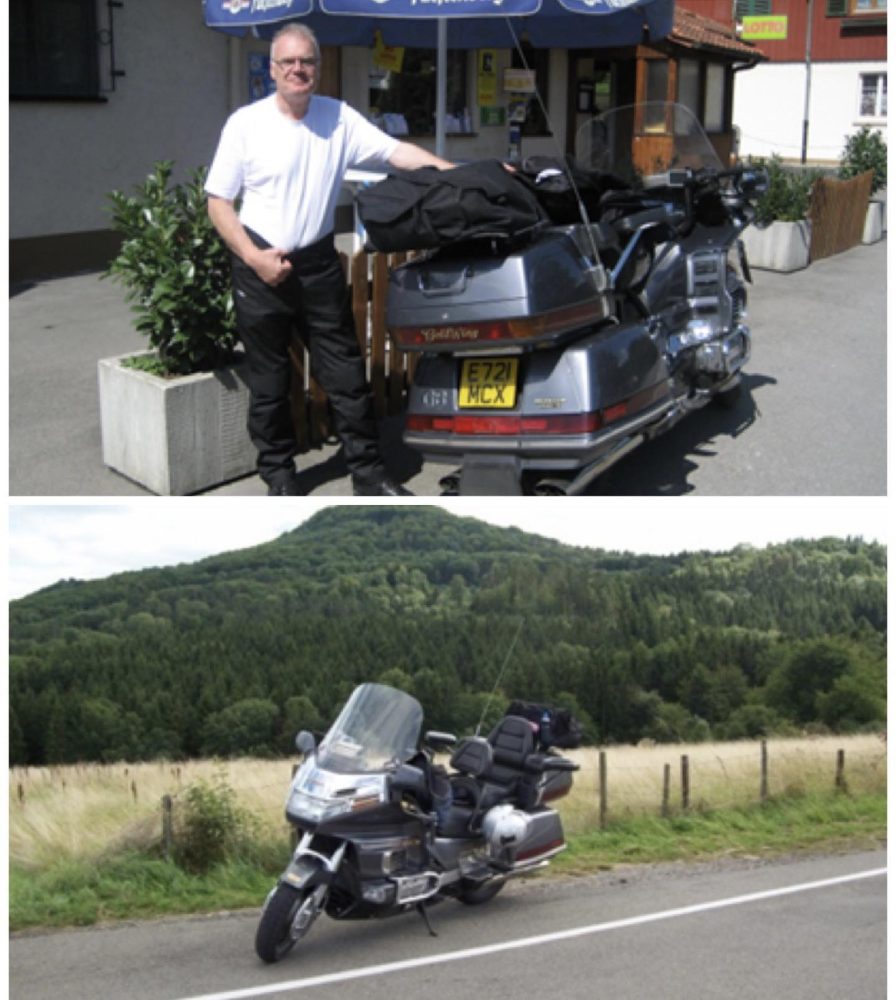
The Goldwing is an ideal cruising motorcycle but it’s a big lump. The photo on the left was taken near the Hohenzollern Castle, East of Strasbourg near the France/German border.The photo on the right was outside one of the dozens of European cafés we have visited. Just like the W.A.R.T.S. walking group we had to visit a café on route sometime.
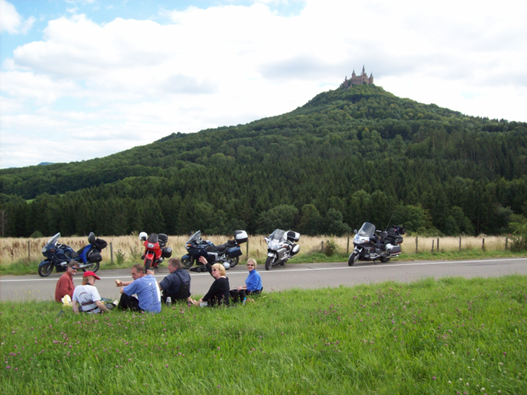
I had to ask Jacqui, one of the riders in this photo, if she could remember the name of this castle, and apart from giving me the location this is what she wrote:
“I remember stopping on the way back down from there for a picnic in a field by the side of the road. We had classical music playing from your bike, a Goldwing?. It was one of those special moments that stay with you”.
Let’s now get back to Moi’s fascination.
To simplify the sequence of changing gear on the wing, I had to simultaneously twist the throttle forward on the right-hand handlebar, pull in the clutch lever on the left-hand handlebar and select the appropriate gear with the left foot, all this is done in less than a second and one of the many enjoyments Moi got from our biking tours. It’s a funny ole world innit?