As the Covid inquiry continues to reveal systemic failings at the heart of government, it is instructive to revisit what was known well before the latest revelations. In early April 2020, I wrote a piece for Yorkshire Bylines in response to the Scientific Advisory Group for Emergencies (SAGE) publication on 20 March of the background papers to, and records of, their meetings. Even at this early stage in the pandemic, it was evident that the choice of questions to ask of scientists and the choice of data was influencing policy decisions in ways that would have serious and deleterious impacts on many people, primarily children and families and those reliant on social or familial care. There was an evident Anglo-centric and masculine bias inherent in ‘the science’ informing government Covid decisions.
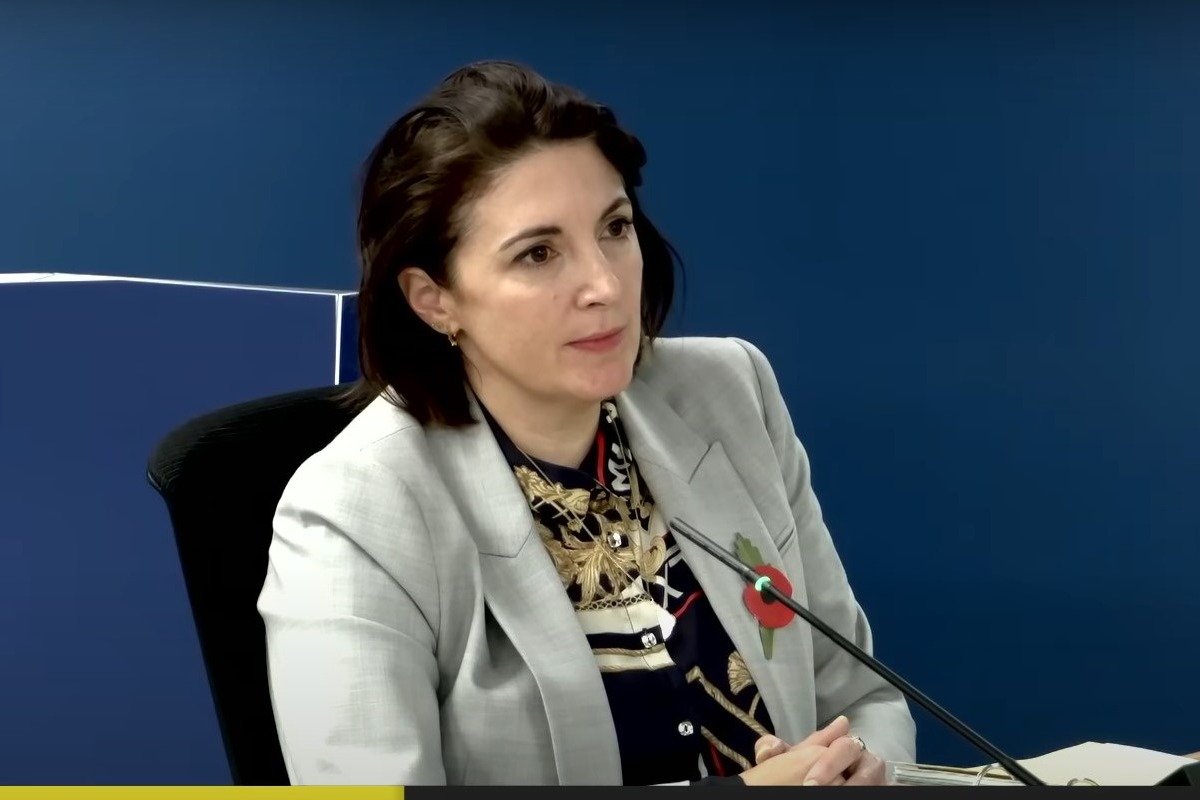
The evidence given to the Covid inquiry this week from Helen MacNamara (previously deputy cabinet secretary) revealed further how these biases impacted adversely on decision-making. Close attention should now be given to her concerns about the structural, institutional and cultural biases at the heart of government.
Scientific authority: whose data counts?
Back in April 2020, I found that ‘the’ science in the SAGE papers was “recent, theoretical, UK-led and data driven … data science over learned ‘on the ground’ experience such as that accrued in South East Asian countries in the SARS outbreak of 2003”.
The questions being asked of SAGE and the data selected to inform them reflected Dominic Cummings’ drive to fill government posts with “data scientists and software developers; economists; policy experts; project managers; communication experts; junior researchers”. I concluded that “while ‘the science’ influenced government policy, government policy was also driving the science, at least in so far as what ‘counts’ as authoritative” for policy making and was the “same belief in British exceptionalism and superiority, ‘we know best’, that has characterised the Brexit negotiations”.
As well as an Anglo-centric bias, the SAGE papers also revealed “an inappropriate gender bias”. The government was concerned about dissident male behaviour if a lockdown was imposed but gave almost no attention (and undertook no research or data on “the risks of (primarily) women not being able to find food for their families or care for their children” or women “return[ing] again and again to empty [supermarket] shelves in between their nursing or care shifts”.
I was concerned that the dominance of the ‘medical model’ and focus on hospitals took attention away from nursing and care in people’s homes or care homes and “[neglected] the continuing need for social care and nursing input, care that is primarily dependent on a largely female paid and unpaid workforce who may not be in a position to provide it”.
I concluded that “other voices and approaches beyond the masculine, British-centric, big-data approach to managing the coronavirus need to be sought. Partial or biased data and science leads to partial or biased policies and approaches”. These fears were realised over the course of 2020.

The Covid inquiry
This week MacNamara gave evidence to the Covid inquiry and described a “macho and egotistical culture” where “women were talked across, were invisible, in the back of meetings or not in the room” and there was some “obvious sexist treatment”. They “had to turn their screens off or were sitting in the back row”. “Junior people were talked over” and “no women contributed to the policy discussions”. On her return to work after her own bout of Covid in late April, women were almost entirely absent from decision making.
MacNamara described an “absence of humanity” in some of the “cold” discussions in No 10. There was a “lack of care” for some members of the public especially more disadvantaged groups – black and minority ethnic people; women as mothers and carers and those needing pregnancy, birth or abortion services; those experiencing domestic abuse including children, and people with disabilities or mental health problems. She said the “impacts on women and children were not properly appreciated” in policies around school closures, childcare, carers, informal networks of care and single parents.
MacNamara was concerned about whether policies were “compounding or correcting inequalities” and where policies impacted adversely on groups, action should be taken to mitigate them. She thought some people might have died as a result, referencing women and children experiencing domestic abuse. She also said that measures were not taken to mitigate policies if the problems were “not showing up on the data” and questioned “what is a countable thing?”. She found government was constantly looking for “more precise data about a particular set of things” rather than looking more widely for information and advice that might inform policy better.
Ignorance and neglect
The government did not exercise its ‘duty of care’. MacNamara found the needs of other vulnerable groups such as prisoners with no control over their living environments (or their families if discharged with Covid) were not addressed in the early days, nor were people working on the front line in public services such as health care professionals, social care staff, teachers and prison officers, and there was correspondence documenting her efforts to ensure PPE, especially respirator masks, was appropriate for the bodies of women (77% of health and social care staff are women).
MacNamara noted that those making the decisions were often unfamiliar with the lives of ordinary people and families “whose children did not have the same privileges as those around the table” (she was one of the few whose children went to state school) and she found the discussions were “disproportionately about shooting and football”.
Government staff and ministers were poorly supported. MacNamara said there were no plans or thought given to what should happen if those in government or their families were ill, or there was a bereavement and she was unable to obtain additional counselling support for staff, some of whom were working in extremely pressured roles and whose families were also affected by covid or lockdown.
As described to the inquiry by a range of witnesses including MacNamara, No 10 appears to be a workplace run by men for men which assumes there is a ‘wife’ at home to take care of the health, familial, social and emotional labour of the family while men in government were responsible for acting “heroically” (MacNamara’s word) and “rationally” in making big decisions.
MacNamara’s view was that there should be “structures to prevent you not noticing the impact of the decisions you were making”. This required diversity within the civil service and/or access to people who could provide a different view. She thought those making decisions were often far removed from the day-to-day lives of ordinary people.
The future
A ‘masculine’ approach to policy making is often driven by power and rationality (an ethic of justice) while a ‘feminine’ approach is more contingent and relational (an ethic of care). Of course, these are not absolute, but one set of approaches is more associated with one gender than the other both in the research literature and in the minds of the public.
The government was hyper-masculine in its approach and this was evident as early as March 2020 when the SAGE papers became publicly available. The questions asked of SAGE showed a masculine mindset or bias so it was inevitable that the policy conclusions would do likewise without additional, feminine, input.
It seems extraordinary now, that the government paid so little attention to how the care sector worked (this was also very evident in the Cygnus, pre pandemic, planning) and its gender bias was largely responsible for this failure. It found the sector confusing, with a mix of familial, social and paid care, lacking in ‘organisation’, and so decided to exclude it from the discussions and consultations because it could not control it.
The government focus on hospitals, deaths, (erratically imposed) movement control measures and the economy, things that could be readily quantified, was not necessarily wrong, but its failure to attend to and then mitigate the likely impacts of their decisions on disadvantaged groups caused immense harm. This has left bereaved families and long Covid sufferers feeling that, in the worst crisis of modern times, the government disregarded them in its drive to ride out the disease.
The approach – to implement and enforce major policy decisions without plans to implement them properly or mitigate the problems, and then blame others for their failure –is reminiscent of the same macho, UK exceptionalist approach to Brexit. Both were driven by Cummings who values a masculine, non-relational understanding of data and policy formulation. His attempts to rid the Cabinet Office of MacNamara reflected his concern that she would bring an ethical dimension to the discussions and it would get in the way of the ‘real’ job of governing:
“If I have to come back to Helen’s bullshit with PET [propriety and ethics] designed to waste huge amounts of my time so I can’t spend it on other stuff – I will personally handcuff her and escort her from the building. I don’t care how it is done but that woman must be out of our hair – we cannot keep dealing with this horrific meltdown of the British state while dodging stilettos from that cu*t. [sic]”
This failure to consider impacts and to mitigate them has also allowed (equally macho) lockdown sceptics to argue that it was lockdown itself that failed and, in future, no measures of control should be imposed. These sceptics are using the same data and asking the same questions as the government, as though it is a war about who is ‘right’ rather than how can we ensure the wellbeing of, or minimise the harm to, all citizens and seek the right information to guide the government in that task.
Unless the government now takes steps to ensure that decisions are made utilising the experience and views of a wider range of the population and is informed by data and research that encompasses a wider range of needs and impacts, we will have learned nothing.