“Life on planet Earth is under siege. We are now in an uncharted territory.” These are the first two sentences of the recent State of the Climate Report, which was published last week. Leading scientists from around the world produced a frank assessment of the multiple climate-related records which were broken in 2023 and the increased pace of climate breakdown.
From Antarctic Sea ice extent figures to world surface temperatures, the report highlighted the climate anomalies that are now being recorded, far beyond historical ranges. The report stated bluntly, “Unfortunately, time is up. We are seeing the manifestation of those predictions as an alarming and unprecedented succession of climate records are broken, causing profoundly distressing scenes of suffering to unfold. We are entering an unfamiliar domain regarding our climate crisis, a situation no one has ever witnessed first-hand in the history of humanity”.
These changes are the more shocking when it is considered that they have been recorded in the past 40 years alone. “In 2023, we witnessed an extraordinary series of climate-related records being broken around the world. The rapid pace of change has surprised scientists and caused concern about the dangers of extreme weather, risky climate feedback loops, and the approach of damaging tipping points sooner than expected.”
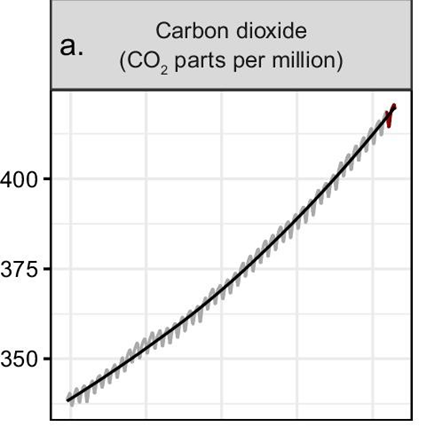
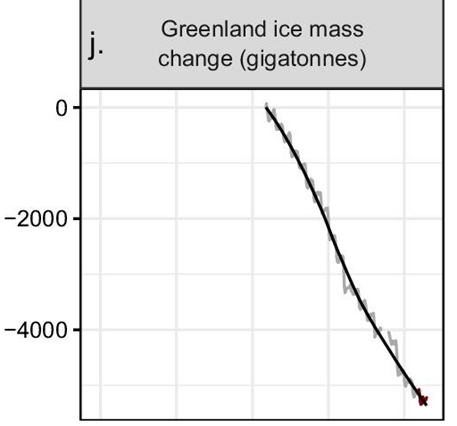
These graphs support the view that the climate emergency is now becoming an existential threat. “The global average carbon dioxide concentration is now approximately 420 parts per million, which is far above the proposed planetary boundary of 350 parts per million (Rockström et al. 2009).” The report did not shy away from assigning responsibility for these drastic changes to Earth’s systems. “Anthropogenic global heating is a key driver of many of these recent extremes.”
It continued in its acknowledgement of cumulative historic emissions from fossil fuels, but that future fossil fuel use must be eliminated. “The elevated rates of climate disasters and other impacts that we are presently seeing are largely a consequence of historical and ongoing greenhouse gas emissions. To mitigate these past emissions and stop global warming, efforts must be directed toward eliminating emissions from fossil fuels and land-use change and increasing carbon sequestration with nature-based climate solutions.”
We are in uncharted territory
One of the report’s leading authors, Dr William Ripple, distinguished professor of ecology at Oregon State University, told Yorkshire Bylines:
“Although average temperatures have been rising for many years now, the number and extent of records set in 2023 have made it clear we are in uncharted territory. We are concerned that this will result in a dramatic increase in the frequency and severity of climate-related extreme weather, including heat waves, storms, floods, and wildfires.”
He continued,
“In short, it appears that as temperatures are creeping up, the frequency of climate-related disasters is leaping up. Given the dangers posed by fossil fuel emissions, including both future warming and direct risks to human health, we are very concerned that fossil fuel subsidies are now at a record high. To help address the climate crisis, coordinating a rapid phase out of fossil fuel subsidies should be a top priority for policymakers at the upcoming COP28 climate conference”.
Using the climate crisis as a political pawn
Unfortunately, it appears that Rishi Sunak, the prime minister of the UK, is planning to include mention in the King’s speech this week of his ‘anti-green’ policies, to attempt to use the climate emergency as a wedge issue among voters. From a new system to award oil and gas licences, to measures favouring motorists, it is clear that listening to climate scientists and urgently acting on the climate crisis, is not the intention of this government.
Dr William Ripple urged that the scientists involved in the production of the report hoped that the climate events of the past year would have been enough by themselves to prompt the unshackling of the bond between world governments and the fossil fuel industry.
“We hope that the recent surge in heat waves, floods, and other climate-related extreme weather events will help to motivate large-scale action. Specifically, we hope that citizens will demand policymakers take aggressive steps to help mitigate and adapt to climate change.
“To address this underlying threat will require equitable policies that support the well-being of all people while curtailing overconsumption by the wealthy.”
The State of the Climate Report also noted a lack of government response globally to the existential threat of climate breakdown. “At the same time, we report minimal progress by humanity in combating climate change… It is the moral duty of us scientists and our institutions to clearly alert humanity of any potential existential threat and to show leadership in taking action.”

Loss and damages funding urgently needed
The report further highlighted the need for more financial aid to be given to ‘developing’ countries experiencing more significant climate breakdown owing to rising emissions, primarily from ‘developed’ nations.
“In 2019, the top 10% of emitters were responsible for 48% of global emissions, whereas the bottom 50% were responsible for just 12% (Chancel 2022). We therefore need to change our economy to a system that supports meeting basic needs for all people instead of excessive consumption by the wealthy (O’Neill et al. 2018).”
It acknowledged that one of the aims of the upcoming COP28 in Dubai is to focus on financial aid, but that this has historically been contentious. “As these impacts continue to accelerate, more funding to compensate for climate-related loss and damage in developing countries is urgently needed. The United Nations’ new loss and damage global fund established at COP27 is a promising development, but its success will require robust support by wealthy countries.”
A lasting legacy
Sadly, one of the authors of the State of the Climate Report, Professor Saleemul Huq, director at the International Centre for Climate Change and Development, passed away this weekend. Professor Huq was generous and kind with his climate advocacy to Yorkshire Bylines and proudly led climate action in Bangladesh.
In terms of climate leadership, he was an excellent example of promoting climate solutions and fighting for climate-related loss and damages. The UK prime minister would do well to follow the example of Professor Huq, rather than cosy up closer to the stranded asset industry of the fossil fuel industry.
To quote directly from the State of the Climate Report:
“This is our moment to make a profound difference for all life on Earth, and we must embrace it with unwavering courage and determination to create a legacy of change that will stand the test of time.”