After sampling by citizen scientists, recorded levels of E-coli in the River Nidd were found to be at staggering levels. The first round of sampling was conducted in early August by over 40 Nidd Action Group volunteers and these samples were sent for laboratory analysis for concentrations of E-coli and nutrient chemicals like nitrates and phosphates, as well as heavy metals
Over 45 locations were targeted on one day to ensure consistency of conditions along the waterway in order to build a unique picture of the variation of pollution and to identify any potential ‘hot spots’.
The sampling was organised by Nidd Action Group with the help and support of Yorkshire Dales Rivers Trust, the University of Leeds, Bilton Conservation Group and numerous individual volunteers.

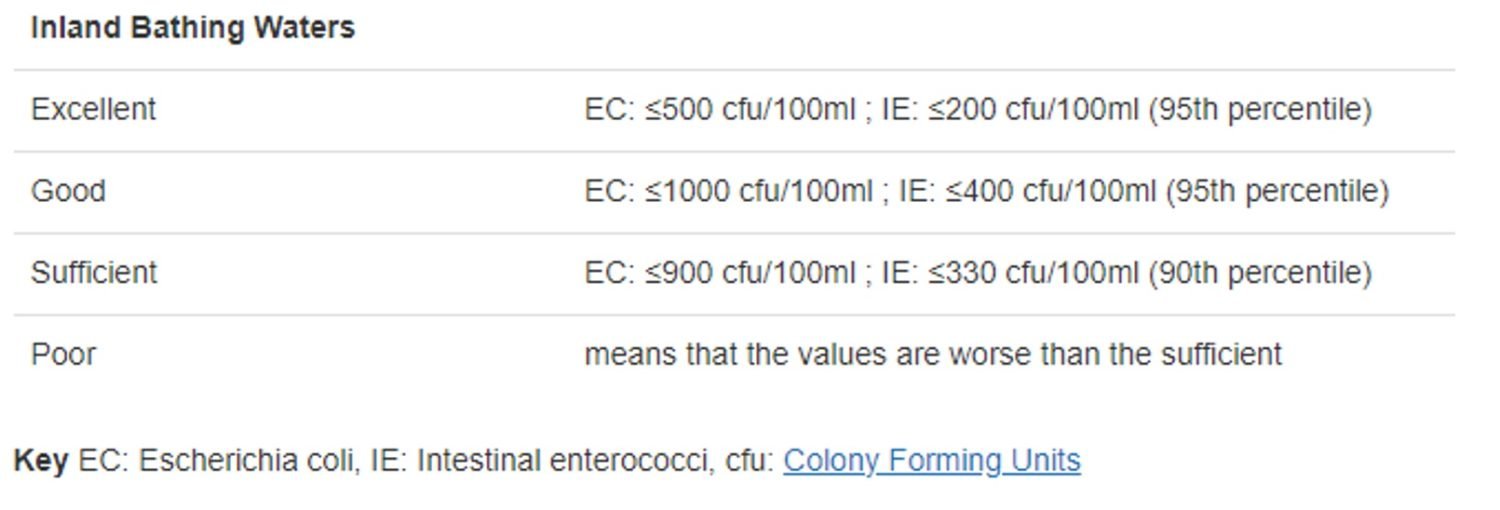
Almost all of the samples taken indicated levels of E-coli breached the ‘sufficient’ level for inland bathing. The bathing water quality levels are below, indicating that this ‘sufficient level’ would equate to ≤900 (E-coli bacteria) colony forming units (CFU) per 100ml. A threshold that is significantly exceeded at multiple spots along the Nidd waterway. At present, of course, the Nidd does not have bathing water status, so these recorded samples are for public awareness, rather than for more regulation and protection.
Campaigners respond
David Clayden, chair of the Nidd Action Group, told Yorkshire Bylines:
“The concentrations of E-coli were high, with only a handful of sites meeting the sufficient level for inland bathing water. In the upper catchment, down to Birstwith the concentrations of E-coli were much lower than in the middle and lower catchment.”
E-coli concentrations rose below Killinghall STW and stayed high, with the most extreme value at the Nidd Viaduct, below the confluence of Oak Beck and the River Nidd.
The extremely high levels of E-coli will have been influenced by earlier rain, due to runoff from agricultural land as well as the discharge of treated sewage and any storm water overflow (SWO).
The pattern of relatively low concentrations in the hills mirrors that found in the Wharfe (iWharfe reports for 2020 and 2021). Sites that need further testing are Bilton Beck – Woodfield Road, Ripley Beck, Oak Beck and Crimple Beck which all showed high concentrations of E-coli.

A year of pollution
It has been a torrid year of pollution for the Nidd waterway. Pollution of the Oak Beck in Harrogate near Nidd Gorge led to the beck being heavily discoloured and visibly brown in colour, leading local conservationists to advise children not to use the beck and for dog owners to keep their pets restrained. During the Knaresborough Bed Race this year, the advice to competitors was to “keep your head above water” while crossing the River Nidd, owing to the quality of the water. High levels of E-coli were also recorded in the River Nidd in March of this year, with testing continuing during the bathing season.
Professor Peter Hammond who works in conjunction with Windrush Against Sewage Pollution (WASP) highlighted a new report by Professor David Werner of Newcastle University from earlier this year, which shows that there are public health risks even when paddling and splashing about in rivers that are exposed to untreated sewage. Although this report focused on the River Ouseburn, a tributary to the Tyne, many lessons can still be learned.
The House of Commons committee report on water quality in rivers concluded:
“We therefore found the claim made by the chief executive of Severn Trent that its sewer overflow discharges were ‘pretty much already rainwater’ to be disingenuous. As water companies do not routinely test the quality of the discharges from storm overflows, they are in no position to make this claim.”
And furthermore:
“… current bathing water quality indicators like E. coli and Enterococci target bacteria … are found in the gut of both, humans and warm-blooded animals. Accordingly, there is considerable debate around the relative contribution of human sewage versus alternative sources like wildlife, agriculture, or dog walking, on faecal pollution of the water environment.”
This report concluded that bathing water status and designation should not be the trigger point for monitoring the bacterial health of the UK’s waterways.
“And the authorities should monitor microbial water quality in rivers that flow through public parks, irrespective of their bathing water designation.”
Bathing water application process
A second round of sampling for E-coli in the River Nidd will take place later this year in different conditions to monitor the levels. As Clayden commented:
‘‘Dry weather sampling, planned for September, should test whether the pattern and significant locations observed in this survey are consistent.”
With this data and the results of chemical testing, the Nidd Action Group believes that they will be in an evidence-rich position to apply for bathing water status. It is worth noting though that gaining bathing water status, by itself, does not necessarily transform the cleanliness of the waterway – simply that more data can then be gathered. At this stage though, the national picture of the health of rivers does not need more data – it needs action plans that can be put in place in a robust fashion.
Local MP, Andrew Jones, was contacted on multiple occasions by Yorkshire Bylines before publication for comment, but unfortunately, no reply was received. He has promised to be present at the next public event for the Nidd Action Group on 3 September at the Knaresborough Lido, where the results of the sampling will be available to the public, as well as consultation about the lido’s safe bathing water application.