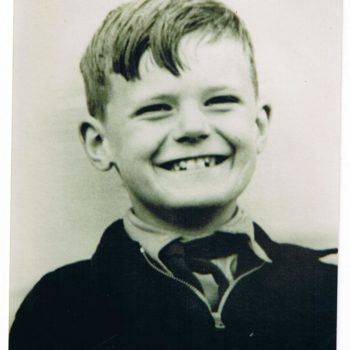

In the ramble Brook Motors, blackouts and three-day week, I wrote about my time at Brook Motors and some of the pranks and banter that developed in that environment. During a walk with the WARTS walking group recently, some of the subject matter centred around the way good friends behave with each other that in other environments would possibly be regarded differently and quite possibly result in the sack.
To put it bluntly we take the piss out of each other relentlessly. Few subjects are barred and if one of us has a particular habit, trait or reputation, we are reminded of it constantly, to such an extent that we are forced to regard it as both a negative and a badge of honour in equal measure. All of us have interests that we will talk of, which of course is natural, but the others will pretend (mostly) that they are not in the least bit interested, but prolong the subject all the same, just so the banter can be fully satisfied.
Friendly banter – our weekly therapy session
Some are better at this than others, but we all agree that it is like a weekly therapy session: we are constantly reminded of our weaknesses only to be lifted again by friendly advice or sympathy and of course ridicule. Except, of course, if we seek medical advice from the Colonel and then we are told how close we are to death. Her conversation about kickerball (particularly one of those Manchester clubs, I think) is relentless and unyielding.
If we mention our liking for a certain food, we are then reminded by our Major that he can’t eat it because he has coeliac, which then reminds us of the incident when he held up an entire queue of hungry, hairy-arsed builders while he discussed at length with the proprietor of one of the best chippies in Huddersfield the ingredients of their chips. Apparently the answer was potatoes. When we meet one of his ex-patients, we all wait in pensive anticipation for the moment when they say “You do look well”. Then a cheer of mockery will ring out from the rest of us, leaving the poor ex-patient wondering what the hell had just happened.
The Forager will receive banter – including from his wife, Bishop, who seems to reserve all her banter and abuse for her husband – on how many local houses he has made an offer to buy. Our Chief Engineer gets stick about trams, trains and trolley buses, of which he is a mine of information, which the rest of us pretend not to be the least bit interested in. The Corporal is notoriously tight and careful. Actually, the abuse and banter he receives on this matter is on the whole justified. I seem to have the reputation for talking relentless bollocks and talking of it at length, but – see previous sentence – we all give as good as we get!

Banter and disappointment – important lessons for children
It is my genuine belief that there is a connection between shielding children from anything even slightly unhygienic, thereby causing them to develop allergies, and the shielding of children from disappointment and banter, turning them into adults who are unable to deal with the distress of coming anywhere other than first place in a competition or deal with a narrative that is different from their own.
It was common for parents of my grandparents’ era to have eight or ten children. This then developed into a natural and healthy mixture of sibling rivalry, support and protection, with the pecking order within the family well-established and understood. When I played any game with our daughter Rachel or my younger brother Nick, or indeed any visiting children, I would not let them win anything; they would have to win on merit, and part of the game would be for me to make the most of my victory. Then came the time when they began to win, which they all did, and their victory was all the more gratifying to them knowing it was honestly earned.
Learning to lose – avoids distress and makes us improve
If we find that we are rubbish at javelin catching and survive the experience, we move on to other things because if we persist, we run the risk of taking ourselves out of the gene pool. A winner is very likely someone who wants it the most, so we cannot all be winners. Most of us are destined to becoming also-rans, and if we are convinced as children that we should not be subjected to banter or disappointment then we are in for a life of distress. If all the schoolchildren are given an equal prize just for competing, then where is the incentive to better ourselves?
Of course, that is if bettering ourselves is what we want. Many are happily just bumping along with the crowd, carrying along with our mundane lives with as little fuss and bother as possible. But others who have not had the opportunity to accept that things don’t always work out for us, or don’t know how to negotiate around an argument without falling out, will inevitably create anxiety for themselves and others around them.
Enough of this already, time to lighten up.
A story about a poor little snake named Peter
Peter lived with his mum in their pit. As all youngsters do, as soon as he found his voice, he was at it all the time, constantly hissing all around their pit. His mum eventually got fed up with Peter’s hissing and said: “Peter, don’t hiss in the pit, go outside the pit to hiss.” So Peter went outside of the pit and carried on with his hissing.
Peter’s mum could still hear young Peter hissing outside the pit and said: “Peter, if you must hiss in a pit, go over to Mrs Pott’s pit and hiss in her pit.” Peter went over to Mrs Pott’s pit to hiss in her pit, but Mrs Pott was not at home, so Peter hissed in her pit anyway.
While Peter was hissing in Mrs Pott’s pit, Mrs Pott came home and found Peter hissing in her pit. She said: “Peter, what are you doing hissing in my pit! If you must hiss in a pit, go to your own pit to hiss and don’t hiss in my pit.”
This made Peter very sad, and he cried all the way home.
When Peter got home, his mother saw him crying, and said: “Peter, what’s the matter?” Peter said: “You told me that if I must hiss in a pit, then I should go over to Mrs Pott’s pit to hiss, but when I got there Mrs Pott was not at home, so I hissed in her pit anyway. Then Mrs Pott came home and found me hissing in her pit and said: ‘Peter, what are you doing hissing in my pit, if you must hiss in a pit, go to your own pit to hiss and don’t hiss in my pit.'”
This made Peter’s mother very angry, and she said: “Why that mean old lady. I knew Mrs Pott when she didn’t have a pit to hiss in.”