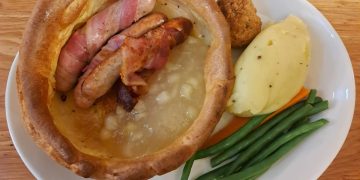
When we sit down to eat at Easter weekend, many of us will be sharing food traditions that have passed down through the generations, such as chocolate eggs and cakes, as well as various meats, such as lamb or ham. But where does all that come from?
Easter food symbolism
Easter has always had a close association with food and the symbolism in these foods goes back to the pagan rites of spring such as rebirth (eggs), fertility (bread and cakes) and the Christian message of sacrifice (the Lamb of God). The word ‘Easter’ comes from the name of the Anglo-Saxon goddess of light and spring, Eostre: special dishes were cooked in her honour so that the year would be endowed with fertility. Easter is one of the most important festivals in Christianity and different countries have their own way of celebrating this with dishes from their own customs and heritage.

Easter eggs and bunnies
In the early Christian calendar eggs were forbidden during the 40-day period of fasting for Lent, which made them an enticing treat once this was over. They became a symbol of Christ’s resurrection from the tomb. In central European countries there is a long tradition of elaborately decorated Easter eggs with colourful and intricate designs. In the 19th century, the idea of the chocolate egg was introduced as a way to mark the end of the fasting period of Lent. And in the 1880s the Russian tsars appointed the goldsmith Peter Carl Fabergé (or Karl Gustavovich Fabergé) to create exquisitely detailed jewelled eggs.
Although the Easter bunny has never been linked to any Christian symbol, the rabbit is known to be a very fertile animal, hence it came to be associated with the coming of spring. In Germany in the 1700s children used to build nests, and leave carrots out for the ‘Osterhas’ or ‘Oschter Haws’. Today, children love to go on egg hunts to find hidden treasure which Easter bunny has left, as well as painting egg shells and Easter bunnies.
Easter food
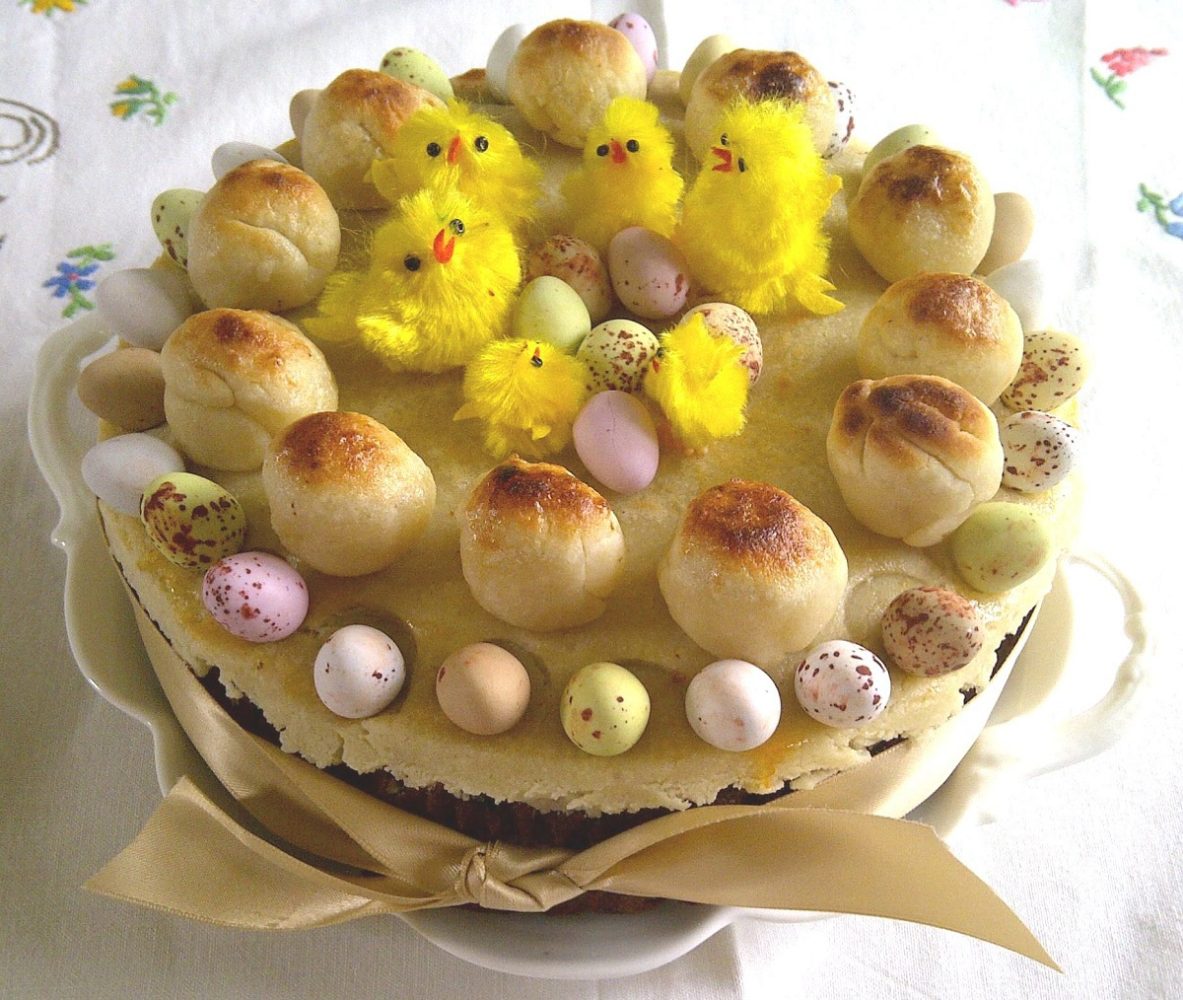
Easter breads, cakes and biscuits are a major feature of Easter foods. On Holy Thursday, to celebrate the Last Supper, Christ shared bread with his disciples. Traditional breads are thus laden with symbolism in their shapes, as well as in containing eggs after the fasting of Lent. In England, simnel cake came to be regarded as an Easter speciality, although it was previously linked to Mothering Sunday. The most popular English Easter bread is the hot cross bun.
For Easter Sunday lunch or dinner, the most popular main dish is Easter lamb. Historically, it may have been that sheep were the only livestock available in abundance after a long winter, but the tradition goes further back. Lamb was eaten on the Jewish holiday of Pesach to represent the protection of a chosen people. Ham is also popular among Europeans and Americans at Easter, which may be because pork meat was considered a symbol of luck in pre-Christian Europe. As attitudes towards Lent evolve and future generations develop traditions of their own, including of course vegetarian and vegan diets, the Easter meal will likely undergo many more transformations.
Happy Easter!
Whether you are eating fanesca (soup) from Ecuador, gigot d’agneau pascal (lamb) from France, Osterschinken im brotteig (ham wrapped in pastry) from Germany, capirotada (Easter bread) from Mexico, torta pascualina (pastry tart) from Argentina, casatiello (Easter bread) from Italy, babka wielkanocna (Easter bunt cake) from Poland, Paskaegg (chocolate eggs) from Iceland, tsoureki (Easter bread) from Greece or any of Grandma Abson’s Easter parade of baking, have a very happy Easter from Yorkshire Bylines!
You can read more about Grandma Abson’s life, her passion for baking and recipes HERE and head over to Instagram @grandmaabson to see Meryl baking with her grandchildren.