




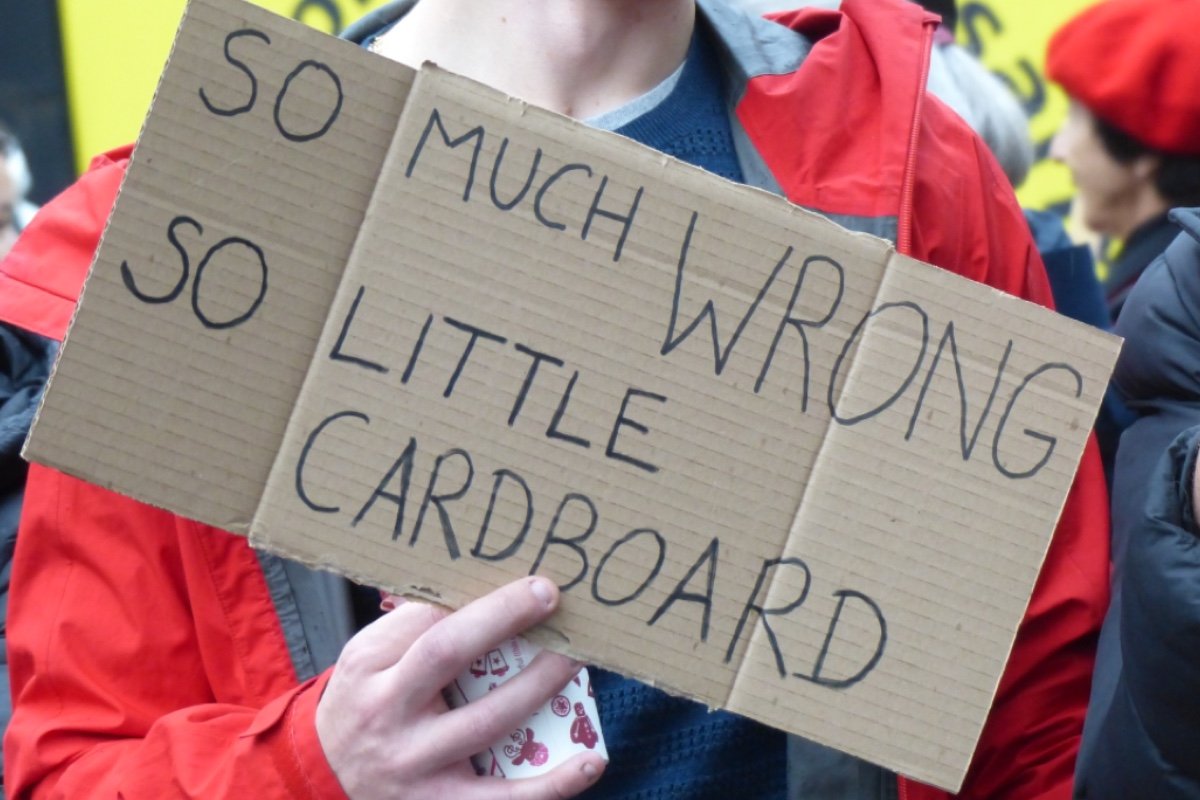
In the extremely rare event that any policies beneficial to society are pursued, passed and enacted by the UK government, new statutes are determined by the likelihood of vote gain or loss rather than good management of the United Kingdom’s affairs on our behalf.
A litany of inaction
We can see the government’s failure to do its job at local, national and international level. Local authorities receive 50% of their income through council tax. Despite which most English local authorities are plainly extremely cash strapped with several in deficit, some even teetering on bankruptcy. Naturally this limits their ability to provide many important services to the detriment of a huge number of residents, organisations, businesses, road users and others.
English council tax bands were valued and set in April 1991 with the very top home value band at £320,000, a figure now not much above our national average house price of £257,400. By failing to take account of this historic rise in house prices, the government starves councils of billions in essential funding.
A similar inertia afflicts trade with the EU. From day one of our EU departure in 2020, EU nations have levied inspections, import duties and their national VAT rates on incoming goods while we are yet to commence reciprocal actions three years after leaving. For example, one NAAFI establishment in Germany has to pay duty on all goods shipped from the UK, even the smallest package, whereas a crate of Portuguese wine, or indeed anything imported from the EU arrives here duty free.
Another prime example is road fuel duty, largely unaltered since December 2008 despite the undoubted inflation during the past 12 years remains little changed for fear of losing votes.
Even the law itself is left in a state of abject neglect. Crown, county, magistrate and probate court services are running truly awful backlogs and waiting times with negative consequences for a great many individuals and companies.
The incredible costs of incompetence
Very recently we find that public hearings for the parliamentary enquiry into former prime minister Boris ‘scofflaw’ Johnson’s numerous ‘gatherings’ during lockdown will not now even start for “some months yet”. Remember also that his taxpayer funded defence costs are thought to be above £222,000.
It hardly needs stating that this administration has a casual approach to government contracting. Take two examples: the £37bn reportedly wastefully expended on the test and trace programme, or the contract signed in 2014 to purchase 589 light tanks. No satisfactory working example of this very problematic Ajax vehicle is yet to be delivered.
Incredibly these are just part of our many national troubles. Troubles entirely attributable to our ‘governing’ party in over 12 wasted years of ‘power’. Remember also Johnson’s failure to “fix the crisis in social care once and for all” despite his forthright promise to do so.

A stumbling, neglected economy
Meanwhile, our international balance of payments deficit is historically high, as is our national debt and deficit. The OBR forecasts that the past two decades of UK negative international balance of payments in trade will continue for the next five years. Given that productivity is not likely to increase significantly in the near future, increases in taxation appear unavoidable.
At the same time, the ‘informal’ economy is huge, growing and plain to see. We’re aware of car washes, nail bars and similar concerns, it has become common to encounter demands for ‘no card payments, only cash’ from established businesses. The possible scale of this can be found in the excellent HMRC commissioned NATCEN 2017 study The Hidden Economy in Great Britain, that finds nearly 5% of our population to be involved in some way.
What can be done?
Remedies to many of the above, and to a host of other serious national issues, would be obvious to any 14-year-old, but our ‘professional’ politicians choose to devote valuable parliamentary time to solving non-existent problems instead, such as imposing voter ID to deal with voter fraud that doesn’t actually exist.
But say our 14-year-old had her day in No 10, some remedies could be:
- Despite the recent brief peak, total road fuel costs are scarcely higher than in 2010, fuel duty and VAT is broadly unaltered, as is the vehicle excise duty. Judging by road speeds, pollution, weight, number, the huge dimensions of modern cars, and driver behaviour, the necessity for increased taxation on fuel, vehicle size and weight is beyond argument. Perhaps, as the first step, reinstate the now foolishly abandoned fuel escalator, which was fair and predictable in operation.
- Impose levies and inspections on inward goods from the EU. Not just for revenue but for public safety.
- Many courts have closed in recent years. Consider reinstating those where backlogs and blockages are greatest. Consider also the problems of legal aid, arrears of court repairs, magistrate and judge recruitment.
- Scotland and Wales have both taken the straightforward and obvious step of adding council tax bands to account for modern home values, very many of which are now greatly above £500,000. We must follow suit – local authorities badly need this money for essential services. Adding bands would mean there was little or no need for the expense of revaluing most existing properties.
- Germany has long had the policy of employing very well-trained tax and revenue inspectors. Companies cannot easily take these officers for fools. Company inspections will increase compliance and tax revenues.
Plainly many more than the steps outlined above are required to improve our national financial health and societal fairness, these suggestions are simply a start. But they’d be a huge improvement on the 12+ years of static, disinterested inactivity we’re presently enduring.
Add to this a layer of undiluted cronyism
The government is not going to change its ways. It’s well known the extent to which government procurement in recent years has depended on how friendly you are with a minister, whether you are landlord of their local or indeed have mutually favourable links to a baroness, VIP lane places were reserved for party donors and ministers’ acquaintances, and so on. This kind of behaviour is ingrained and will continue as long as the same people remain in power.
And as long as they do remain in power, and our ‘government’ completely fails even to attempt to improve our national condition, this damaging, aimless drift will continue. The ideas set out here cannot be the answer to all our troubles, but they would be a jolly good start. If this retired plasterer can see extremely simple remedies that require little legislation, why on earth do our ‘leaders’ not adopt them, or suitable alternatives, in place of this dreadful inaction?






