Whenever any section of society starts to stand up for its rights it faces a barrage of criticism and people come up with some very overblown theories about what will go wrong if we start treating them more reasonably.
This happened in both the days of the suffragettes and throughout the struggle for wider women’s liberation that began to hit wide public consciousness in the early 1970s. We were told that bra burners would destroy the fabric of family life. It turned out that families where there is rather more equality function rather well.
These days women’s inequality sometimes comes in subtle forms. Only 26% of chief executives are women. All too often it still comes in the form of crude violence. There has nevertheless been some very real progress and those who fought for women’s rights can pride themselves on having achieved huge improvements in the ordinary lived experience of millions. Gains that remain under attack.
We have been here many times before
When it comes to gay rights there is a similar pattern of huge improvements accompanied by a long way still to go. When large numbers of gay people began to ask for the right to conduct their relationships in freedom and security in the 1970s, they were met with cries of horror.
I worked alongside teachers in the 1980s who would have been sacked if they had openly told their employer that they were gay. It was assumed by Margaret Thatcher’s government that any gay teacher was a risk to young boys because being gay was the same thing as being a sexual predator. The Section 28 law that prevented schools from talking to children about the normality of gay relationships was in place in England right up until 2003.
Resistance to women’s liberation and to gay rights didn’t just come from the right. I lost track of the number of socialists who told me that it was a distraction from the real struggle which was for workers’ rights. Others told me that we shouldn’t scare the working-class horses by raising such controversial issues. Or they were just outright opposed to change that threatened their own privileges. It turned out that working-class families contained almost identical proportions of people who were as open-minded about change as middle-class families. Along with equal numbers of aggressive unpleasant closed-minded bullies.
Transgender rights in Scotland
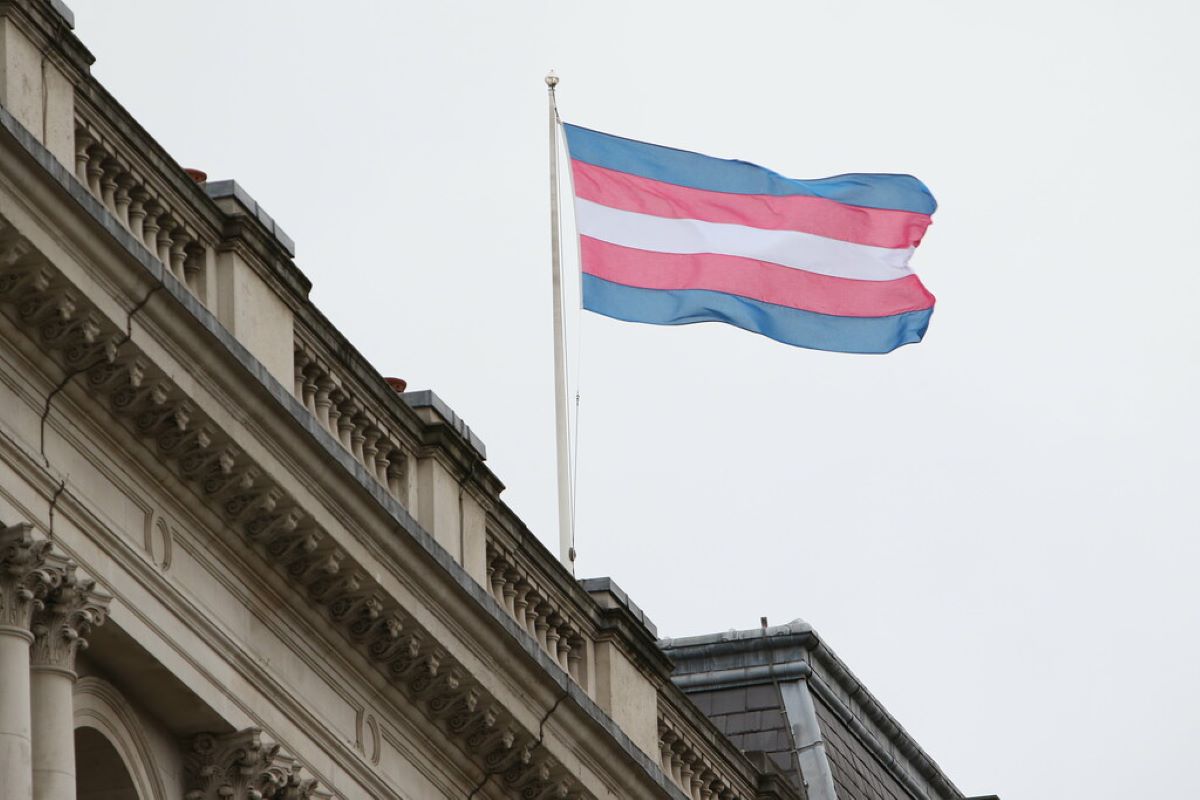
All of which should lead us to be very suspicious of arguments raised against increasing freedoms for the trans community. If you listen to Rishi Sunak you might get the impression that the Scottish government had gone mad and has opened the door to every sexual predator to start attacking women in their safest places. What it has actually done is to pass a law that makes it a little less of a horrible bureaucratic nightmare for a person to change their legally registered gender.
That is not something that anyone is going to do lightly. It involves a redefinition of who you are at work, at home, and in wider society. Easing the stress of someone who decides to do that is not remotely the same thing as enabling sexual predators. It is as wrong to assume that every trans person is automatically some kind of threat to women as it was to assume that every gay teacher was a threat to young children.
Those who are queuing up to confuse and alarm the public over what has actually entered the law in Scotland include a lot of people who would also love to get rid of abortion rights for women and ban gay marriage. It is usually wise to be very wary about siding with enthusiasts for limiting freedom and equality. They rarely stop after their first victory.

Encouraging safe and open dialogue
The best test of any radical is not how well they defend the rights of their own community, it is how well they champion the rights of those from another. A freer and more equal society is unlikely to be created by those who deny rights to those who are different from themselves.
Nor, of course, is a free and equal society ever created by banning discussion of ideas that we don’t like. The authorities have much more power than us and will always have a huge advantage in any battle for control over what is allowed to be said. They can afford to dominate the media whilst those who want to push for change need to rely on the truth and fairness of what they say winning out in the communities where most of us live and work.
That is why it is such a mistake for those of us who recognise the importance of championing trans rights to seek to prevent debate over how this is best done and what happens if there are a few rare circumstances in which the rights of one community seem to impair the rights of another. We need to win the arguments – not ban the arguments.
No one is free until we are all free
If we can establish a consensus that trans men are men and trans women are women, it is likely to add to the safety of all as it increases the open-mindedness of society and challenges fears and divisions. A society that watches passively whilst a late-night drunk beats a trans woman senseless is unlikely to be one that is good at protecting women. A society where people will step in and protect the trans woman is also likely to be a society that will step in and protect other women.
That is why it is so important that we do not allow the mass media to demonise Nicola Sturgeon’s government for making the tiniest of moves to improve the lives of the trans community in Scotland. If those who oppose this succeed in crushing the change then they will be empowered and encouraged and they won’t stop at pushing one marginalised community back into a box.
Those who want a more equal society need to be working together to normalise an improvement to Scottish law passed by a Scottish parliament, instead of siding with a deceitful British government in its efforts to whip up paranoia and place fresh constraints on devolution.