



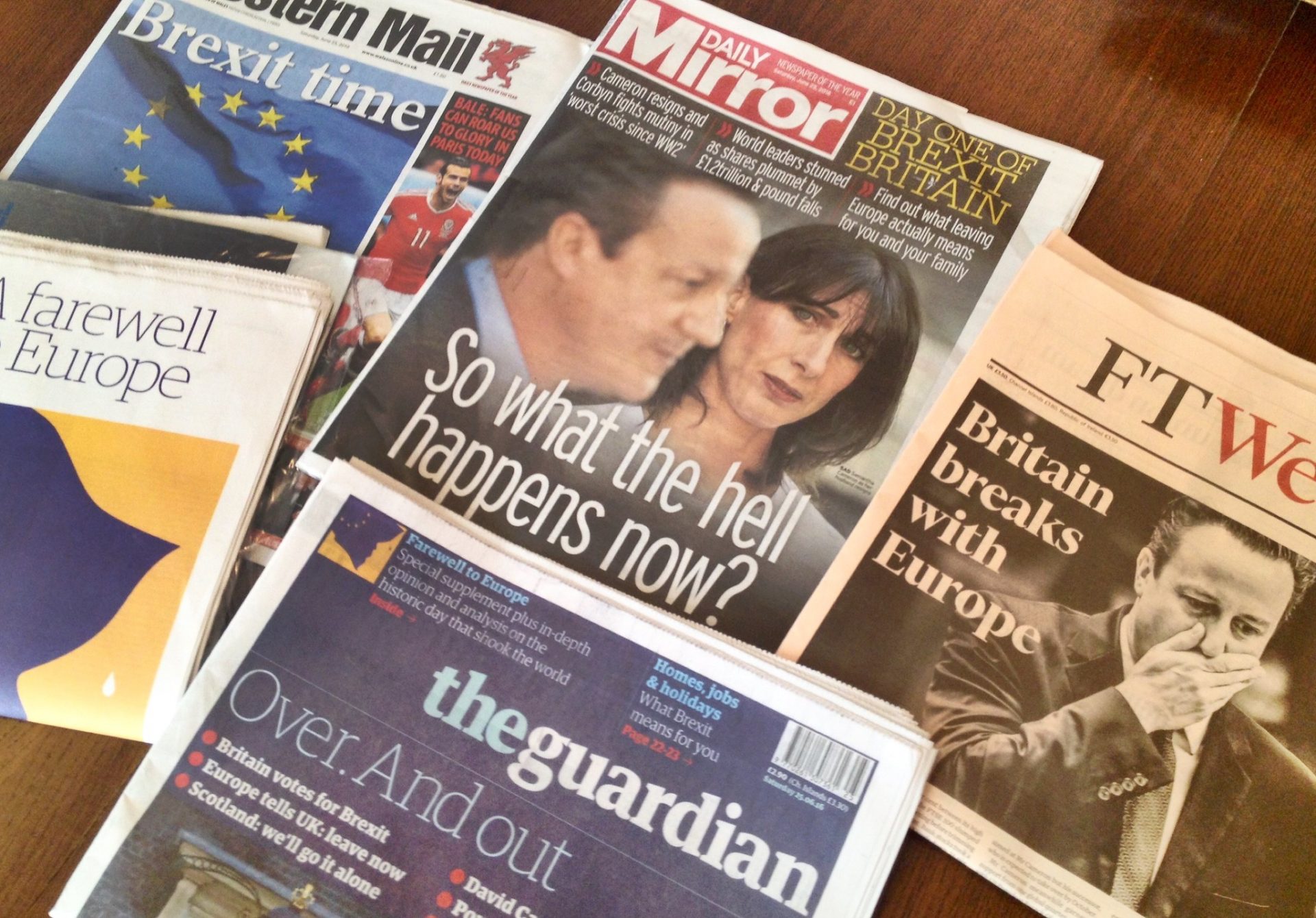
Brexit clearly isn’t working. As we approach the second anniversary of the UK’s exit from the European bloc, a growing chorus of criticism is being aimed at the particularly damaging version of Brexit chosen by Theresa May and Boris Johnson, and negotiated by Lord Frost.
Business leaders, trade bodies, exporters, politicians, the music industry, farmers and fishers all complain of restrictions, red tape, delays and extra costs. Economists point to the loss of trade and the impact on the nation’s wealth.
Former Brexit Secretary David Davis recently admitted there are no potential counterbalancing benefits so far which he could point to. Broadcaster Andrew Neil goes further. In an article for The Daily Mail, he declares that the prospect of any Brexit dividend being found is now “stone dead”.
Brexit isn’t working
The public is also turning against it. An IPSOS survey in November 2022 found 52% of the population believe Brexit has had a negative impact, more than twice as many as those thinking the impact has been positive (22%). In December, a YouGov poll suggested 69% thought the government was handling Brexit badly while just 18% thought it was going well.
Lord Hannan suggests we should never have left the single market and there are calls for Britain to move towards a ‘better’ or closer ‘Swiss style’ relationship with the EU. The Conservative MP Tobias Ellwood says we should go the whole hog and rejoin the single market. Others argue it’s far too early to pass judgment on Brexit and that the advantages of leaving the EU have yet to be grasped.
What is abundantly clear is that Brexit isn’t working.
A debate is beginning
Given the unhappy backdrop, the government, or more likely the next one, will need to review where we are and decide what ought to be done. The broad choices are these:
(a) Do nothing and see if the present deal, perhaps with minor tweaks, can be made to work.
(b) Negotiate a closer relationship with the European Union.
(c) Abandon caution and go for a deregulated low-tax Singapore style economy.
The last option is essentially the one attempted by Liz Truss and Kwasi Kwarteng in September, which triggered a meltdown in the financial markets. Virtually all the measures have now been rolled back and although not out of the question, it’s doubtful that experiment will be repeated again anytime soon.
As for making some minor tweaks and hoping things settle in the end, this may not be politically feasible for very much longer, especially if the EU continues to grow more quickly. How much are we prepared to sacrifice for Brexit? We may soon find out.
What we know for sure is that the Brexit we have at the moment has failed to live up to the hype.
Learning lessons
In the run up to the next general election, politicians on all sides will come under pressure to spell out what they intend to do. That debate has already started and in terms of reviewing the available evidence of ‘what works’, we are in a considerably better position than Theresa May in late 2016. Experience has increased our understanding of what leaving the EU actually entails and has replaced the empty tautology ‘Brexit means Brexit’.
The delusions that accompanied the UK-EU negotiations of 2017–2019 have disappeared, along with the politicians who harboured them and a sizeable and economically painful chunk of our workforce, exports and tax revenues. Realism is at last starting to get a look in.
It is vital that new delusions don’t arise from the ashes of the old ones. We need to learn from the last two years. To this end, Yorkshire Bylines has decided to offer our help by publishing a series of linked articles: The lessons of Brexit.
Each will touch on a particular aspect of the way in which Brexit has impacted Britain and what we might learn, to inform and guide the thinking on what we can realistically aim for in any future relationship. The series will cover trade, deregulation, immigration, the media and so on.
The first, on trade, is available here.