I have always been impressed by a uniform, the British army dress uniform of the Hussars and Scottish pipe bands in particular. I think anything uniform sits comfortably in my world. I may suffer, or to be more accurate, happily live with OCD – obsessive compulsive disorder.
Apparently there are four main types of OCD contamination/washing, doubt/checking, ordering/arranging, and unacceptable/taboo thoughts. I fully admit to one of these, I will give the reader a second or two to consider which one I think it is…
It’s ordering/arranging. The word ‘pile’ has no place in my world, it has to be ‘stacked’, neatly with the largest item at the bottom or in the case of coins they have to be stacked in like manner with their brothers and sisters, largest coins on the left. Folding money has to be all facing the same way before putting it in my wallet, all with Her Majesty’s image upwards.
Silvery coaches glistening in the reflective light
I have not attempted to write my thoughts about the death of The Queen, I could not better or equal the superlatives already written, my writing skills only allow me to agree with all the positive remarks.
The funeral of The Queen was a masterpiece of uniformity, the rows of soldiers, sailors and air personnel reminded me very much of her coronation on the 2nd of June 1953. It was a few days short of my sixth birthday; relatives, friends and neighbours crammed into my uncle’s front room and squinted at a 12-inch Bush television. Even though compared to modern standards the television was very small, and it being in black and white, the silvery coaches glistening in the reflective light, those magnificent horses and uniforms were like a magical fairytale. Then a few days later we saw it all over again in splendid colour on the Pathé News at the pictures (cinema). This will have been my first experience of colourful military dress uniforms marching in their thousands, I was hooked and my OCD was born.
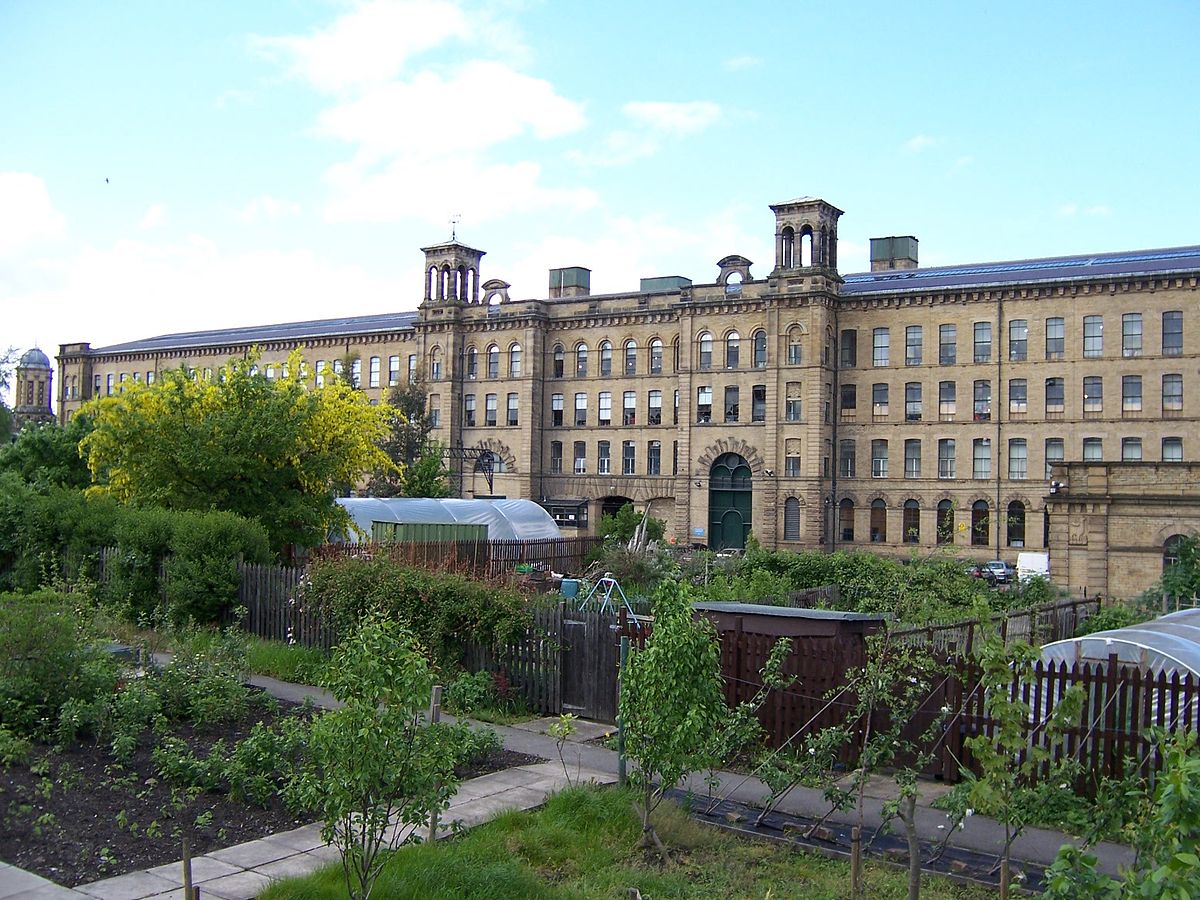
Even though the Royal Air Force are professional, brave and their sense of duty is equal to our other military personnel, I find their uniforms a little drab, and there are several reasons for this which are connected with the Saltaire mill near Bradford, The Russian royal family and WW1. There may also be a reluctance to be as flashy as say, my distant cousin Colonel Norcliffe Norcliffe.

Bradford mill owners Titus Salt and Sir James Roberts, The Russian royal family, WW1 and the RAF
Titus Salt had an apprenticeship and a good grounding in the textile industry before joining his father’s company which in turn became Danial Salt and Son in 1833. Later while Titus was in a Liverpool dockyard he stumbled upon several bales of unwanted Alpaca wool, previously only used for packing, Titus could see potential in this fibre and much to his father’s disapproval he bought it. During the next eighteen months he experimented with the fibre in secret until the manufacturing technique and the finished cloth became near perfect and proved very popular which in turn made Titus a fortune.
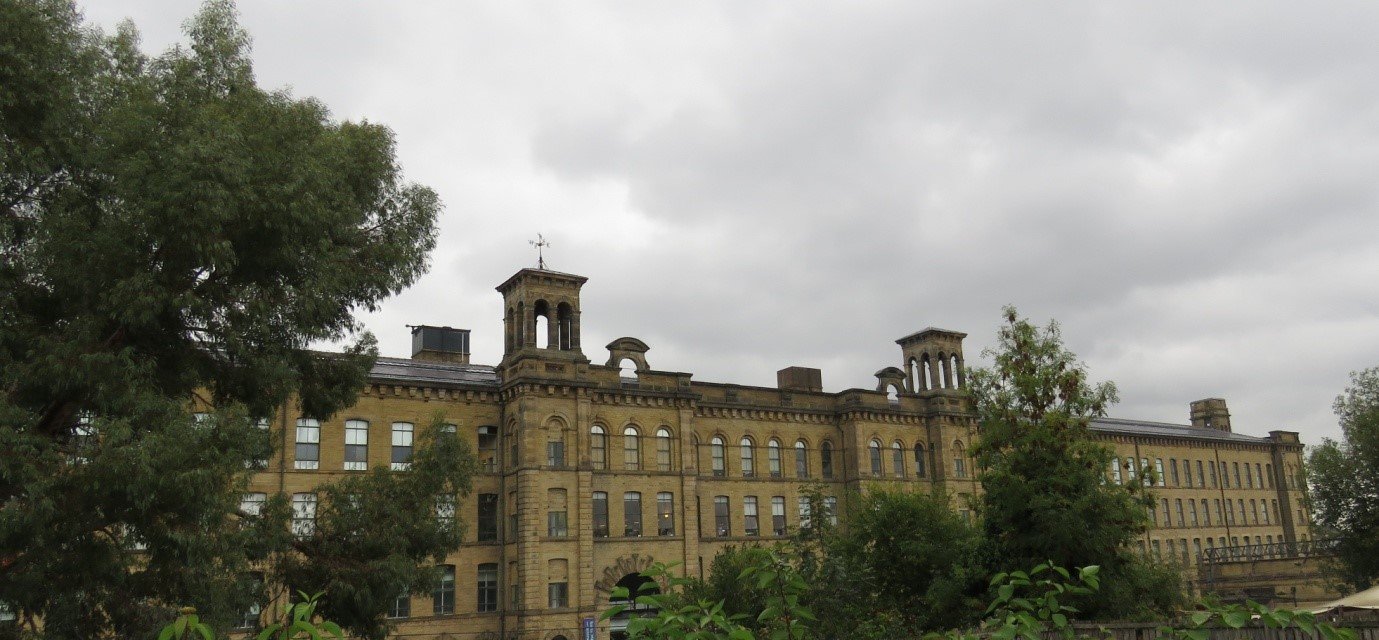
He moved his mill out of the grimy industrial centre to a more healthy rural area of the Aire Valley, built a new mill and town for his workers and named it Saltaire. There were more amenities than mill workers could ever wish for: schools – eventually for children under five, churches, dining rooms, a library and a meeting hall with areas for quiet study. He thought Education, health and religion were very important for his workers’ wellbeing. He also had a certain need for moral discipline and control; no pubs were built and alcohol was discouraged but the workers were treated far better than by many other mill owners of the time, see ‘Norky’s ramblings: a WARTS ramble to Cragg Vale’.
Natty Cousin Norky, the knight, and the Wing Commander
A few years later a young lad named James Roberts mirrored Titus Salt’s diligence, hard work and business skills and eventually bought out the Salt family to become the new owner of Saltaire. Through his many successful business tours to Russia and Germany, developing and expanding the import of Marino wool with fibres that were longer and finer than our homegrown sheep breeds he became very influential in the developing textile industry.
Through his hard work and diligence, he was recognised with a knighthood. Sir James Roberts could speak Russian and the story goes that he one day attended a dinner where the guest of honour was Tsar Nicholas Romanov, they got into conversation and Sir Roberts persuaded the Tsar to order a light blue uniform cloth for the Russian cavalry in 1914.
Assuming, as many did at that time, that the war would be over by Christmas, the Saltaire mill carried on with the order. However, the hostilities between Britain and Germany dragged on, that and the Russian revolution in 1917 seriously scuppered Sir Roberts’ monopoly and world domination of light blue cloth manufacture. This left many hundreds of light blue pieces sitting in the Saltaire warehouse until 1918, when coincidentally the newly formed merger of the Royal Flying Corps and the Royal Navy Air Service, which was up to that point part of the army and eventually became the RAF were looking for a new uniforms.
Sir Robert got wind of this and offered some very nice light blue cloth at a reduced price. However the pale blue colour was proving impractical and unpopular. When John Slesser was appointed Marshal of the RAF he described it as “a nasty pale blue with a lot of gold over it, which brought irresistibly to mind a vision of the gentlemen who stands outside the cinema”. Obviously it was much too flashy for Marshal Slesser and it had to go, it was replaced with the blue/grey colour we are familiar with today. I have been unable to discover what impression a gentleman stood outside a cinema dressed in light blue with gold braid gave, but Marshal Slesser certainly did not approve.

The two British military uniforms above are of equal rank but from very different times. On the left is a distant cousin Colonel Norcliffe Norcliffe 1791-1862. of the 18th Kings Irish Regiment of Dragoons (Hussars) who went on to become Major General Sir Norcliffe Norcliffe and a good example of a splendid, if not a little showy, uniform. On the right is my first cousin Wing Commander David MacInnes of the Royal Air Force In his more sober blue/grey uniform. David went on to father a son and daughter who became wing commander and squadron leader respectively. Marshal Slesser would have been very proud.
In days of old when names were bold
An amusing and amazing coincidental footnote about the early construction of the museum and renovation of Saltaire, which in 2001 became a World Heritage Site.
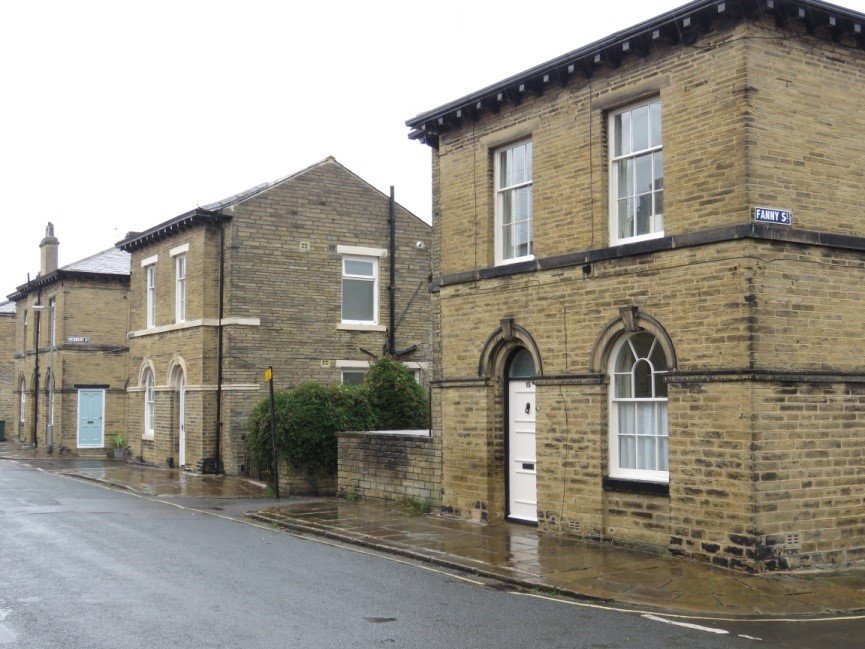
Titus Salt named the streets in the town after his family. The early Saltaire heritage committee thought it appropriate to attempt as much as possible to reconstruct everything as original, and one enthusiastic committee member was charged with sourcing the street signs. They had assumed the signs would be made of cast iron and visited the nearby foundry for help. This foundry had been in constant production for generations, and during the conversation about what was needed, the foundry owner said ‘just a minute’ and wondered off into the dusty old storeroom. He eventually returned with an equally dusty old box of the original casting moulds of the Saltaire street signs, they were then able to use the original moulds for all the new cast iron street signs.
There was one street sign that troubled them greatly, they felt compelled to think long and hard, Titus Salt’s sister was named Fanny. Would they be brave enough? Would the sign be stolen? To their credit Fanny is now proudly on display between Herbert and Edward – the street signs that is of course.