




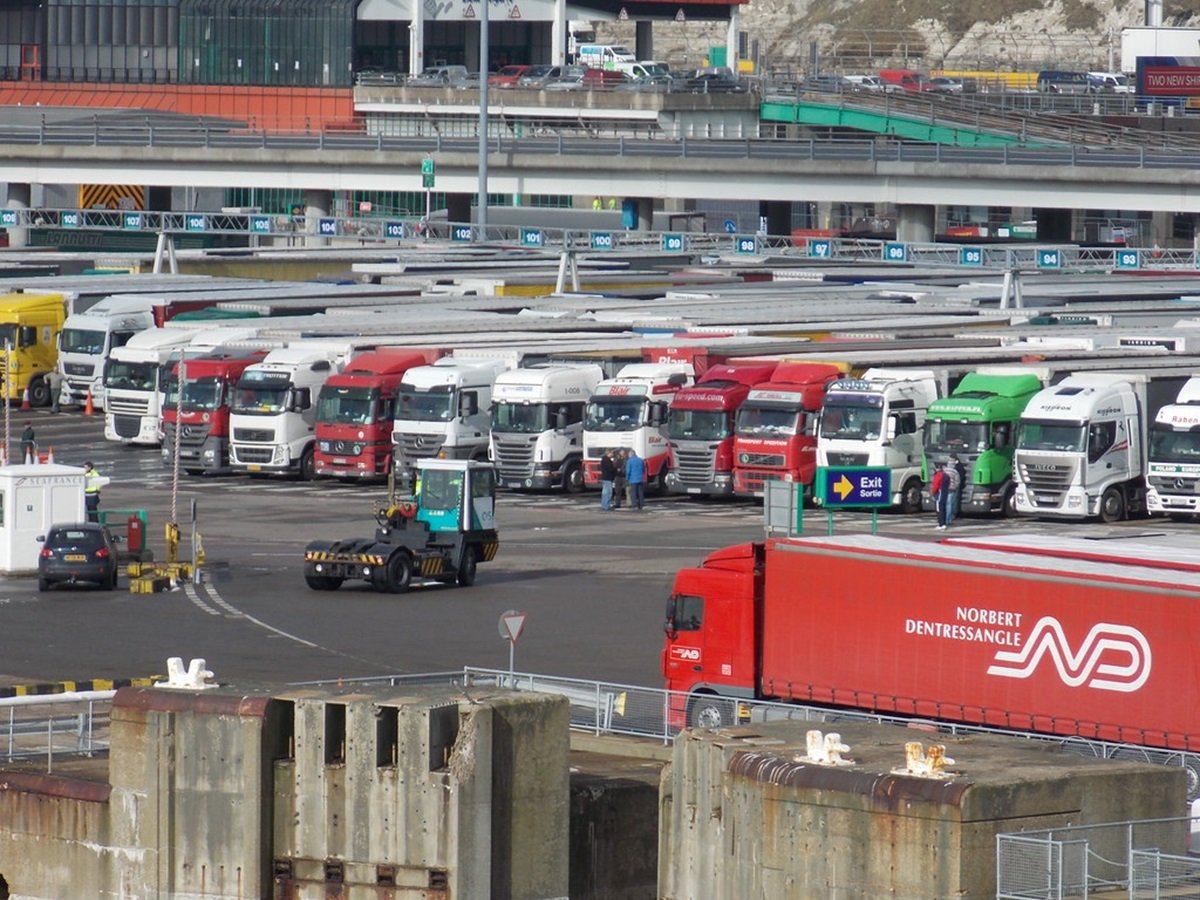
Bloomberg claims to have seen a 29-slide PowerPoint presentation circulated by HMRC setting out in broad-brush terms how the goods vehicle movement service (GVMS) might work. Intended to avoid blocking the Channel ports with trucks, it was described a few days ago at the future relationship select committee as a “pre declaration” system.
The Bloomberg article headline: After Brexit, Trucks set to need taxman’s permission to move, describes the reality of Brexit for Britain’s exporters and hauliers.
To avoid trucks clogging up Dover or Folkestone (or other UK ports handling roll-on, roll-off traffic presumably) by turning up without the correct paperwork, they will need permission from HMRC to enter the port or embarkation area.

Permission will be granted if all the required customs and safety/security declarations have been made and approved by HMRC. However, this appears to be an optional system. One slide reads, “If you decide to control goods using the Pre-Lodgement model at your location and you would like to make use of the GVMS …” indicating it may not be compulsory.

And it can only work if HMRC are sure all the customs and safety and security declarations are properly filed electronically beforehand. Before proceeding to the point of departure at Dover or Folkestone, for example, a driver will need to obtain a GMR (goods movement reference) number which is generated once all the correct customs and security declarations have been made and checked by HMRC.

Without a GMR, goods will not be allowed to enter the port area and will need to park up somewhere and wait for the unique reference number to be generated.

The GVMS will need to interface with other government systems including CHIEF (customs handling of import and export freight) and the new CDS (customs declaration service) to which CHIEF users are gradually being migrated over the next nine months. It is also expected to communicate with the EU’s import control system (ICS), introduced in 2010, in order to receive confirmation from EU authorities that the documentation is sufficient to permit boarding.
The HMRC slides obtained by Bloomberg also mention CTC, the common transit convention for moving goods through Europe to a non-EU country with a TAD (transit accompanying document). This will be needed for moving goods from Ireland (Eire and Northern Ireland presumably) through the UK to continental Europe after Brexit, and for UK exporters sending goods through the EU to third countries.
In a tweet, Joe Mayes, Bloomberg’s UK politics and Brexit reporter, compares it to the status quo where, “Currently, UK trucks just drive to Dover, get on the ferry, and arrive in Calais, with minimal documentation requirements. The English Channel is effectively a motorway. But as this PowerPoint shows, Brexit turns it into a proper border crossing.”
As Mayes explains, this process will apply whether a deal is concluded or not. Drivers will have to go through the “headache of a new bureaucratic process,” which relies on an IT system that has yet to be built, from a government with a poor record on IT projects.
He also raises questions about how the government will physically prevent trucks arriving at ports without the correct paperwork. What enforcement powers will they have? When will the GVMS system be built? Will it be tested before it is used? HMRC apparently declined to answer those questions when asked on Monday.
Anyone familiar with large-scale IT projects will understand the term “specification phase”. The fact that we have only six months to go before the self-imposed deadline, and the fact that we have just a simple PowerPoint presentation to demonstrate how things might work, shows that we have not yet reached the specification phase, let alone issued tender documents or started detailed design work.
It makes the government’s deadline (now set in stone) look extremely challenging.
Searching for what a British exporter might need to prepare for from next January, a government website (HERE) pops up. It explains that the UK has left the EU and is now in a transition period, before new rules come into place from 1 January 2021. The last update appears to be from 27 February – four months ago.
Another government website (HERE) offers advice to exporters and says from next year UK businesses trading with EU countries will need to follow processes they currently use when trading with non-EU countries that have no existing trade agreement in place. If, for example, you click on Belgium as a potential export target, you are taken to a sub-menu which provides more information about tariffs and quotas, managing risks, exporting goods, controlled goods, selling services, travel, sanctions and embargoes and contact details for the Department of Trade where one can, I assume, obtain further advice about “exciting opportunities.”
At the moment this is our home market which we can access without contacting anyone or worrying about tariffs or quotas or standards or anything else.
Exporters face big changes from next year. Let us hope they are all prepared.


