• Contact
  • About
  • ISSN 3049-9720
  • Authors and editors
NEWSLETTER SIGN UP
Yorkshire Bylines
Advertisement
  • Home
  • News
    • Brexit
    • Culture
    • Education
    • Environment
    • Home Affairs
    • Transport
    • World
  • Politics
  • Opinion
  • Society
    • Food
    • Music
    • Poetry
    • Sport
  • Business
    • Economy
    • Science and Technology
    • Trade
  • Region
No Result
View All Result
Yorkshire Bylines
Home Region

The Battle of Towton

A civil war that pitted two strands of the country’s royal family against each other, the War of the Roses was one of the most famous non-religious civil wars in European history

John Heywood by John Heywood
11-07-2021 16:01 - Updated on 11-10-2024 16:56
in Region
Reading Time: 4 mins read
A A
Battle of Towton

Image courtesy of Allan Harris

Share on Bluesky

Now idyllic and peaceful, the pastures and cultivated fields that form a plateau between the villages of Towton and Saxton, south of York were once the scene of what has been called the bloodiest battle in English history. Some 560 years after it took place, the Battle of Towton still holds a fascinating place in the country’s collective memory.

The lead up to the Battle of Towton

A civil war that pitted two strands of the country’s royal family against each other, the War of the Roses was one of the most famous non-religious civil wars in European history.  The red rose of the House of Lancaster against the white rose of the House of York were set against each other in a thirty-year long tussle for the throne.

Both houses traced their origin to the sons of Edward III of the House of Plantagenet, who ruled from 1327 until 1377. The Yorkists descending from the female relatives of Edward’s second and fourth sons, and the Lancastrians being related to Edward’s third son, John of Gaunt.

James William Edmund Doyle, Public domain, via Wikimedia Commons

By 1461, the Lancastrians had killed Richard, Duke of York and Richard Neville, the 5th Earl of Salisbury at the Battle of Wakefield, and had been victorious at the Second Battle of St Albans.

Salisbury’s son, Richard Neville, the 16th Earl of Warwick, known as Warwick the Kingmaker, controlled London and had proclaimed the eldest of York’s sons as King Edward IV.

Edward decided to take the important move to march north to inflict a final and decisive defeat on his rival, King Henry VI. Henry though was a peace-loving and religious man and placed the military decisions in the hands of his Queen, Margaret of Anjou, and her main military tactician Henry Beaufort the Duke of Somerset.

The battle of Towton

By the spring of 1461, both sides had assembled large armies and were determined to deal each other a final and decisive blow, with the leaders having previously made an informal agreement that the battle would decide the conflict. The armies moved towards each other, the Lancastrians from the north and the Yorkists from the south, meeting just outside the village of Towton. 

The battle itself took place on a bitter Palm Sunday, 29 March 1461 in blizzard conditions.

Contemporary sources estimated the death toll for the battle to be in the region of 25,000–35,000.

These extremely high figures have been disputed, but there is no escape from the savagery and bloodshed of the engagement. It has been calculated that at one point the Yorkist archers were firing upwards of 100,000 arrows per minute.

At one point in the battle though it looked like the Lancastrians might be gaining an advantage until the very timely arrival of the army of John Mowbray, the 3rd Duke of Norfolk, an ally of the Yorkists, on the Lancastrian flank.

Despite putting up fierce resistance, the Lancastrian army finally collapsed after ten hours of gruelling combat.

It was alleged that many more were then killed during the rout that followed with many men drowning in the river, often being trampled on by their own men as they fled in panic and terror pursued by Yorkist troops.

Battle of Towton
Image courtesy of Allan Harris

Archers showed no mercy and rode to high ground and bombarded the fleeing Lancastrians with arrows, with bodies piling up in the terrible and brutal conditions.

In the aftermath of the battle, the victorious Yorkists established Edward IV as the sole king of England. Although fighting continued for many years, and the Lancastrians were briefly restored, the Yorkists essentially retained control of the throne until the arrival of the Tudors in 1485.

Towton and the surrounding area is now thankfully much more peaceful, and there are several fascinating walks telling the story of the battle.

You never know if you might just stumble upon an archaeological remnant of this most famous of battles.


Tags: History

Sign up for the Yorkshire Bylines newsletter

* indicates required

Consent for having Bylines Network store my submitted information

You can unsubscribe at any time by clicking the link in the footer of our emails. For information about our privacy practices, please visit our website.

We use Mailchimp as our marketing platform. By clicking below to subscribe, you acknowledge that your information will be transferred to Mailchimp for processing. Learn more about Mailchimp's privacy practices.

John Heywood

John Heywood

John is a Yorkshire historian, writer and broadcaster and formerly programme manager at the historic Queens Mill in Castleford. He is passionate about combining heritage and community in order to regenerate forgotten towns and cities. He is also the curator of the popular History and Heritage Yorkshire account on X and BlueSky. Follow him on Bluesky

Related Posts

The Tricolor team standing outside their storefront on Church Street
Economy

Is York’s flagship business incubator still working?

by Gabriel Macarthur
7 November 2026
Architect's imagining of the new Dewsbury Market development.
Region

Dewsbury Market: a place where the town has always come together

by John Heywood
5 November 2026
Todmorden Book Festival Logo
Culture

Todmorden Book Festival welcomes literary heavyweights

by Kay Johnstone
4 November 2026
The Milner York's The Garden Room
Food

Review: A Night at The Milner York Hotel

by Graham Clark
3 November 2026
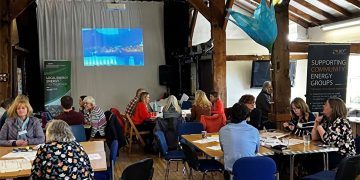
People gathered in a decorated hall for Tadcaster Climathon
Environment

North Yorkshire villages take energy into their own hands

by Kay Johnstone
31 October 2026
Next Post
“David Frost Dinner Michel Barnier” by Number 10 is licensed under CC BY 2.0

The perils of megaphone diplomacy

PLEASE SUPPORT OUR CROWDFUNDER

BROWSE BY TAGS

Art Books Boris Johnson Bradford Charity Climate Change Cost of Living Covid-19 Creative Industries Crime Democracy Devolution Donald Trump Environment Equality Experience Farming Festival Gaza Conflict General Election History Human Rights Immigration Iran Journalism Keir Starmer Labour Leeds Media Mental Health NHS Northern Ireland Protocol Pollution Poverty Recipe Refugees and Asylum Seekers Restaurants Retained EU Law Review Rishi Sunak Sheffield Theatre Travel Ukraine USA
Yorkshire Bylines

We are a not-for-profit citizen journalism publication. Our aim is to publish well-written, fact-based articles and opinion pieces on subjects that are of interest to people in Yorkshire and beyond.

Yorkshire Bylines is a trading brand of Bylines Networks Limited which is separate to, but allied with, Byline Times.

Learn more about us

No Result
View All Result
  • About
  • Authors and editors
  • Complaints
  • Contact
  • Donate
  • Letters
  • Privacy
  • Network Map
  • Network RSS Feeds
  • Submission Guidelines
  • Download the Bylines Network App

© 2020-2026 Yorkshire Bylines. Powerful Citizen Journalism. ISSN 3049-9720

No Result
View All Result
  • News
    • Brexit
    • Education
    • Environment
    • Health
    • Home Affairs
    • Transport
    • World
  • Politics
  • Opinion
  • Society
    • Culture
    • Dance
    • Food
    • Music
    • Poetry
    • Recipes
    • Sport
  • Business
    • Economy
    • Science and Technology
    • Trade
  • Region
  • The Davis Downside Dossier
  • The Digby Jones Index
  • Cartoons by Stan
  • Authors and editors

Newsletter sign up

CROWDFUNDER

© 2020-2026 Yorkshire Bylines. Powerful Citizen Journalism. ISSN 3049-9720