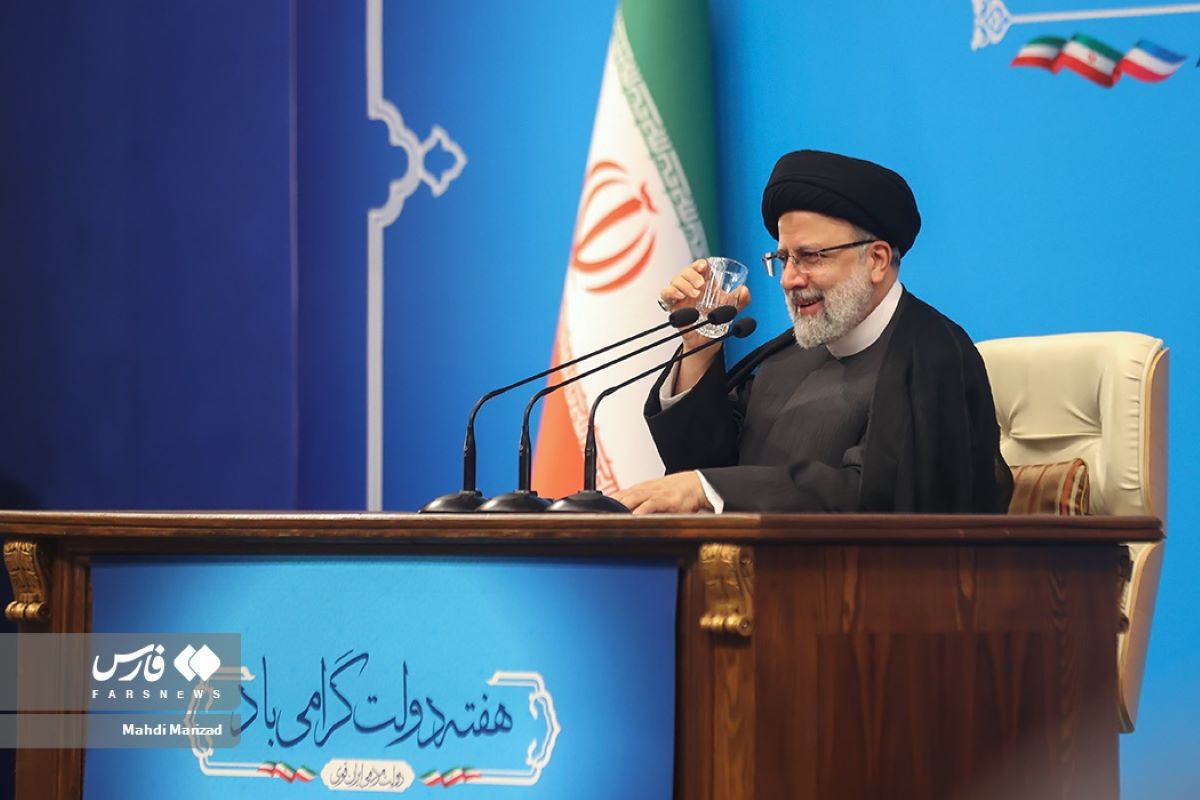
On 12 December, the president of Iran, Ebrahim Raisi, cancelled his scheduled trip to Geneva to address the United Nations Global Refugee Forum out of fear of being arrested over his role in the 1988 massacre of political prisoners, Swiss and international media reported.
Raisi was due to address the forum on 13 December 2023. However, three survivors and witnesses to the 1988 massacre living in Switzerland lodged a legal complaint with the Swiss Federal Public Prosecutor, calling for Raisi’s arrest upon arrival.
Simultaneously, on 12 December, campaign group ‘Justice for the Victims of the 1988 Massacre in Iran’ (JVMI) sent United Nations High Commissioner for Refugees Filippo Grandi and President of the Swiss Confederation Alain Berset a statement co-signed by 450 former world leaders, judges, Nobel laureates, former UN officials, human rights and legal experts and NGOs, denouncing Raisi’s planned participation in the UN forum in Geneva. The signatories pointed out:
“Raisi was a key perpetrator of the 1988 massacre of thousands of political prisoners. His presence at the UN forum contradicts the fundamental values the UN stands for.”
The petitioners behind Monday’s complaint said they could personally identify Raisi as figuring on a commission that sent thousands of jailed opponents to their deaths during the crackdown.
Symbol of brutality in Iran
Previously, in October 2021, the Iranian regime called off Raisi’s visit to Glasgow for the UN Climate Change Conference following a petition signed by former Scottish MP Struan Stevenson and human rights activists. The petition was grounded in the principle of universal jurisdiction, centring on allegations of genocide and crimes against humanity.
Raisi is the symbol of brutality in Iran. The number of executions has drastically increased in Iran since he took office in August 2021.
“The clerical regime’s assault on Iranian society stands as a universal violation of human rights. This aggression directly correlates with the regime’s warmongering across the Middle East, fostering global insecurity through its acts of terrorism and advancement of missile and nuclear programmes.”
These are the words of Maryam Rajavi, the president-elect of the National Council of Resistance of Iran (NCRI), addressing a conference in the Netherlands on 9 December, 2023, the day before Human Rights Day.
A devastating and escalating conflict has engulfed the Middle East in recent weeks, fueled by the Iranian regime’s sponsorship. As the world focuses on this conflict, the regime has intensified both clandestine and overt executions within Iran.

Iran: one execution every six hours
In the wake of the Middle East conflict that erupted on 7 October, the Iranian regime has carried out more than 250 executions, including political prisoners and courageous protesters. In November alone, the regime put at least 120 prisoners to death across the country, averaging one execution every six hours. The National Council of Resistance of Iran (NCRI) has revealed that more than 5,000 individuals remain on death row in Supreme Leader Ali Khamenei’s prisons.
Khamenei and his authoritarian president, Raisi, have found themselves in a stalemate in the face of the Iranian people’s uprising against the regime. Desperate to quell their internal unrest, the mullahs have resorted to external conflicts. This is a hallmark of this regime. The ongoing and devastating conflict has exposed the world to the reality that the religious fascist regime that governs Iran is the head of the snake, the central source of perpetuating war and terrorism in the region, posing a primary threat to global peace and security.
The West has been encouraged to proscribe the Iranian regime’s Islamic Revolutionary Guard Corps (IRGC), responsible for suppression and executions inside and export of terrorism outside Iranian borders as a terror group.
Western parliaments reject all forms of dictatorship in Iran
In June this year, 3,600 lawmakers in 61 parliaments in 40 countries, including 29 majorities in France, Italy, USA, UK, Norway, the Netherlands, Ireland, and others called for the designation of the IRGC as a terrorist organisation and expressed support for a democratic secular Iran, endorsing Rajavi’s ten-point plan for alignment with the democratic principles upheld in Western nations. This manifesto outlines essential principles such as free elections, freedom of speech and assembly, gender equality, separation of religion from the state, and a non-nuclear Iran.
In the UK, 525 cross-party members of parliament including peers signed a statement of support for the ten-point plan calling on government to proscribe the IRGC.
Most recently on 14 December 2023, 530 German lawmakers, including 180 members of the Bundestag and 350 members of the German state assemblies joined their European and American colleagues in expressing solidarity with the Iranian people’s pursuit of a secular and democratic Iran. The German parliamentarians firmly rejected all forms of dictatorship in Iran, including both the ousted Shah’s regime and the current theocratic one. The signatories, again, wholeheartedly endorsed the ten-point plan for the transition period. Rajavi participated in the gathering remotely.
The German statement vehemently condemned the Iranian regime’s interventions and warmongering within the region and its terrorist activities in Europe. It, too, called for the designation of the IRGC as a terrorist organisation and for holding regime officials accountable for their crimes against humanity.
Call for governments to end appeasement
The global support for the Iranian people’s aspirations for regime change in Iran is a testament to the urgent need for change in the failed policy of appeasement by the Western governments. It further underscores the critical importance of addressing the Iranian regime’s escalating terrorist activities and warmongering through proxy groups in the region, which pose a challenge to global peace.
The time has come for Western leaders to adopt a resolute policy towards the theocratic regime, including designating the IRGC and acknowledging the legitimate resistance of the Iranian people under the leadership of Rajavi. By taking this decisive step, they can ensure peace and stability not just within the region, but also on a global scale.