Trees are dying across the world from logging, fire, drought, climate change, pests and disease. Meanwhile, the UK government is struggling to deliver the tree-planting programmes needed to combat climate change. This is compounded by the loss of newly planted trees and pressure to release land for housing. This article examines the threats facing trees and the growing gap between political commitments and what is actually being achieved.
The title of this article might sound like the opening line of a poem. In reality, it might better describe a requiem, because the consequences of human activity in the form of environmental degradation are causing trees to die.
Trees, which generate oxygen and absorb carbon dioxide, are an essential link in the chain that supports our ability to survive as a species. Human activity and the by-products of that activity are causing our climate to change and this is having a massive negative effect on the ability of trees to survive healthily.
The global impact
The World Bank estimates that 15 billion trees are felled annually across the globe (quoted figure from 2021). In the period 2022–2025, that amounts to the felling of 60 billion trees. A truly staggering quantity, resulting directly from intentional logging activity, with devastating consequences for the environment, indigenous peoples and the climate.
If this were not enough… climate change, itself driven by human activity, is causing significant tree loss. Research published by Nature Communications highlights the fact that 17,000 tree species are at risk of extinction as a result of rapid global change.
If this were not enough… trees are also being lost to fires, whether natural or caused by human activity. Global Nature Watch describes it thus:
“In 2020 the world had 3.5 Gha of natural forest, extending over 27% of its land area. In 2025 it lost 23 Mha of natural forest, equivalent to 9 Gt of CO2 emissions.”
Stark warning
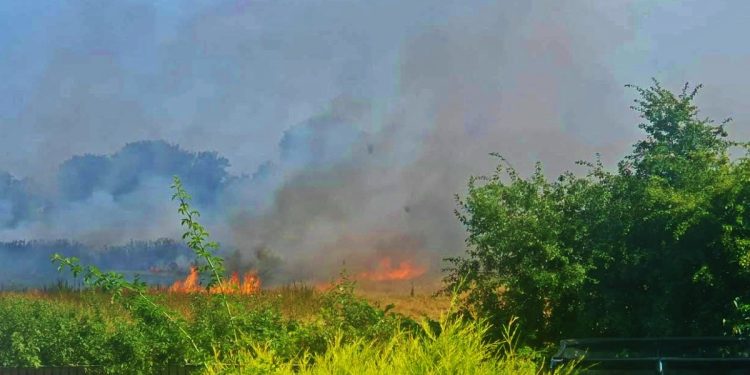
The data provide stark evidence of tree loss, and the alarm bells have been ringing for many years. So why is it that, having driven many hundreds of species into extinction, we are not recognising the fact that we could be doing the same to ourselves?
Perhaps tree loss will not lead to the doomsday scenario implied thus far. Certainly, scientists at the Massachusetts Institute of Technology, writing in 2023, seemed to think we are not on a trajectory towards extinction, with the caveat “unless we act quickly to stop warming the planet, there will be very severe consequences for many, many people”.
The myth that climate change is a “con job”
Are governments acting quickly enough? Since 2025, one office that could have played an important role in mitigating the effects of climate change, namely that of the President of the United States, has been occupied by someone who believes climate change is a “con job”.
Well, Mr President (hopefully an avid follower of Bylines), take a look at the facts – or even just the images of what is happening in the land you preside over, and elsewhere around the planet we share with you.
The UK’s plan to save the planet
To combat climate change, the government recognised the need for more trees to be planted. However, it is one thing for a whip or sapling to be planted and quite another for it to survive to maturity.
In 2022, there was a government commitment to “increase tree and woodland cover from 14.5% to 16.5% of land area by 2050”. Lord Benyon, then Minister of State at DEFRA, stated: “We made a commitment in our manifesto to increase annual planting across the UK to 30,000 hectares by the end of this Parliament.”
This annual target was never achieved. This table shows how far short of the target 30,000 ha of trees planted each year we have fallen:
| Planting year | 000 ha planted | Target gap: The catch up 000ha |
| 2022–23 | 12.96 | 17.04 |
| 2023–24 | 20.66 | 9.34 |
| 2024–25 | 15.58 | 14.42 |
| Total | 49.2 | 40.800 ha not planted |
So we are around 41,000 ha short in tree planting over this period, based on the government’s own targets. There is a lot of catch-up to do, and this is compounded by the increasing loss of trees caused by the very problem the government is attempting to mitigate – climate change. Is the target now unachievable without the right investment? Who will be held to account in 2050 for such a catastrophic failure?
People are being paid to make the right noises while failing to achieve the target.
The toll of the hot, dry summer
What has been the effect on the health of trees in the UK as a result of this summer’s lack of rainfall and intense heat – both results of the climate crisis? There doesn’t appear to be much in the way of reliable current data.
The National Trust reported in 2025: “Newly planted saplings at the places we care for suffered losses of up to 40 per cent – far above the expected 10–15 per cent factored in each year.”
The potential real scale of tree loss
It’s possible to use current figures to hypothesise on how many trees we are potentially losing. Depending on the size of whip or sapling, typical distances between trees to be planted is 2 to 2.5m. If 49,200 hectares are planted (see table above) on such a basis, this would result in approximately 78 million trees. A 40% shortfall means that we are missing over 31 million trees: almost 20,000 hectares of newly planted woodland no longer occupied by viable trees, reducing the effective area potentially from 49,200 hectares to 29,520 hectares. And we do not know what the successive annual loss of trees might be. That is pretty dismal if this is anywhere near reality.
Trees under attack

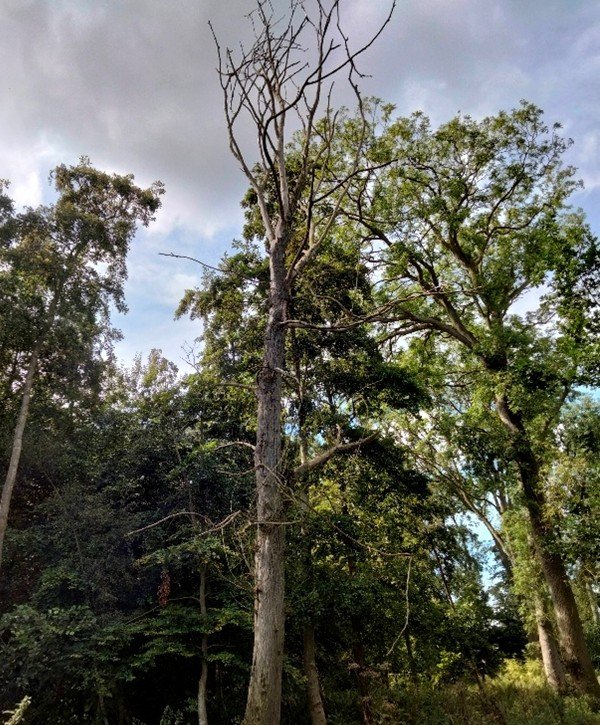
You may have noticed leaves turning brown and some tree species shedding leaves. This is a response to drought. Furthermore, drought conditions can lead to major branch collapse as a defensive response to a lack of water.
The oak tree in this photograph has lived longer than any human being. Ironically, it is a direct consequence of human activity that has caused this magnificent specimen to suffer and collapse. This is a sign that we all need to understand and respond to.
Pests and diseases
And if this were not enough for trees to deal with, they are succumbing to the effects of pests and diseases which are increasing with the warming climate.
The latest alert from the Forestry Commission highlights the damage caused to spruce trees by the eight-toothed beetle, Ips typographus. Please note one of the comments:
“I have evidence of these in my woodland, I sent a full report to the forestry commission 8 months ago, never heard anything back, send a follow up email 3 months ago, never heard anything.”
On top of all the threats highlighted, it would appear that a government department simply adds to the problem, while being supported by the taxpayer!
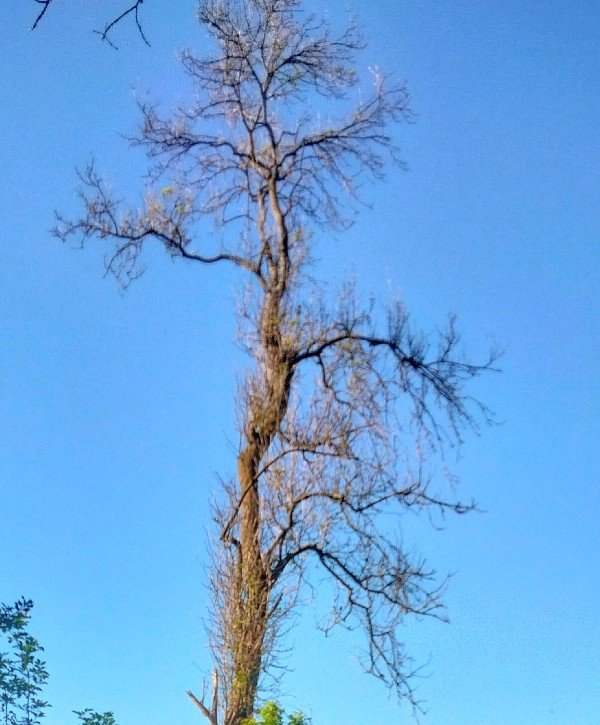
With all the threats to trees globally, nationally and on your street (if the council hasn’t cut them down in case a conker falls on your head!), there are challenges that governments and their agencies need to get to grips with and ‘act quickly’.
UK government housing targets: green belt at risk
More land is needed for housing. At the local level, this contradiction could not be more apparent:
- “Government requires us to review our Green Belt to assess its continued role and identify potential land for future growth.” Objective 12. Leeds Local Plan 2024–2042
- “Some Green Belt land is likely to be released to meet local needs because we don’t have enough brownfield land in the right places.” Objective 14. Leeds Local Plan 2024–2042
The contradiction is clear: while we are being urged to plant and protect more trees, pressure for housing is simultaneously putting more green land at risk.
The cost of failure
The significance of trees to the planet’s health is recognised, yet the rate of global tree loss is greater than the rate at which they are being replaced. This is unsustainable. The government is clearly failing to deliver on the commitments it has made. Targets are set, but without the resources or means to achieve them, what is the point? Hot air is generated, taxpayer money is wasted, but the established trees we need are not delivered. What is the UK planning to spin at the next climate change conference?
What a complete snafu it is. And while governments debate targets and resources, the consequences will not be shared equally. The voiceless global poor are likely to suffer the most.

Bylines Network Gazette is out!
The latest Bylines Network Gazette is out now. Become a Friend of Bylines Network or upgrade to a paid Substack subscription, and you will get access to a vital collection of citizen articles and stories.
Journalism by the people, for the people.