This is an article about language and meaning. Last week the United States surpassed even its own record of discriminatory and illegal trade measures by imposing, via Section 301 of its Trade Act, tariffs of 10% or more on 60 economies as diverse as Cambodia and the EU, ostensibly due to the prevalence of forced labour in all these countries. Pot calling the kettle black did I hear?
Less noticed was a separate punishment dealt to Canada, for long the US’s closest trade partner, under a rarely used statute, Section 338 of the 1930 Trade Act.
That statute allows the White House, without much check, to impose duties or other trade sanctions on countries that in his view provide more favourable treatment to other countries’ goods compared to those of the US.
Section 338 is in a way a crude precursor of what later became, at the US’ bidding, the foundational principle of the GATT and the WTO, namely the most favoured nation (or MFN) clause, which states that any tariff concession given to one country has to be extended immediately and unconditionally to all other WTO members.
Section 338, however, gives enormous discretion to the president to judge what is discriminatory treatment.
Hard cheese
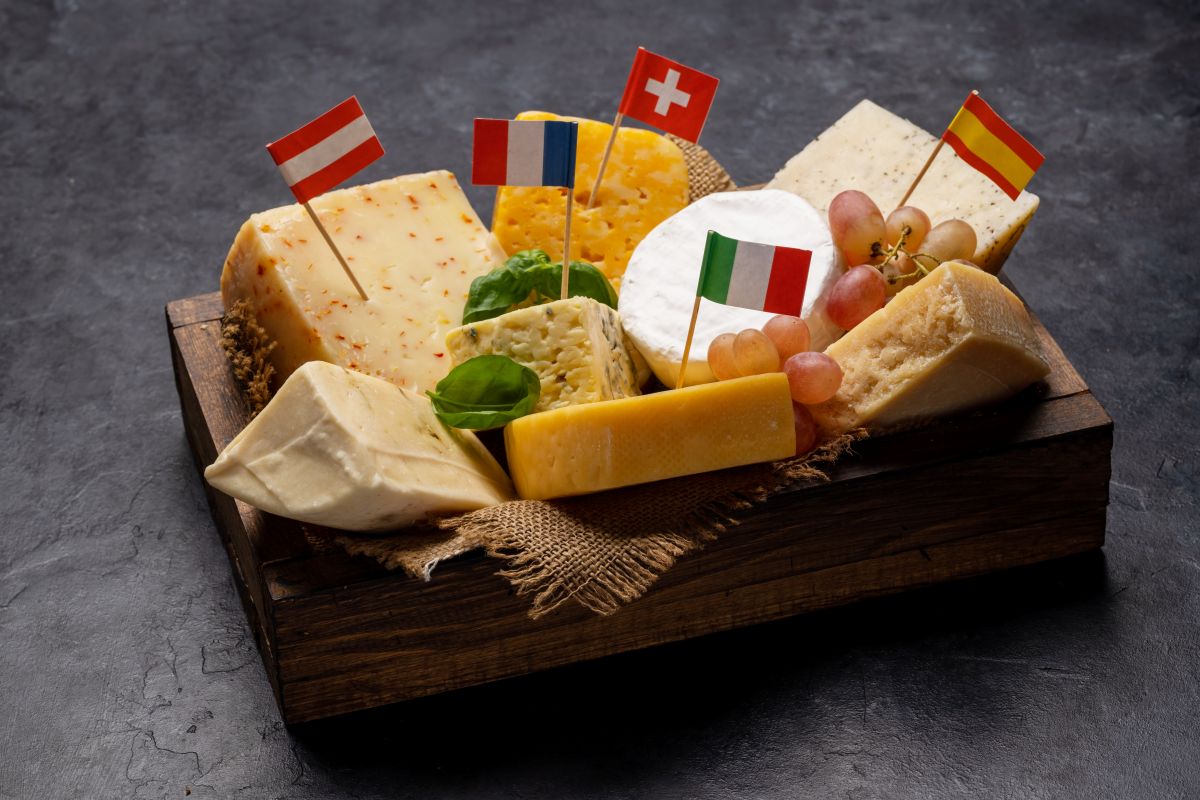
In the present case, the US’s gripe is partly over the fact that Canada, in its free trade agreement with the EU known as CETA (part of which I negotiated), gives the EU a cheese concession which is more favourable than the concession for US cheeses under the US-Mexico-Canada free trade agreement – USMCA.
Specifically, the 18,500-tonne duty-free quota for the EU is bigger than the US’s 12,500-tonne quota. Unlike in USMCA, Canadian retailers anxious to import ‘European quality cheeses’ hold the import licences for a big chunk of the quota. They hold no import licences for US cheeses coming in under the USMCA.
I am quite proud of this cheese quota my team and I negotiated back in the day for two reasons. First, it was the first serious inroad into Canada’s famously protected dairy sector. The European Dairy Association is very happy with it. Secondly, because the then-head of the European Commission’s trade directorate, Jean-Luc Demarty, who is NEVER wrong, told me I would never get more than 16,500 tonnes…!
But that is a parenthesis that probably just rubs salt in the US’ wounds.
The response
The US government regards the Canadian cheese concession to Europe as discrimination that hurts US exporters. In response, it has placed a 25% tariff on a range of Canadian goods as a penalty, with a threat to raise this to 100% or higher if Canada does not give in.
True, the CETA cheese concession IS discriminatory in the EU’s favour, but it’s an explicitly permitted form of discrimination.
That is the whole point of an FTA. Is it futile to point out to the US, which seemingly does not do irony, that free trade agreements, which give more favourable treatment to the FTA partner, are a recognised exception to MFN? GATT Article 24, my friends!
Section 338 action is, therefore, likely inconsistent with the US’s own GATT commitment to respect FTA exceptions – or it should litigate at the WTO if it has doubts.
This is doubly ironic given the US’s insistence in the last decade that a country’s recourse to MFN exceptions in the WTO, especially the national security exception, cannot be challenged. The US presumably agrees with Mark Twain that “consistency is the hobgoblin of the small minded”.
Paradise Lost
To paraphrase John Milton’s Paradise Lost: irony piles upon irony.
The US itself has many bilateral free trade agreements, including USMCA, and also FTAs with Morocco, Australia, the Andean Community, Vietnam, Singapore … and many others.
These, by definition, give more favourable treatment to imports from the US compared to other countries. In return the US gives better access to these partners to its own market.
Would the US accept being sanctioned by the EU for giving more favourable tariff treatment to one of its FTA partners?
The US’s position is doubly nonsensical since it HAS an FTA with Canada, which it is currently renegotiating. It is, therefore, at liberty to seek improvements to its cheese or any other products’ access. Is it possible that the US is invoking Section 338 for leverage?
MFN forward
MFN clauses are increasingly common features in FTAs. The EU-Japan FTA, for example, includes a clause whereby, if Japan in the future gives another country better access than it gave the EU, it has to extend that better treatment to EU exporters.
Such provisions obviously only apply in the case of non-liberalised products like agricultural quotas.
But the clauses have had a chilling effect, making countries cautious in the concessions they give for fear of having to compensate existing FTA partners.
But I digress. Back to the US.
The US in one fell swoop is both applying via Section 338 a very broad, subjective, and frankly protectionist interpretation of the GATT MFN clause, while disregarding the reality of the GATT Article 24 exception for regional trade agreements and defending to the death other exceptions like national security.
Canada will survive this tantrum. Prime Minister Mark Carney has sensibly shrugged off the US threat and the new tariff.
The real problem lies in the steady erosion of the MFN principle, the North Star of the international trade system.
“Why, sometimes I’ve believed as many as six impossible things before breakfast” – Lewis Carroll
The US trashed MFN through last year’s discriminatory ‘Liberation Day’ tariffs. It has done so ever since, calling on the WTO to review this foundational principle along with other jewels in the crown like consensus.
Washington is consciously turning the MFN principle on its head. It has labelled its discriminatory price agreements with a gaggle of pharmaceutical companies as ‘MFN Agreements’.
This writer cannot see any relation between the WTO MFN rule forbidding discrimination between like products and the US’s sweetheart deals with pharmaceutical companies that will enjoy a lower import duty if they relocate manufacturing back to the US.
This was a deliberate choice by US officials to misappropriate the term MFN to this policy.
The tactic is similar to the misuse of the concept of ‘reciprocity’ in the US’s bilateral and patently non-reciprocal trade agreements with the EU, Japan, the UK, Switzerland, and others. It is a deliberate semantic smear devised by clever US trade officials.
Manipulation of language
As regards MFN, we are witnessing a strategy of semantic erosion characteristic of the ‘MAGA’ movement’s conscious manipulation of language.
The term is questioned, relativised, progressively divested of agency and drained of meaning until it becomes fair game for negotiation and ultimately abandonment. Goebbels understood this propaganda technique well.
The EU is embarking on a similar slippery slope with its own clumsy questioning of MFN via two submissions this year to the WTO, and Trade Commissioner Maroš Šefčovič’s public statements.
As the British poet T.S. Eliot wrote in beautiful lines in his Four Quartets, written in 1936 as fascism spread across Europe, with a warning to us all:
Words strain,
Crack and sometimes break, under the burden,
Under the tension, slip, slide, perish
Decay with imprecision, will not stay in place,
Will not stay still…

Bylines Network Gazette is out!
The latest Bylines Network Gazette is out now. Become a Friend of Bylines Network or upgrade to a paid Substack subscription, and you will get access to a vital collection of citizen articles and stories.
Journalism by the people, for the people.