



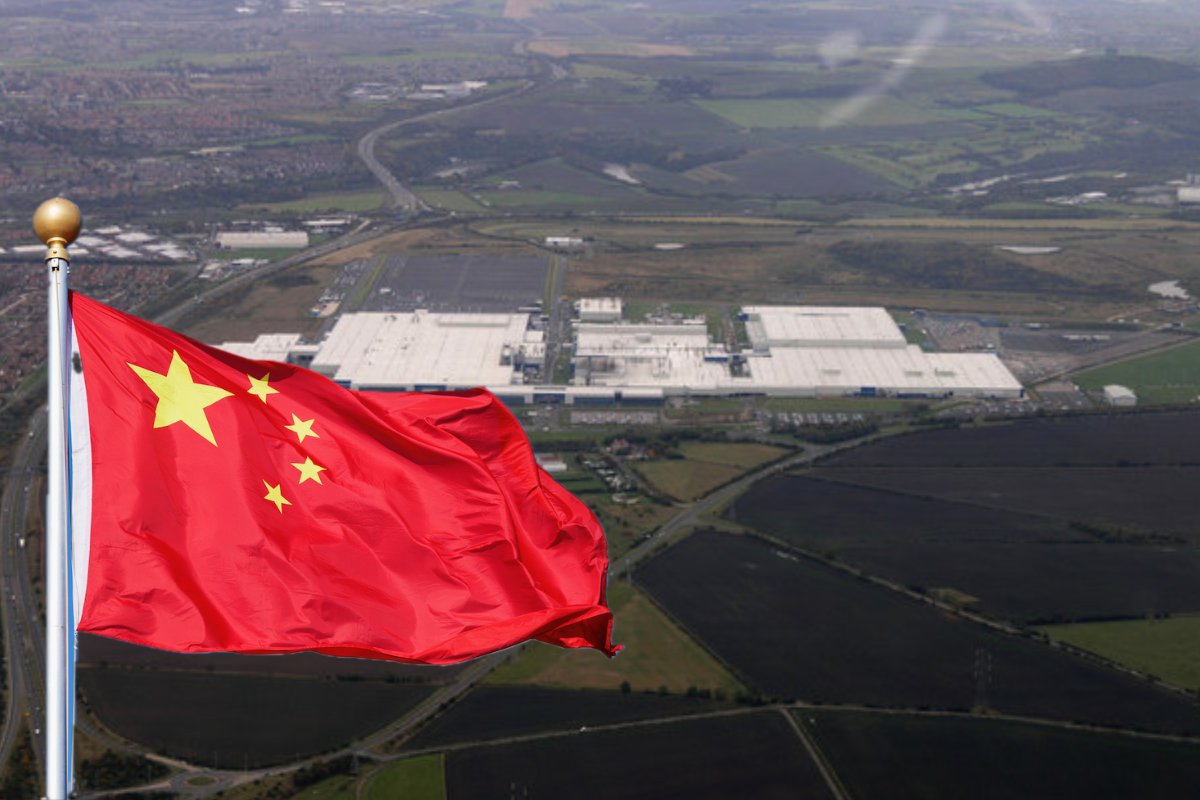
The recent news that Nissan in the UK has signed a memorandum of understanding with the Chinese electric vehicle (EV) auto-manufacturer Chery to make its EVs in Sunderland was welcomed by the UK car industry’s main union, Unite.
Unite’s Des Quinn, one of the union’s national officers for the auto sector said: “It’s the news our union reps in the UK auto sector and the supply chain have been arguing for some time. Manufacturing new a Chinese EV will give a much-needed boost to our auto sector and UK manufacturing.”
“Of course, we will have to wait and see the final deal, but Chinese EV manufacturers have been looking for some time for manufacturing and assembly facilities in Europe. There are plans to have a Chery HQ on Merseyside. This is the first step in any government plan to reach 1.3 million [electric] vehicles produced in the UK, [while] also, importantly, developing the auto supply chain, which is much needed.”
Following Keir Starmer’s visit to China in late January this year, there were rumours that some kind of a deal could be in the offing after business minister Peter Kyle let slip that that a Chinese car manufacturing company was looking to set up an HQ in the UK.
European carmakers build relationships with China
And there are also signs that the relationship between Nissan and Chery (the parent company of the Omoda, Jaecoo and Lepas marques) has been building. Previously, Nissan has sold two of its plants to Chery: in 2024, a Barcelona factory was sold to make the Ebro brand and, in January 2026, the Rosslyn plant outside Pretoria, South Africa.
European carmakers have also been looking to get a piece of the action, recognising that they would have little choice but to change tack rather than merely defending their own market share. Stellantis which owns Peugeot, Fiat and Vauxhall has now said it would look to produce EVs for China’s Leapmotor.
Ford, an American company is looking to sell part of its plant in Valencia, Spain, to Geely. Volkswagen has also said it is open to working with a Chinese company, although Xpeng’s managing director of northeastern Europe, Elvis Cheng, is reported by the Financial Times as saying VW plants were “a little bit old”, while evaluating factory acquisitions in Europe to meet the technical requirements of next-generation vehicles.

Sunderland as UK launchpad?
Professor David Bailey of Birmingham University and an expert on the global auto industry told me in an interview: “Chery building cars at the UK’s biggest car factory is a pivotal moment. This is not a question of Nissan helping out Chery – it’s Chery keeping a major Nissan factory busy. Chery will have a dedicated track –line one – in Sunderland. The balance of power is no longer in Detroit, Tokyo and Europe; it is moving to China. Sunderland could be the launchpad for China’s expansion into the global auto industry.”
According to reports in Business Matters, the Sunderland factory itself “would remain wholly Nissan-owned and the workforce would stay on the Japanese company’s payroll.”
Sunderland currently builds the Qashqai and electric Leaf with the new Juke EV due to join them on the line from next year.
In addition, and potentially to ensure compliance with the EU rules on manufactured content – to avoid the 10% tariff – the battery plant owned by Envision AESC in Sunderland could be used to supply the next generation of EV batteries.
Optimism for the future
In response to my question as to whether this development could see the return of the UK auto industry as the UKs manufacturing “jewel in the crown”, David Bailey responded: “The UK auto industry has been in bad shape. We have suffered a low–volume crisis and we will still need more of this kind of investment – but it’s a game changer.”
Unite’s Des Quinn was also optimistic and told me: “Well, we look forward to more Chinese models being made here in the UK, that’s the view of our union reps and members – and we have a skilled, highly productive and unionised workforce.’

Traditional local journalism is shrinking, news deserts are growing, whilst disinformation, AI content and political polarisation dominate social media.
Join some of the leading voices in independent media for a timely discussion on the future of journalism..
The event will conclude with a live audience Q&A.