• Contact
  • About
  • ISSN 3049-9720
  • Authors and editors
NEWSLETTER SIGN UP
Yorkshire Bylines
Advertisement
  • Home
  • News
    • Brexit
    • Culture
    • Education
    • Environment
    • Home Affairs
    • Transport
    • World
  • Politics
  • Opinion
  • Society
    • Food
    • Music
    • Poetry
    • Sport
  • Business
    • Economy
    • Science and Technology
    • Trade
  • Region
No Result
View All Result
Yorkshire Bylines
Home Politics

Language and power: Trump’s war on ‘woke’ words

Don’t mock Trump’s attempt to purge the language: it hides a more disturbing agenda

Josephine Ingram by Josephine Ingram
18-03-2025 06:39 - Updated on 08-09-2025 17:33
in Politics
Reading Time: 6 mins read
A A
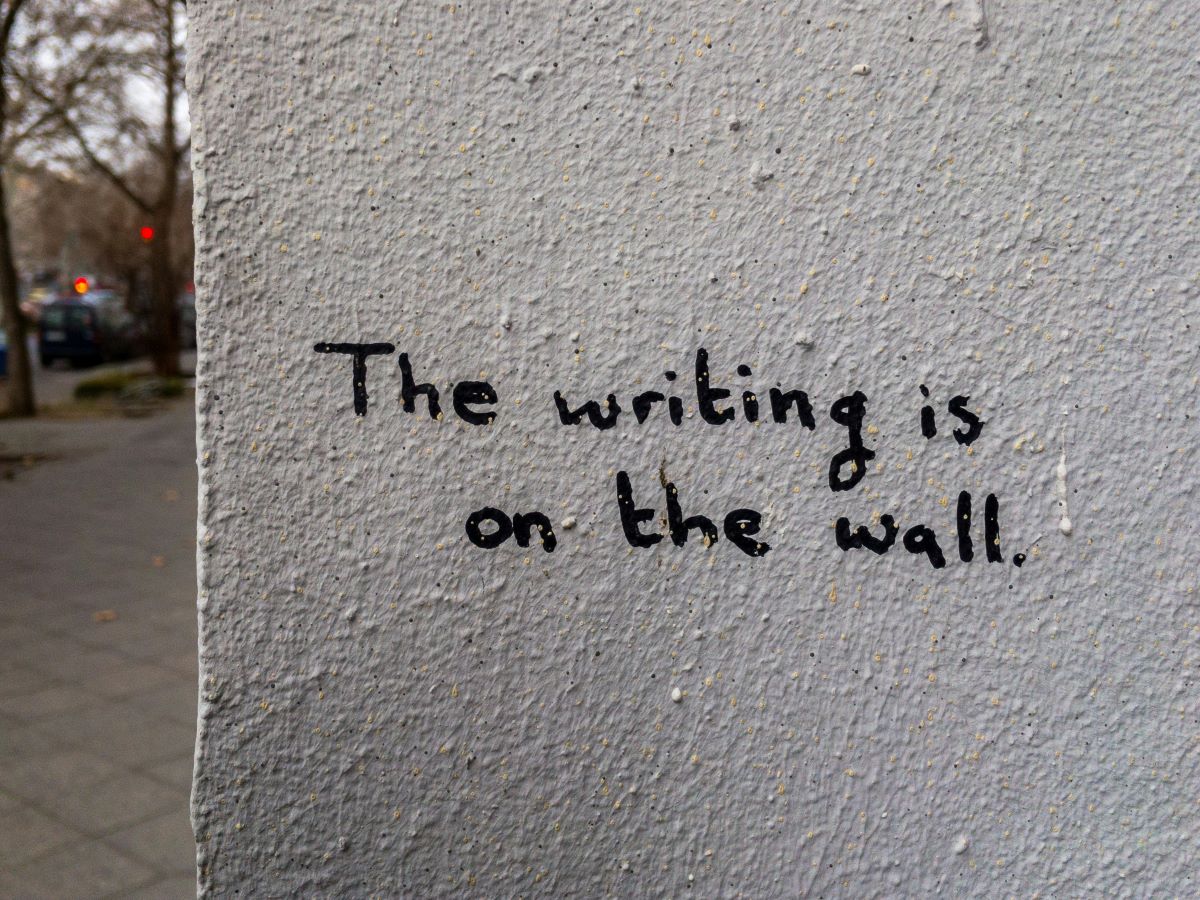
wall with writing that reads 'The writing is on the wall'

Image by Randy Tarampi on Unsplash

Share on Bluesky

The German philosopher Ludwig Wittgenstein once said: “The limits of my language mean the limits of my world”. Whilst other philosophers may argue about this (after all, it’s what philosophers do), there’s no doubt that in order to communicate with each other, we need a shared – and also varied – vocabulary.

The same notion was later explored by George Orwell, both in his novel Nineteen Eighty-Four and his lesser-known, but equally important essay Politics and the English Language. I’ve commented elsewhere on how expressions from Orwell’s novel have become commonplace in our language and culture, but in addition to coining new expressions, Orwell was also concerned about how the reduction of our language to a controlled set of words could have a detrimental effect on the expression of thoughts and ideas.

The war on woke

Those who have been closely following the news from across the Atlantic, will be aware of Donald Trump’s ban on certain ‘woke’ words from appearing on federal government websites. Among the words and phrases he objects to, are ‘clean energy’, ‘racial identity’ and even ‘women’. Naturally, this has caused some consternation and confusion – not least, because many of the terms have more than just the ‘woke’ meaning that is being targeted. There was a bit of schadenfreude in some quarters at the realisation that references to the Enola Gay aircraft had been flagged for removal under his new edict.

Ironically, on his first day in office, Trump had signed an executive order titled ‘Restoring Freedom of Speech and Ending Federal Censorship’. The order declared, “Government censorship of speech is intolerable in a free society”. The main source of his ire appears to be a social media crackdown on the spreading of misinformation rather than a genuine desire to allow people to express their views – political or otherwise – freely.

Even on our own side of the Atlantic, certain politicians and the mainstream media have been vocal in their support for ‘free speech’, bemoaning the so-called ‘cancellation’ of some words by the ‘woke’. Nigel Farage recently gave a speech to CPAC in Washington DC, in which he claimed that “We should be able to say whatever the hell we want”, going on to complain that “in my country you can’t say anything or you might get put in prison”. Fortunately for Nige, help was at hand: enter that well-known hero of free speech – Elon Musk!

Senior couple walking together in street
Health

Lasting power of attorney – a question of trust

by Josephine Ingram
14 February 2025 - Updated on 30 March 2025

Censorship as a political act

It would be easy to write this off as another off-the-wall or irrational decree from a president who appears to specialise in bizarre ideas. However, censorship of language has long been a political act. In the 19th century, the (essentially English) British government tried to prevent children in Wales from speaking Welsh. Similar acts were prevalent in many countries across the British Empire – witness the restoring of original place-names post-colonisation – Mumbai, back from Bombay, or Dun Laoghaire from Kingston, for example.

The extreme – albeit fictional – example of linguistic censorship is Newspeak – the official language in Nineteen Eighty-Four. One of Orwell’s characters, Syme, explains:

“Don’t you see that the whole aim of Newspeak is to narrow the range of thought? In the end we shall make thoughtcrime literally impossible, because there will be no words in which to express it. Every concept that can ever be needed will be expressed by exactly one word, with its meaning rigidly defined and all its subsidiary meanings rubbed out and forgotten…”

Much of Orwell’s views on language change could be seen as hyperbolic – he was criticised both in his own time and more recently by what some saw as his over-pessimistic view of the future. His analysis of language as a form of control, however, is not without precedent – as Wittgenstein had previously observed, and the colonisers who tried to ban native languages had practised.

When we read about Trump’s renaming of the Gulf of Mexico to the Gulf of America and the insistence of the White House press secretary that this is the “correct” name, it’s not hard to see something Orwellian in this chilling reject-the-evidence-of-your-eyes-and-ears moment – particularly as expulsion from press conferences was threatened for the news agencies that didn’t use it.

Doublethink

By restricting the use of language, Trump is following a well-trodden path, one that is about control. By re-shaping the ‘official’ language of the federal agencies, he is censoring what can and can’t be said by government employees. Taken to the extreme conclusion, this could result in the erasure of identities and the limitation of certain human rights – after all, how can you discuss people, ideas and principles if you don’t have the language to do so? It’s also worth noting that by removing the use of certain words from official documents, he is also fundamentally altering what source information is available to AI, which will gradually also change the results produced. Trump is inhabiting a contradictory position. He is claiming to end federal censorship, yet he is enacting his own form of censorship.

To return to Orwell and Nineteen Eighty-Four, there is a word that perfectly exemplifies Donald Trump’s championing of free speech, while simultaneously attempting to restrict it: that word is ‘Doublethink’.


    Superb piece.  It deserves a coffee…
Tags: Donald TrumpUSA

Sign up for the Yorkshire Bylines newsletter

* indicates required

Consent for having Bylines Network store my submitted information

You can unsubscribe at any time by clicking the link in the footer of our emails. For information about our privacy practices, please visit our website.

We use Mailchimp as our marketing platform. By clicking below to subscribe, you acknowledge that your information will be transferred to Mailchimp for processing. Learn more about Mailchimp's privacy practices.

Josephine Ingram

Josephine Ingram

Jo Ingram is the student and education co-ordinator for Bylines Network and also edits articles for Yorkshire Bylines. She previously worked in further education in West Yorkshire. She swims regularly and is learning French and German. Follow her on Bluesky

Related Posts

Wooden blocks painted with the European Union EU flag placed on a Europe map, symbolizing European unity, integration, politics, and economy
Politics

Embracing EU free movement should hold no terrors for the UK

by Richard Corbett
6 November 2026
Chelmsford, Essex, United Kingdom - May 08th 2026: Reform UK Leader Nigel Farage speaks at Chelmsford Race Track after sweeping local election victories for his party. Credit: Will Colebourne
Home Affairs

‘Reforming’ Britain? A window to the past

by Dr Pam Jarvis
30 October 2026
Flag of county Yorkshire, UK at cloudy sky background on sunset, panoramic view. County of United kingdom of Great Britain and Northern Ireland, England.
Opinion

Who scrutinises Yorkshire-wide decisions?

by John Hall
29 October 2026
Barack Obama and Donald Trump face one another at the US Capitol during the presidential handover in January 2017. Obama rests his hands on Trump's arms as the two men exchange words.
Opinion

J’Accuse: how Obama’s triumph helped fuel Trump’s rise

by J 'Masharubu' Strauss
26 October 2026
Make Votes Matter protest at Westminster. One activist holds a banner that says, "Our FPTP voting system fails to give us representation in govt".
Constitutional Affairs

On the urgency of reforming our electoral system

by John Cole
23 October 2026
Next Post
cargo ship with shipping containers

Labour’s dilemma: fixing the UK’s trade deals

PLEASE SUPPORT OUR CROWDFUNDER

BROWSE BY TAGS

Art Books Boris Johnson Bradford Charity Climate Change Cost of Living Covid-19 Creative Industries Crime Democracy Devolution Donald Trump Environment Equality Experience Farming Festival Gaza Conflict General Election History Human Rights Immigration Iran Journalism Keir Starmer Labour Leeds Media Mental Health NHS Northern Ireland Protocol Pollution Poverty Recipe Refugees and Asylum Seekers Restaurants Retained EU Law Review Rishi Sunak Sheffield Theatre Travel Ukraine USA
Yorkshire Bylines

We are a not-for-profit citizen journalism publication. Our aim is to publish well-written, fact-based articles and opinion pieces on subjects that are of interest to people in Yorkshire and beyond.

Yorkshire Bylines is a trading brand of Bylines Networks Limited which is separate to, but allied with, Byline Times.

Learn more about us

No Result
View All Result
  • About
  • Authors and editors
  • Complaints
  • Contact
  • Donate
  • Letters
  • Privacy
  • Network Map
  • Network RSS Feeds
  • Submission Guidelines
  • Download the Bylines Network App

© 2020-2026 Yorkshire Bylines. Powerful Citizen Journalism. ISSN 3049-9720

No Result
View All Result
  • News
    • Brexit
    • Education
    • Environment
    • Health
    • Home Affairs
    • Transport
    • World
  • Politics
  • Opinion
  • Society
    • Culture
    • Dance
    • Food
    • Music
    • Poetry
    • Recipes
    • Sport
  • Business
    • Economy
    • Science and Technology
    • Trade
  • Region
  • The Davis Downside Dossier
  • The Digby Jones Index
  • Cartoons by Stan
  • Authors and editors

Newsletter sign up

CROWDFUNDER

© 2020-2026 Yorkshire Bylines. Powerful Citizen Journalism. ISSN 3049-9720