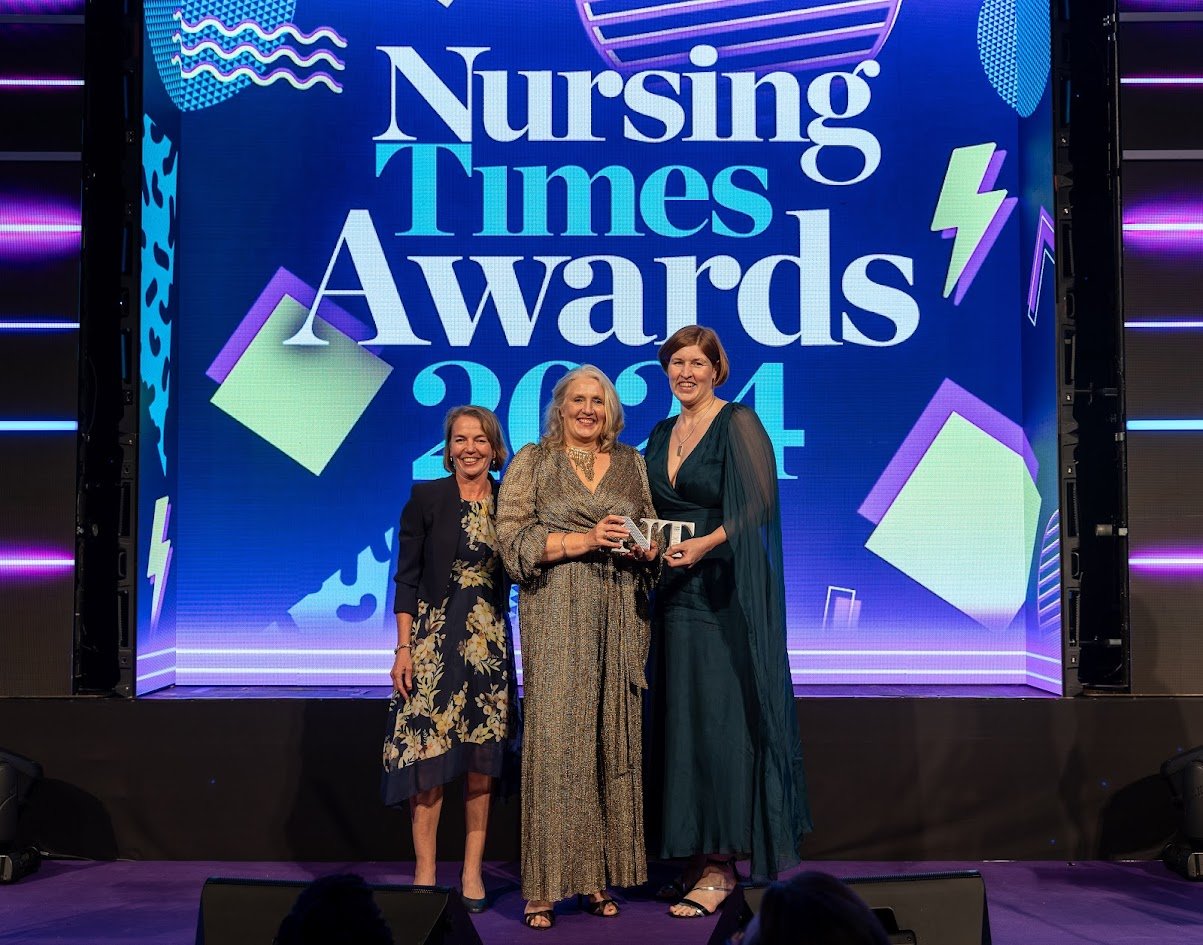
A pioneering service that helps patients to manage the physical, mental and emotional consequences of cancer treatment in the months and years afterwards has won a top national nursing award.
The nurse-led Late Effects screening service at Sheffield Teaching Hospitals NHS Foundation Trust has scooped the Ingrid Fuchs Cancer Nursing award at the Nursing Times awards.
Late effects are debilitating side effects of both older and emerging cancer treatments that can become permanent or appear months or years after cancer treatment. These include physical, emotional and psychological consequences of treatment such as bone loss, infertility, diabetes, heart problems, nerve damage, anxiety and post-traumatic stress difficulties.
Innovative support for cancer patients
Launched in 2009, the first-of-its-kind service provides specialist advice, support and management to patients living with and beyond cancer who suffer with late effects of cancer treatment.
The internationally renowned service has since expanded, and now provides support for stem cell transplant patients, immunotherapy patients and those who have had pelvic radiation disease and myeloma.
The new immunotherapy Late Effects clinic run by Dr Joanne Bird once again broke new ground as one of the first of its kind in the country. It has helped with the early identification of the impacts of immunotherapy treatment to aid quicker interventions. This new clinic builds on the success of the original Sheffield Late Effects service to support those living with the after-effects of novel immunotherapy treatments.

A service praised by judges…
The judges hailed the team for “addressing physical, emotional, social and financial impacts through dedicated clinics and innovative pathways for both paediatric and adult patients”.
Regarding the service itself, they said it is:
“A great example of nurse-led innovation, using nursing skill, knowledge and research to develop a service focused on the effects of current and emerging cancer treatments. This groundbreaking team are at the forefront of late effects management across the UK, developing new pathways, digital solutions and a strong nurse-led research infrastructure.”
Professor Diana Greenfield, nurse consultant at Sheffield Teaching Hospitals NHS Foundation Trust, who founded and leads the service, said:
“We are thrilled to be given this award. While cancer treatments are life-saving the success of modern cancer treatments also means more and more patients are living with the long-term consequences of treatments, impacting physically, mentally and emotionally. Our driving force is our patients whose stories we hear and learn from every day. We have a fantastic team here in Sheffield. I’m incredibly proud of all they do.”
…and patients alike
Gill Allan received treatment for her Hodgkin’s lymphoma said the Late Effects service had been instrumental in helping her to regain a quality of life which she “assumed had been forever lost”.
Gill suffers with two rarer types of late effects, but thanks to the team, she has been able to understand her late effects, something she describes as a “revelation”.
She explained:
“Ten years ago, I was struggling with overwhelming chronic fatigue, pain, stiffness and losing my mobility. I couldn’t drive or go out without assistance or somebody with me. My overall quality of life was poor, and I felt fearful for my future.
“The quality of my life has improved immeasurably. I can now drive short distances in an automatic car and walk further distances after taking part in a tailored exercise rehabilitation programme. Without the compassion and exceptional knowledge of the Sheffield team, I wouldn’t have made any progress and I’d probably be disabled at home.”
Terry Reddick was diagnosed with advanced kidney cancer over two years ago. He was referred to the new immunotherapy Late Effects service in May 2024 after suffering with severe itching. Like Gill, he thanked the team for helping him cope with the debilitating side effects of his immunotherapy treatment:
“I felt listened to and understood. For the first time it gave me hope that it could all be brought under control. The results have been brilliant – and the itching has virtually stopped. It’s made a tremendous difference to my life.”
CLICK HERE TO DONATE TO OUR CROWDFUNDER
HELP US BECOME STRONGER SO THAT WE CAN CONTINUE TO DELIVER POWERFUL CITIZEN JOURNALISM!