Jacques in Shakespeare’s As You Like It was wrong. All the world is not a stage. The stage is the world’s rehearsal room. It is where we memorise our lines, try out our costumes and smooth out the marks of doubt that disfigure our faces. It is where we learn how to cope with life before we are forced to do so. There is a sign on the door that says ‘Culture’.
There are seven stages to culture, not “ages”, as Jacques evidently misspelt. What we learn with each stage is never quite forgotten. It lingers with us, so that when we are old, we can feel what it was like to be a child.
Stage one: mewling and puking
In the first stage, while we are “mewling and puking” (according to Jacques) in somebody’s arms, we are calmed by lullabies and stories that end ‘happily ever after’, the soothing arts.
They comfort and cradle. Without them, the world would be an alarming place, too loud and harsh for our comprehension. Their protection, however, is limited.
Stage two: unwillingly to school
As we grow older and “creep like a snail unwillingly to school”, we are trained in the grammar of the outside world. We learn how to stick to the rules, but in our bedrooms at night, we play wild video games. These are the arts of conquest and adventure. The high point comes when the Ruler in Chief, the Emperor of Everywhere, pins a medal on our jacket to signify that we are ‘Grown Up’.
Stage three: puberty
The badge of puberty, the third stage, is difficult to wear. It slides around in the buttonhole. It is a delicate balance between the person that we want to be, and the half-formed creatures that we are. There are the instruction manuals – How to be a Man, or a Woman, Neither or Both – and How to Experiment. Every magazine on the shelf has its pull-out supplements.
Some sections are intimate – the size, the better shape – to the point of embarrassment. Some are so glossy that they set impossible standards. Others tell you how to make the best of a bad job. Have you tried anti-perspirants? The climax – and I use the word advisedly – comes with the erotic arts, from porn escapades in small hotels to high society weddings. These require a cultural centre of their own. Olympia was once tried. It was too small.
Stage four: just about managing
After a time, however, the erotic arts exhaust themselves. They subside into the fourth stage, domestic bliss, or, as Theresa May put it, “just about managing” (JAM). These are the arts of the kitchen, garden, workshop, playroom; and looking after the kids. The zenith is Christmas and the nadir, tax returns in September. The ghosts in the hall are the in-laws.
The first rule to remember about JAM is that nothing goes according to plan. It is not your fault. It’s built into the system. There is always one plate lost or broken in the table service. The car is always three years out of date. Mending and fixing things, and solving family crises, are the skills of a top-class performance in the JAMboree, the festival of the exhausted. When the curtain falls, however, and the children have left home, you can happily reflect that you have helped to prolong the species, bravo!

Stage five: in control
You have now reached the fifth stage, maturity, or the art of being in control. You know your rights as a law-abiding citizen and taxpayer. More people listen to your opinion than dare to offer their own. You have earned your honorary membership of the golf club, where at the nineteenth hole, you exchange ‘wise saws and modern instances’ with those of a similar status.
You do not need to know everything or, indeed, anything. You can call on the specialists for expert advice. You do not need always to win. A generous defeat gains more in the maturity stakes than a mean-minded victory. You live in an orderly universe where police officers address you politely, and your life’s work is not threatened by artificial intelligence. The front door has been digitalised. So has everything else.
Life works superbly, unless there is a power cut, a hack, an international crisis of mega-proportions, or something else goes wrong. Scientists make mistakes, although (if they are mature) the good ones learn from their mistakes. Sometimes there are so many mistakes that it is difficult to decide which to correct first. When one has been modified, another arises, and another, until you can reach the conclusion that there is so much wrong with this world that you need to find another.
Interplanetary travel is the final expression of despair. Following Nadine Dorries’ resignation as an MP, and the gloomy opinion polls, the Conservatives vowed to send up a space satellite every month.
Stage six: the critic
Before you boldly go in that direction, however, you should reflect that there are differences in mistakes. Some are not so bad as others. The sixth stage is that of the critic, whose role is to provide the hierarchy of mistakes, from ‘tolerable’ to ‘sad’ to ‘catastrophic’. Decisions must be reached, values assessed. In every tavern and hostelry, there are juries of pundits, who rank those in authority with calculated levels of disapproval.
Is this the Voice of the People (Vox Pop)? Certainly, they think so. But there are those, even among the critics, who take a more positive approach. In their view, the world could be turned into a better place. This is called liberalism by those of a certain age and disposition. They organise bring-and-buy stalls to that effect.
Stage seven: mere oblivion
Jacques called the seventh and final stage “mere oblivion”. How did he know? What looks like oblivion in the eyes of a cynical observer might be a higher form of contemplation. As our senses dull, and the house lights flicker and dim, another spirit permeates the backstage facilities. It comes without our permission and fills the space left empty by our cast-off clothes.
Where have they gone, the worries of the past? Where were the mistakes that we made? Who has unlocked the conservatory doors, raised the blinds, and let the sunlight flood in?
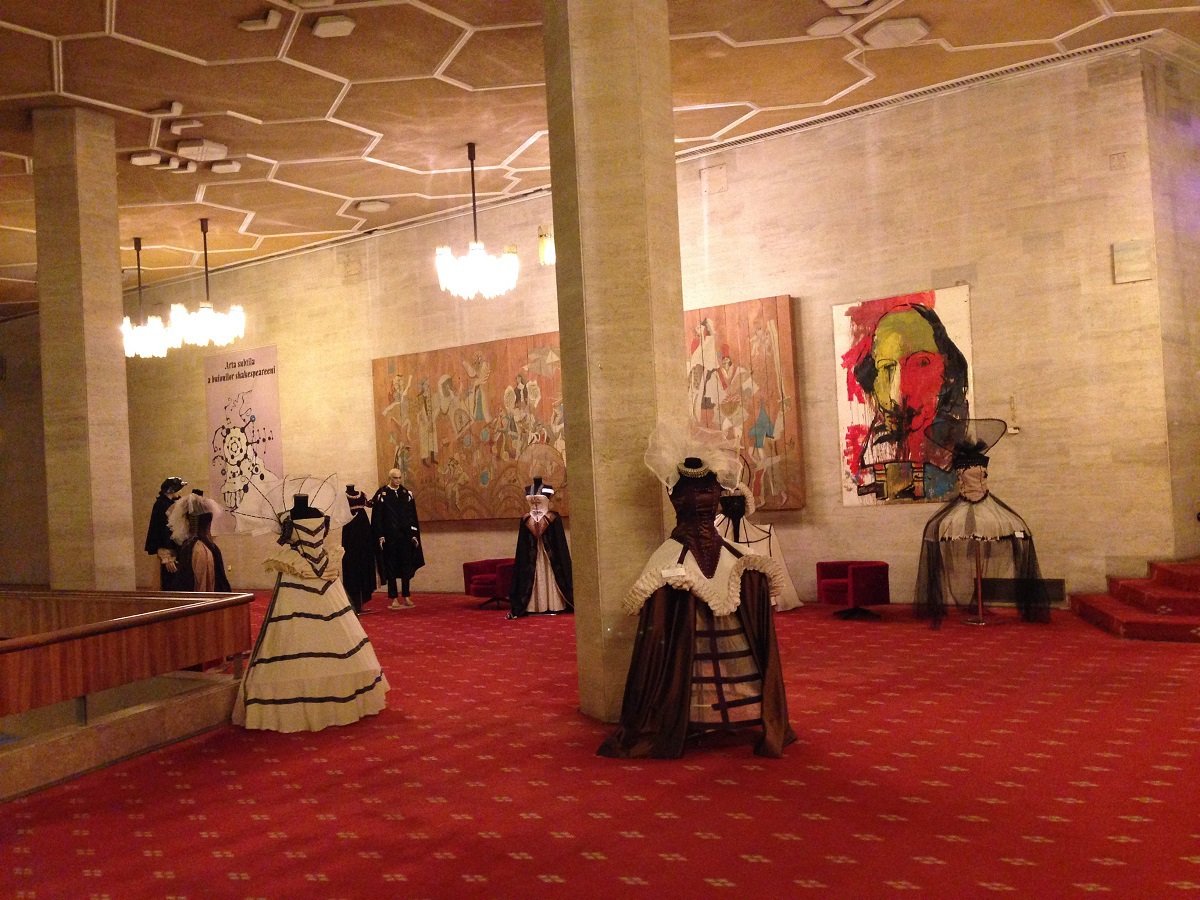
We are, of course, still in the rehearsal room. Our costumes of death, like our apparel for life, hang on the rails in the cupboards. We try one on, discard it, and try another. Some are better than others. Beethoven’s Moonlight Sonata is more than a nursery croon, but still no more than a lullaby. The sophistication and scale may differ, but the motives remain the same. Even Big Data is simply a filing cabinet, but a very large one, with a robot as a secretary.
Beyond lies the real world
Sometimes, we lose the key to the door marked Culture. We cannot escape. We try on frock after frock, cloak after cloak, and never find those that fit. We sit on the couch, and watch sit-coms, action movies and porn, until they merge into one ‘strange, eventful history’.
Beyond this door, however, there lies the real world, a vast and dark auditorium with an infinite number of hidden eyes. What happens there?