“Nearly everyone agrees that our MPs are not up to scratch. Two-thirds of people believe that politicians are merely out for themselves, and trust in politics in the UK is lower than in most OECD countries.” The first of the Bylines Network’s Debates for Progress, this one looking at how we can get better MPs, was opened with the above words by the event’s chair Louise Houghton, co-director of the Bylines Network.
This event was the brainchild of Sam Chandler, a writer at Yorkshire Bylines, an attempt to move past the toxicity and lack of constructive public debate in politics: “Tonight we hope to show that we can debate our views on something whilst still agreeing on the overall direction of travel,” Houghton added in her introduction.
The Debates for Progress featured four speakers, who each put forward a short pitch on how they would solve a particular issue. To debate improving the calibre of our elected representatives, we had former Liberal Democrat MP and director of Unlock Democracy Tom Brake, Labour councillor for Hertfordshire county council Tina Bhartwas, Byline Times chief reporter Josiah Mortimer, and Labour’s prospective parliamentary candidate for Huddersfield, Harpreet Uppal.
Less of a debate, more of a joint manifesto?
It was immediately clear that the four speakers had a lot of common ground, and also that the solution to getting better MPs may well involve implementing, together, all their ideas.
Brake said off the bat: “There are lots of valid answers to this question about how do we get better MPs, and I think probably all of the people who have spoken at the end of this event agree that all of the ideas that have been put forward are ones that should be taken forward.” Throughout the event, there were many instances of the four speakers appraising ideas the others had put forward.
There was also a challenging, to an extent, of the premise of the event by Brake and Uppal, in that to purely look at getting better MPs ignores the fact that many MPs are good and do good work.
Uppal said: “I do believe the vast majority of MPs are committed public servants… generally, we’ve got good people.
“We’ve got 650 MPs and we maybe hear about 20 or 30 of them in the national media, and I think that’s part of the issue in terms of who is spotlighted. We may disagree on values and policies, but most have entered politics to do the best for the people and communities that they serve.”
Tom Brake’s solution: a fairer voting system
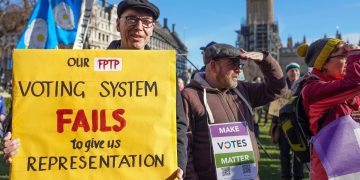
Brake, the first of the four to speak, presented his “very simple” solution: “Scrap the first past the post (FPTP) electoral system… and replace it with a fair voting system.”
There are two ways the present intake of MPs ‘lets the side down’ according to Brake. First, they are not representative of the country as a whole, and second, there’s a small minority abusing the system in an attempt to benefit themselves financially (he points to recent gambling revelations as an example of this).
Brake sees proportional representation (PR) as being well-suited to overcoming these issues. In the first case, a fairer voting system would allow political parties to avoid choosing what they see as the ‘safe candidate’, and so would lead to increased diversity, especially if parties make a concerted effort to make sure candidates are diverse; he pointed to New Zealand, which since adopting PR has seen a much greater number of aboriginal representatives elected.
In the second case, Brake sees the abundance of the ‘safe seats’ in the FPTP system as damaging in its diminishing of accountability of MPs. There’s a clear correlation between the size of a majority and safety of a seat, and the risks that MPs are willing to take. He added: “A safe majority, as happens very often under first past the post, gives these MPs a feeling of invincibility.”
Brake said he favours open list PR systems, as it gives voters more of a choice if they can choose their preference of candidates.
Tina Bhartwas’s solution: greater accessibility and support for diverse groups entering politics
Bhartwas started her segment by recounting a message she gets all the time: “I think what you’re doing is amazing, but I wouldn’t do it myself.” She says that the barriers facing different groups in accessing politics, from joining a party in the first place up to campaigning and taking a place in public office, are the reason why so many people feel as though they don’t want to get involved in politics.
Bhartwas’s personal experience attests to this – she has faced backlash online over her age and lack of work experience when standing for positions, faced rumours about her personal life that led to a media circus, and had things said to her that, she thinks, would never have been said to a man.
Bhartwas said: “Although it’s well documented that women, especially those with my characteristics, experience disproportionate levels of abuse, there is no strategy in place within political parties to support us… I’ve seen many councillor colleagues around the country choose to step down or not re-stand and they’re stating similar reasons – toxicity and abuse in public life, difficulties balancing politics and family life, and this fundamental lack of cooperation.”
She says that what she wants from parties is for candidates to be backed up, rather than dismissed – she discussed how, before running, people told her they were worried about putting her forward because of the levels of abuse she may receive, which is the wrong attitude as it may lock out people from certain groups from the political process.
“Not only do some people not want to make politics more accessible but, quite frankly, if they do then they don’t know how to,” she said. Because of this, she added, it’s no surprise we get the wrong politicians.
“Those that think politics isn’t for them are exactly the kind of people we should have as our MPs. Parliament should be representative of our country.”

Josiah Mortimer’s solution: funding for local grassroots journalism
A few months after Mortimer left the employment of Reach, having been the City Hall editor of MyLondon, they announced that they’d cut hundreds of local journalism jobs around the country. Although there are enough journalists to cover nearly all of the boroughs of London, no-one focusses on council level politics except for the BBC funded local democracy reporters – and now the BBC intends to cut hundreds of local radio jobs across the country.
Some areas of the country are left with just one reporter covering politics for areas of several hundred thousand people. “It’s absolutely impossible for those people to do a proper job of scrutinising candidates in an election, and I think that means voters aren’t getting the information they really need to make informed decisions,” Mortimer said.
“The decline of local journalism I think is a real threat to open democratic politics, and I think we need to do something about it.”
For Mortimer, guaranteed independent funding for local, grassroots journalism would ensure that we could have enough good reporters on the ground to cover local politics thoroughly – focusing not only on what candidates are saying but on what they’ve done, scrutinising incumbents’ records, moving past clickbait to actually provide what local people need to help them make informed decisions.
This idea shouldn’t stand on its own, he said; this fund could come alongside new duties for candidates to attend hustings or publish their tax returns. Also, by uncovering scandals early and scrutinising the conduct of future MPs, we can influence the quality of politicians right to the top.
Harpreet Uppal’s solution: making politics more inclusive and bringing decisions closer to citizens
Uppal, as noted above, stressed that many MPs are committed, good public servants; she drew particularly attention to the good work done in Northern Ireland 25 years ago by people like Mo Mowlam in negotiating the Good Friday agreement. Because of this work, if you’re someone growing up in Belfast or Derry, “life is very different from the conflict of the past”.
But a small minority abuse the system, and this rubs off on everyone else – Uppal is used to hearing the typical “you’re all as bad as each other” when door knocking.
Uppal wants to bring politics closer to communities – she says that when things like fly-tipping or leisure centres closing occur, many people don’t know how they can make a change, they feel cut off. “I want to see how citizens can get involved in decision making, so I’d like to see us implement more processes like citizens assemblies,” she said.
Uppal had a range of other suggestions; making sure politics is representative of the population so people feel they can access the system, proper devolution (of power, not just funding), regulation of second jobs for MPs, “proper and statutory processes” for tackling misconduct, and better vetting. A manifesto, almost. Brake commented after, highlighting the common ground of the four speakers, that these were many of the things Unlock Democracy were campaigning for.
An evening of collaboration
Candidates seemed ready to endorse each other’s suggestions but also discuss and build upon suggestions – sortition came up, which Mortimer argued could be a “great idea for the House of Lords”, ensuring we heard more voices in politics. Brake however, thought “it might be easier to get people to commit to a citizens assembly around climate change, for instance, than it would be to get them to commit, through a sortition process, to becoming an MP for three, four or five years,” thereby supporting Uppal’s previous suggestion.
Overall, it was a fruitful evening with a variety of ideas and strong collaboration. Brake won audience voting with his idea of a fairer voting system, but as he predicted, all speakers seemed to agree on the validity of each other’s ideas.
The audience was polled at the start and end of the event to assess which idea was the most popular. Perhaps unsurprisingly, reforming our electoral system won hands down in first preference votes. But once all four speakers had presented their ideas, there was considerable movement on second preferences, with each of the suggestions finishing strongly. Voting ran using the ‘alternative vote’ system and the final tally put Uppal’s solution of making voting more inclusive and bringing decisions closer to citizens in second place.