In 2002, I urged constitutional reform. I would have never predicted that I would write again in 2022 offering tentative support for the monarchy. But here it is.
In 2002, when the Queen was 76 and Prince Charles was 54, I wrote in Open Democracy:
“My sense of national identity, I suspect, like many Britons, whether I like it or not, is emotionally bound up in the Royal Family. Although I logically know that the idea of monarchy within a system of governance is undemocratic and archaic, we are not dealing with cool logic, but warm emotion. This aspect of cognitive dissonance makes the discussion of constitutional reform an exceptionally difficult issue for the British people.
“So, what of a monarchy-less Britain? I suspect this is like asking an individual to imagine a parent-less existence; the fact is, we don’t really like to discuss the prospect, and tend to face such a reality only when our parents are gone.”
Twenty years later, we are still in the same dichotomous situation with respect to monarchy. But we have a new King, a new prime minister and a new chancellor, and, as they all step into their roles, we have entered one of the most politically and economically precarious eras since post-World War II austerity.

The Monarch and the prime minister: the odd couple
What can we expect from King Charles III and Prime Minister Liz Truss? His irascibility caused him to become unable to contain his frustration with a leaky pen, and her first ‘fiscal event’ has crashed the pound, while it is reported that her backers in the city have made a fortune ‘shorting’ (betting against) the currency on international money markets. The omens do not seem good.
The Tatler lists the new King’s interests as the environment, farming, heritage and architecture, alternative medicine, and unemployed and disadvantaged young people.
One of Truss’s first actions as prime minister was to repeal the moratorium on fracking. She has appointed an adviser who proposes that global warming could have advantages, it has been reported that she is “largely uninterested in the environment”, and as environment secretary, she cut subsidies to solar farms, on the basis that they were “a blight on the landscape”. Maybe this has some relevance to the King’s interest in architecture, but somehow, I doubt it.
Truss co-authored a book that suggested the British are “among the worst idlers in the world”. The King, as Prince Charles, talking about his Prince’s Trust charity’s work with disadvantaged young people said “with the right support they can fulfil their potential and go on to achieve tremendous things”. He was later moved to tears in the subsequent award ceremony.
Diametrically opposed reigns?
Queen Elizabeth II’s reign covered a 70-year period. She came to the throne unexpectedly early in life, in an austere but aspirational post-WWII era, with a socially deferent population, and a veteran prime minister, Winston Churchill, to mentor her. She later publicly thanked him for “wise guidance during the early years of my reign”. In the twilight of her 70-year reign she basked in the glow of her status as the woman most of the networked world thought of as ‘The Queen’, with her glowing confidence in the role underlined in her poignant Platinum Jubilee video.
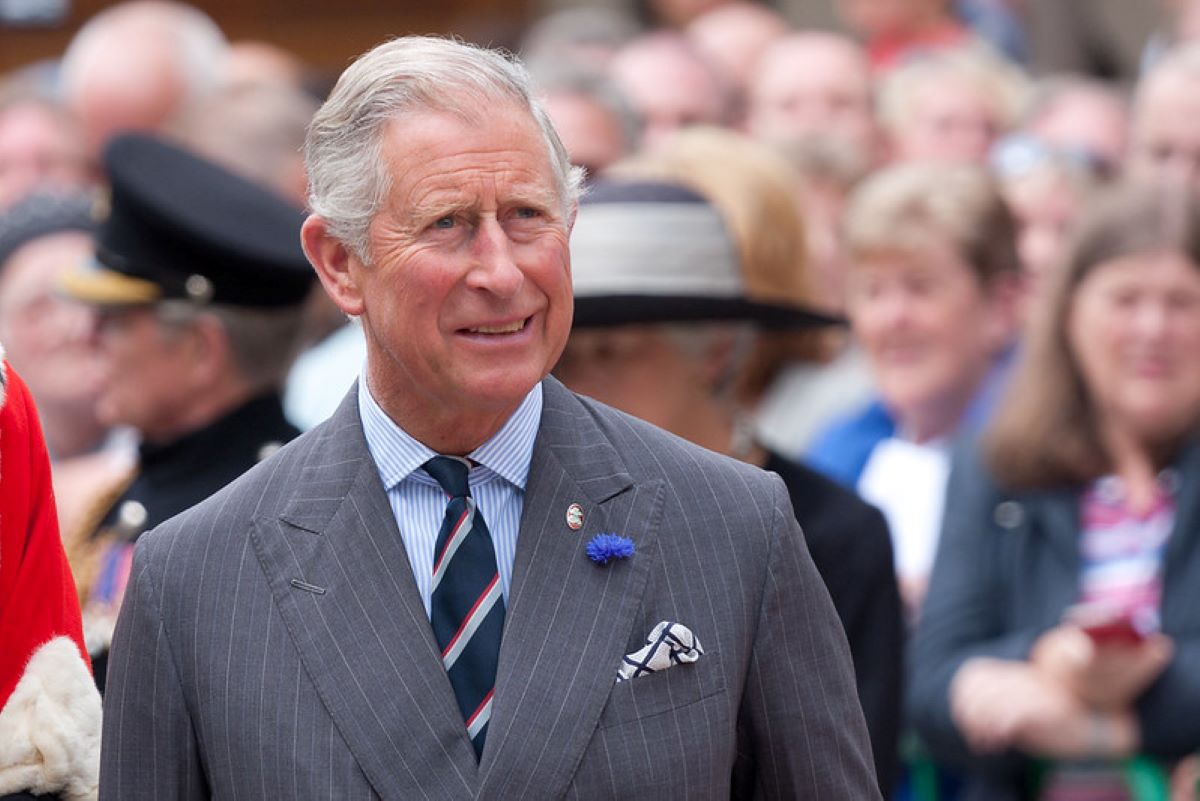
King Charles has been the heir apparent to the British throne since his grandfather died in 1952. He is the oldest person ever to assume the British throne, and has spent a lifetime in preparation, managing the Duchy of Cornwall, working on projects such as the Prince’s Trust and in more recent years, increasingly deputising for his mother as her health began to fail.
He begins his reign with a rookie prime minister less than a month into her role, who controversially entered 10 Downing Street with just 81,326 votes from 57% of the Conservative Party membership. She was also not the first choice of the parliamentary Conservative Party. Her mandate to govern started from a rocky premise and her actions have caused it to gain in controversiality.
He too has dealt with controversy about his suitability, in an irreverent networked world full of soundbites and social media trolls who continue to feed upon the messy break up of his first marriage, including questions about the role of his current wife within that process. These issues are bound to be reignited when the fifth series of The Crown begins to stream on Netflix on 9 November, with the central element of the story focusing on the final years of his first marriage and the subsequent death of his first wife in a car accident in 1997.
King Charles III: Cometh the hour, cometh the King?
What is Charles going to make of his lot? The burgeoning positive regard shown for his mother in her later years is something he might be able to capitalise upon. The ‘warm emotion’ trumping ‘cool logic’ is still just as much in place as it was in 2002 when I wrote my article for Open Democracy. But he is a very different personality, and has a record of determination to put his own stamp on every initiative he undertakes.
This could yet work in his favour. It was clearly in Queen Elizabeth’s interests to remain largely silent in the deferent, tightly structured society that existed over much of the period in which she reigned. But does the monarchy need new protocols for very different times?
Might it be in King Charles’s interests to speak out as a powerful advocate for disadvantaged citizens and the natural environment in the more cosmopolitan, chaotic nation that he inherits? What if he chooses to make it plain that he is not in agreement with his government turning the nation’s economy into a roulette wheel for the very rich, whilst the poor scrape a bare existence? In this way, he could turn his irascibility and social reforming zeal into positive action.
And with respect to the impact upon democracy, it has long been accepted by both royalty and citizens in the UK that the constitutional monarchy only endures via popular support. By contrast, our current parliamentary administration has been undemocratically chosen by less than 0.5% of the population, and in less than a month its actions have created a huge groundswell of anger amongst the British people.
While it remains possible that Charles might overstep his role as a constitutional monarch by criticising his parliament, he is in possession of a ‘get out’ clause: it is quite possible for him to gracefully walk away from the throne at any time of his choosing, leaving his son to step in as a clean pair of hands.
The new Prince of Wales is currently an ideal age to ascend the throne; unlike his father or his grandmother, he would begin his reign as a mature, but not yet aging adult. And, if his father chooses to ultimately sacrifice his own position to defend the rights of the people, William V could inherit a monarchy that taps even more effectively into ‘warm emotion’ than it did in the era of Queen Elizabeth II.
Cometh the hour, cometh the King?
When I wrote my short article in 2002, I would have been amazed to look 20 years into the future and see myself writing an article that ends ‘God Save the King’. But the way the situation has unfolded, it may yet be that because Charles III has had to wait to until he is 73 to ascend to the throne, he will be handed an opportunity to turn an inevitably short reign into a historic one that will be remembered for ‘cometh the hour, cometh the King’.
So, for now, I’m happy to go along with ‘God Save the King’. Charles III has served one of the longest royal apprenticeships in history, after all. And I am hoping that this has prepared him for what may yet be his finest hour. And now please: bring it on, Your Majesty.