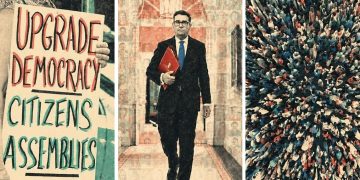




Andy Burnham’s expected arrival in Downing Street on 20 July has been accompanied by a familiar promise: to rebalance power away from Westminster and towards local communities. His vision is ambitious. He has spoken of the biggest transfer of power from the centre in modern times, extending devolved powers and strengthening the ability of local leaders to drive regeneration, housing, transport and economic growth.
For many in England, particularly in regions such as Yorkshire that have long felt overlooked by Whitehall, this message has obvious appeal. Yet there is an uncomfortable question at the heart of Burnham’s devolution agenda: does it adequately recognise that devolution means something very different in Northern Ireland, Scotland and Wales?
Much of the discussion surrounding Burnham’s proposals appears rooted in an English understanding of devolution. The focus is on mayors, local government, city regions and economic development. Even commentary that purports to examine the implications for the whole United Kingdom often gives only passing attention to the devolved nations. Northern Ireland, in particular, is frequently treated as an afterthought.
That is surprising because Northern Ireland poses constitutional questions that cannot be answered simply by creating stronger local leadership structures. There is no equivalent in England to the fundamental issue that sits beneath Northern Irish politics: whether Northern Ireland should remain part of the United Kingdom or become part of a united Ireland.
Northern Ireland: a unique devolution
The distinction matters because English mayoral devolution and national devolution are not the same thing. Greater Manchester’s powers over transport or planning are fundamentally different from the powers exercised by the Scottish Parliament, the Welsh Senedd or the Northern Ireland Assembly. In Scotland, Wales and Northern Ireland, devolved institutions are not merely administrative arrangements; they are expressions of national identity, political culture and competing constitutional aspirations.
Critics of further devolution often point to mixed economic outcomes in the devolved nations. If devolution is such a powerful engine of growth, they ask, why have Scotland, Wales and Northern Ireland not consistently outperformed England? The question misses the point. The argument for devolution in these nations has never been solely about economic growth. It has also been about self-government, democratic accountability and recognition of distinct national identities.
This is particularly true in Northern Ireland. Since the Good Friday Agreement, politics there has been shaped by a delicate balance between two constitutional traditions. For many unionists, the priority is preserving Northern Ireland’s place within the United Kingdom. For many nationalists, the long-term objective remains Irish unity. Neither aspiration can be accommodated by simply devolving more powers from Westminster.
Burnham engages but does he have real vision?
Burnham has occasionally spoken about Northern Ireland. He recently visited Belfast and has argued that Westminster has not always worked well for the region. He has longstanding family connections to Ireland and has promoted stronger economic links between Greater Manchester and the island of Ireland. None of this suggests indifference towards Northern Ireland. Indeed, it probably demonstrates more engagement than many English politicians have shown over the years. Nevertheless, there remains little evidence of a fully developed constitutional vision for Northern Ireland beyond his broader commitment to devolution.
The challenge facing any future prime minister is that Northern Ireland cannot be viewed simply through an English lens. The political landscape is changing. Sinn Féin now holds the position of First Minister in Northern Ireland and continues to campaign for Irish unity. In the Republic of Ireland, preparations for future constitutional debates are becoming increasingly mainstream. Demographic and political trends suggest that questions surrounding a border poll are unlikely to disappear.

Let Northern Ireland speak on self-determination
Brexit has added a further layer of complexity. Northern Ireland voted to remain in the European Union, yet left alongside the rest of the UK. For some voters, Irish reunification is no longer simply a question of national identity; it is also viewed as a possible route back into the EU. Whatever one thinks of that argument, it has become part of Northern Ireland’s political reality.
This is where Burnham’s devolution narrative faces its biggest test. He rightly argues that power should be moved closer to the people affected by political decisions. But what happens when a significant proportion of people in Northern Ireland conclude that those decisions should be made not in London, but in Dublin?
The Good Friday Agreement already provides a mechanism through which such a choice could be made. The real question is whether a Burnham government would be willing to engage seriously with the possibility. Would it begin preparing for the constitutional implications of a future border poll? Would it establish clear criteria for determining when such a referendum should be held? Or would Northern Ireland remain largely confined to the traditional Westminster approach of crisis management and short-term fixes?
Time to address, not fudge, the issues
There is also a broader political problem. Neither Labour nor the Conservatives contest elections in Northern Ireland. Reform UK has shown little interest beyond occasional interventions in unionist politics. Electoral incentives therefore encourage British parties to devote most of their attention elsewhere. As a result, Northern Ireland is often discussed only when institutions collapse, tensions rise or a political crisis erupts.
For decades, successive governments have promised stability while avoiding deeper questions about Northern Ireland’s future. The danger for Burnham is that he repeats the same pattern. His critique of Westminster centralisation may resonate strongly across England. However, Northern Ireland requires more than a conversation about mayors, local growth strategies or relocating parts of Whitehall to Manchester.
The central question in Northern Ireland is not how power should be distributed within the United Kingdom. It is whether Northern Ireland will remain part of the United Kingdom at all.
Until Andy Burnham explains how his devolution revolution addresses that reality and articulates a clearer position on the constitutional implications of the Good Friday Agreement and a potential border poll, it will remain unclear whether his vision of devolution extends beyond England’s internal governance to the multinational realities of the UK itself, particularly so in Northern Ireland.

Bylines Network Gazette is out!
The latest Bylines Network Gazette is out now. Become a Friend of Bylines Network or upgrade to a paid Substack subscription, and you will get access to a vital collection of citizen articles and stories.
Journalism by the people, for the people.