• Contact
  • About
  • ISSN 3049-9720
  • Authors and editors
NEWSLETTER SIGN UP
Yorkshire Bylines
Advertisement
  • Home
  • News
    • Brexit
    • Culture
    • Education
    • Environment
    • Home Affairs
    • Transport
    • World
  • Politics
  • Opinion
  • Society
    • Food
    • Music
    • Poetry
    • Sport
  • Business
    • Economy
    • Science and Technology
    • Trade
  • Region
No Result
View All Result
Yorkshire Bylines
Home Politics

EU announces new covid certificates: ready, steady, go?

Juliet Lodge reviews the EU's covid certificate programme, how will it work in reality, and what future steps could be

Professor Juliet Lodge by Professor Juliet Lodge
22-03-2021 07:15 - Updated on 24-09-2024 14:51
in Politics, World
Reading Time: 5 mins read
A A
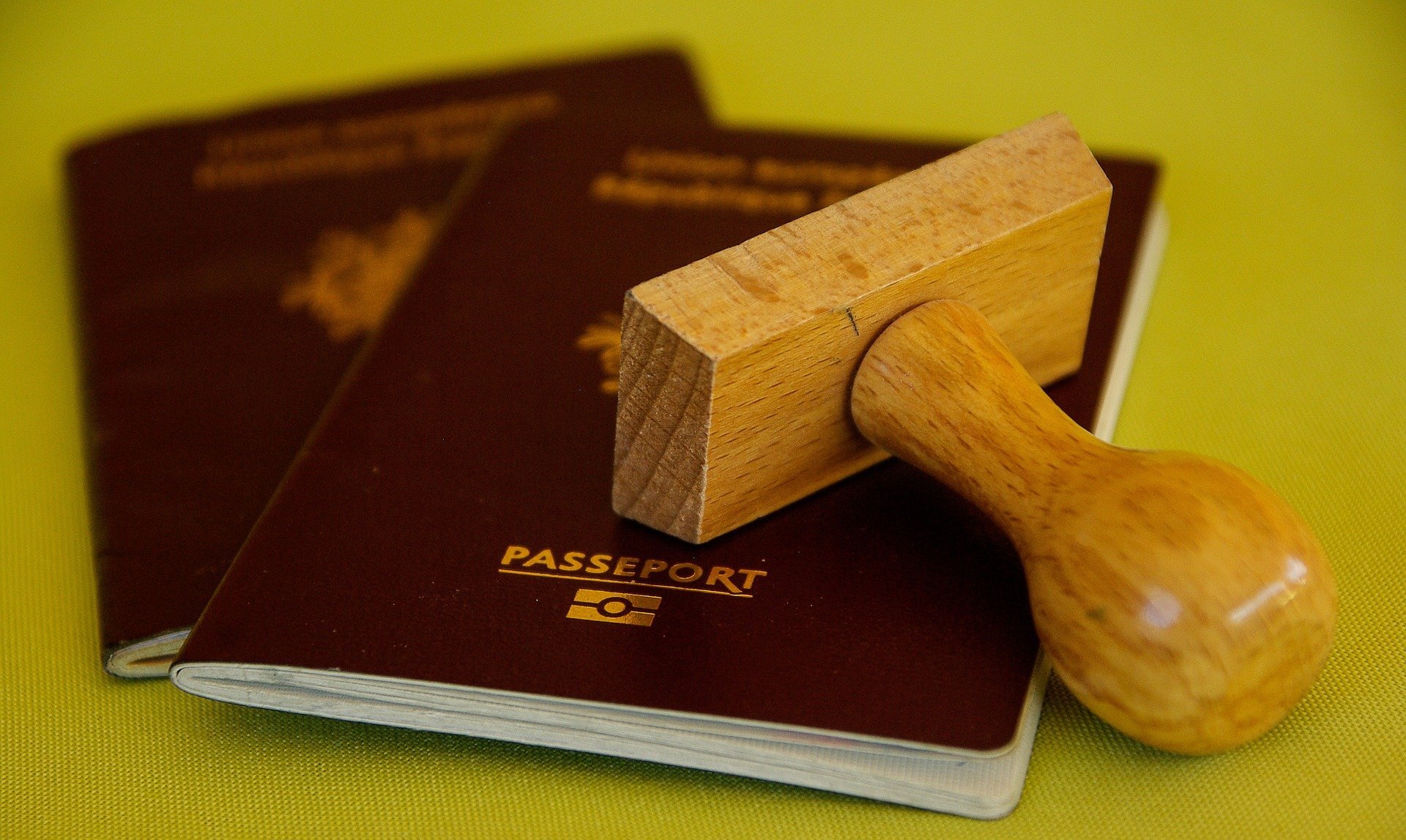
covid passport europe

Image by jackmac34 for pixabay

Share on Bluesky

Are you geared up for a summer holiday in Spain or Greece? Flights booked, preparing for covid tests to allow you to fly and travel across borders? And have you checked that the country you want to visit will let you in? The UK is on the ‘red list’ for many destinations, including in Europe. Will you need a covid certificate?

EU “Digital Green Certificate”

To facilitate travel, the EU has just published its proposed new law on so-called digital green covid certificates. They will be free for all EU citizens wanting to travel in Europe, both in digital or paper formats, with QR codes and a digital signature to prove you are really who you say you are.

According to the EU Commission, the proposed digital or paper document will help to coordinate the opening of borders and reinstate freedom of movement in a trustable, responsible, fair and safe way. But it won’t overrule any country’s specific rules on quarantine or freedom of movement restrictions.

The Commission says that the certificate system has to be fair to avoid discriminating against people who have yet to reach the top of the priority list for jabs (such as in family groups), or who come from countries where the roll-out of the vaccine has been slow.

The Commission also recognises that some people may not be suitable for vaccination for health reasons or may not be able to tolerate the vaccines.

Covid certificate: relevant data only

To be useful, these covid certificates have to be mutually recognised as valid and authentic by all the member states. So only essential, relevant information is to be on them and there will not be centralised databases that link up information about the green certificate holder to their credit score, health records and so on. The World Health Organization has insisted on such an approach.

Accordingly, the certificate will confirm only your covid status: your recent test results (PCR or rapid antigen test), whether and when you’ve had covid, and your vaccination status. That might include how many doses you’ve had and when you were vaccinated. If you’ve had covid, the certificate will show when that was confirmed and by whom.

Apart from that, only your name, date of birth, the state that issued the certificate and your unique identifying number will be included. The certificates will be issued by trusted national authorities, such as hospitals and test centres. They will be valid for 180 days.  

How will covid certificates work?

The aim is to open up the borders inside the EU and to create as uniform a system as possible. Member governments are still discussing how much discretion they will retain individually to decide whether to keep some existing rules, like on quarantine, whether to allow in someone who has only had one not two doses of a vaccine, and whether a valid negative test result (as is now the case) will still be required.

You’ll be able to download the certificate onto your phone or tablet so that you can prove whether, where and when you received a negative test result, and when and if you’ve had two jabs. Member states are expected not to require further testing or quarantine and, if they do, they must explain their reasons to the Commission.

What will it mean for British would-be travellers?

So far so good. Now for the complicated bit. The UK is out of the EU. So all Brits will be treated like ‘third country nationals’ – as the EU refers to non-EU nationals – just like anyone arriving from anywhere else in the world.

At the moment, non-essential travel is generally banned. But Brits living and working in EU states will be eligible for these certificates. If someone has a certificate issued outside the EU by a trusted authority, it will be recognised only if it is compatible and ‘interoperable’ with the EU ones.

And that’s another complication, because the EU opposes the kind of linking up of our private data that the UK government likes and is liable to want to build into any similar certificate scheme here. Nevertheless, the EU has made some detailed proposals public to cover third country nationals and facilitate tourism.

A possible step forward?

The EU and World Health Organization both see these as temporary measures. At their summit at the end of this month, EU leaders will discuss using the certificate as one step in their plans to coordinate re-opening their economies and borders. Then the proposal will go to their ministers and to the European parliament for approval.

So it’s a case of watch this space. The digital green certificate isn’t an open and shut case yet.


Tags: Covid-19

Sign up for the Yorkshire Bylines newsletter

* indicates required

Consent for having Bylines Network store my submitted information

You can unsubscribe at any time by clicking the link in the footer of our emails. For information about our privacy practices, please visit our website.

We use Mailchimp as our marketing platform. By clicking below to subscribe, you acknowledge that your information will be transferred to Mailchimp for processing. Learn more about Mailchimp's privacy practices.

Professor Juliet Lodge

Professor Juliet Lodge

Juliet has worked as professor of European integration and EU politics in universities in New Zealand, the EU and UK – including in Yorkshire. Her research spans biometrics, AI and EU affairs, on which she has given expert evidence to many parliaments and to the EU. Juliet is the AI ethics lead in the EU Horizon project 'AI 4 Trust' which is building a hybrid system where machines cooperate with humans to counter advanced disinformation techniques. She was elected EU woman of Europe for her voluntary work with communities, and supports freedom of movement and EU reform. Follow her on Bluesky

Related Posts

Wooden blocks painted with the European Union EU flag placed on a Europe map, symbolizing European unity, integration, politics, and economy
Politics

Embracing EU free movement should hold no terrors for the UK

by Richard Corbett
6 November 2026
Chelmsford, Essex, United Kingdom - May 08th 2026: Reform UK Leader Nigel Farage speaks at Chelmsford Race Track after sweeping local election victories for his party. Credit: Will Colebourne
Home Affairs

‘Reforming’ Britain? A window to the past

by Dr Pam Jarvis
30 October 2026
Flag of county Yorkshire, UK at cloudy sky background on sunset, panoramic view. County of United kingdom of Great Britain and Northern Ireland, England.
Opinion

Who scrutinises Yorkshire-wide decisions?

by John Hall
29 October 2026
Barack Obama and Donald Trump face one another at the US Capitol during the presidential handover in January 2017. Obama rests his hands on Trump's arms as the two men exchange words.
Opinion

J’Accuse: how Obama’s triumph helped fuel Trump’s rise

by J 'Masharubu' Strauss
26 October 2026
A man walks past the Berlin Wall with armed men on the other side
World

Only in it for stockings and chocolate: Operation Marriage

by Professor Juliet Lodge
25 October 2026
Next Post
UK Aid budget

Voluntary Service Overseas will pay the price of broken UK aid budget promise

PLEASE SUPPORT OUR CROWDFUNDER

BROWSE BY TAGS

Art Books Boris Johnson Bradford Charity Climate Change Cost of Living Covid-19 Creative Industries Crime Democracy Devolution Donald Trump Environment Equality Experience Farming Festival Gaza Conflict General Election History Human Rights Immigration Iran Journalism Keir Starmer Labour Leeds Media Mental Health NHS Northern Ireland Protocol Pollution Poverty Recipe Refugees and Asylum Seekers Restaurants Retained EU Law Review Rishi Sunak Sheffield Theatre Travel Ukraine USA
Yorkshire Bylines

We are a not-for-profit citizen journalism publication. Our aim is to publish well-written, fact-based articles and opinion pieces on subjects that are of interest to people in Yorkshire and beyond.

Yorkshire Bylines is a trading brand of Bylines Networks Limited which is separate to, but allied with, Byline Times.

Learn more about us

No Result
View All Result
  • About
  • Authors and editors
  • Complaints
  • Contact
  • Donate
  • Letters
  • Privacy
  • Network Map
  • Network RSS Feeds
  • Submission Guidelines
  • Download the Bylines Network App

© 2020-2026 Yorkshire Bylines. Powerful Citizen Journalism. ISSN 3049-9720

No Result
View All Result
  • News
    • Brexit
    • Education
    • Environment
    • Health
    • Home Affairs
    • Transport
    • World
  • Politics
  • Opinion
  • Society
    • Culture
    • Dance
    • Food
    • Music
    • Poetry
    • Recipes
    • Sport
  • Business
    • Economy
    • Science and Technology
    • Trade
  • Region
  • The Davis Downside Dossier
  • The Digby Jones Index
  • Cartoons by Stan
  • Authors and editors

Newsletter sign up

CROWDFUNDER

© 2020-2026 Yorkshire Bylines. Powerful Citizen Journalism. ISSN 3049-9720