




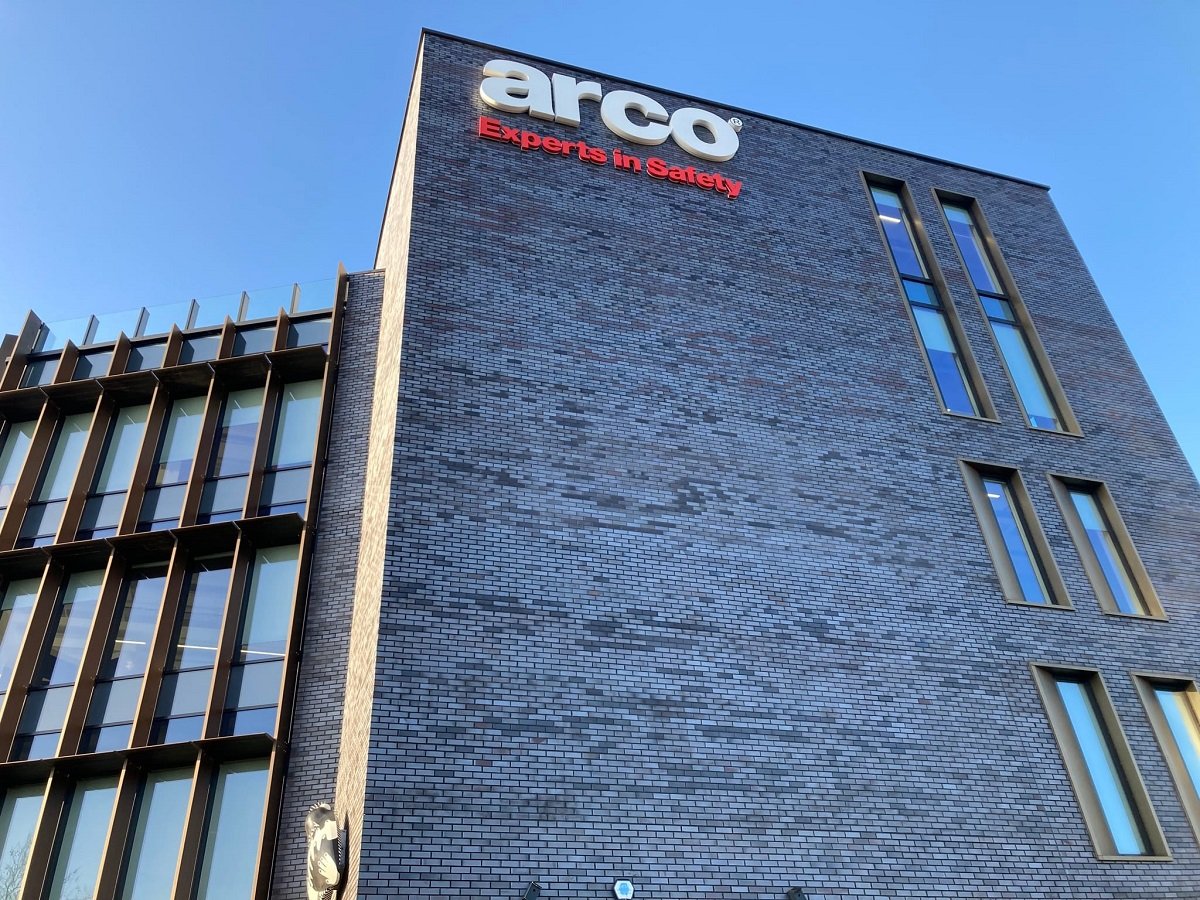
Thomas Martin was waiting for a call that would never come. The outbreak of the Covid pandemic had plunged Britain into its gravest crisis in decades and, as the chairman of one of the country’s biggest safetywear companies, he knew he could help.
Arco had £44mn worth of personal protective equipment (PPE) sitting in warehouses, including in a vast 220,000sq ft distribution centre which opened just weeks before the UK went into its first Covid lockdown. Martin also knew his firm’s long-established supply chain team in Xiamen, China, could quickly secure quality-assured PPE to protect health workers against a deadly and little-known virus.
What he didn’t know was that a “VIP fast lane” was being hurriedly set up which would allow certain MPs, ministers, peers, and senior NHS officials the opportunity to give companies they personally knew about priority to secure vital PPE supplies. It was a lane never destined to reach the main road into Hull.
The VIP route saw firms with little or no history of trading in PPE being awarded multi-million pound contracts without having to go through a normal tendering process. Back in Hull, Arco – the family-owned firm with a 135-year history in safety and PPE – was left in the dark.
Apparently, it counted for nothing that Arco employed 1,600 staff and had a number of government departments, such as the Ministry of Justice and the Department for Food and Rural Affairs, among its 25,000 clients – together with a proven record in supplying PPE during outbreaks of Ebola, SARS and foot and mouth disease.
“We had approved, certified products sitting in our warehouses in the UK,” said Martin. “We had a team in China who have been there for over 11 years and who run quality assurance and ethical trading. They were on the ground and we could even provide details of supply chains going forward for four or five months to government colleagues.
“It was a disorientating and frustrating situation for us. At a time when there was a clear demand for huge volumes of protective equipment, it seemed unusual that we were not able to provide more support than we did. I was certainly frustrated because I wanted to help.
‘Established suppliers were crowded out’
Arco’s initial efforts to contribute to the national response to Covid was via a portal hastily set up by the Department for Health and Social Care (DHSC), in order to register and manage immediate offers of PPE from UK businesses.
Martin recalled: “We made a number of attempts to supply PPE to central government at the height of the pandemic, acting in good faith on the basis of our established position as a market-leading PPE supplier and first seeking to approach via existing commercial channels. We made contact with several NHS supply chain personnel to offer PPE and services during March and April 2020.
“We were directed to submit these on to the DHSC supplier portal. The portal did not require suppliers to provide information about their experience or record in sourcing PPE, nor was proof of ability to meet obligations under the PPE regulations required. This meant it was swamped with speculative offers, crowding out numerous reputable and established suppliers from a highly developed sector.
“I think they [the DHSC] were dealing with an exponential wave of offers with absolutely no filtering mechanism to be able to understand which was a bona fide offer backed up by expertise and which was a more speculative offer.”
PPE system had major flaw
The portal’s major flaw, according to Martin, was the new management system put in place behind it. “To manage demand, the NHS set up an entirely new set of processes and drafted in military planners, Cabinet Office officials and external consultants to coordinate them,” he said.
“However, setting up completely new structures at the onset of the crisis meant suppliers lacked information and clarity about who they should be working with. Supply Chain Coordination Limited, the management function of NHS Supply Chain, seemed unable to play its part. Often, those making procurement decisions had no experience in PPE purchasing, no understanding of the PPE market, nor the right level of technical understanding around compliance and quality assurance to make a decision on whether the PPE they were ordering met the right standards.”
Martin accepts the situation at the time was unprecedented and ultimately overwhelmed the portal system, prompting the launch of an alternative procurement route that abandoned normal contracting rules – the politically-connected VIP fast lane.
When the parallel system started to become public knowledge, Thomas contacted Hull West and Hessle Labour MP Emma Hardy, as Arco’s head office was based in her constituency. In a video call, she said she knew as much as he did.
Both made subsequent attempts to contact Lord Deighton, the Conservative peer who had been appointed by Matt Hancock, the then health secretary, to coordinate the supply of PPE and, in particular, oversee the VIP fast lane as more stories emerged of doctors and nurses being forced to work without the correct PPE. Neither would receive a response.
Hardy said: “It’s fair to say that Thomas was deeply worried about the PPE situation and desperate to help but was finding the official process frustrating. He was incredibly worried about the inevitable impact of NHS professionals using poor-quality PPE during a pandemic.”
Martin recalled: “We were unaware of the fast-track principles, so we then escalated through a number of ministers, MPs and the Cabinet Office, and were still unsuccessful. Perhaps the inference is that not all companies were able to offer the same proportionate support in terms of deploying their resources.
“I wrote to Lord Deighton, who ran the PPE procurement scheme, citing precisely that and offering our resources and saying that I wish we could have done more. I said we were frustrated and fearful because we could not deploy our sales force, our warehousing resource, our quality assurance and our technical expertise the length and breadth of the UK. We had no response.”
‘These mistakes had real-life impacts’
Communications with the Cabinet Office and ministerial special advisor contacts also came to nothing. The only responses received were standard automated email acknowledgement receipts. The subsequent awarding of contracts via the VIP fast lane still leaves a bitter taste.
“While we appreciate there was an urgent requirement for PPE for frontline responders at the beginning of the pandemic and that the government was facing unprecedented and challenging circumstances, we still believe that with our track record in sourcing, emergency planning and distribution of PPE, the government could have engaged more proactively to benefit from our expert knowledge to support the process,” Martin said.
“There was a cost of £8.7bn incurred because of the government buying equipment that was not fit-for-purpose, paying increased prices in a competitive global market and purchasing products that subsequently had passed their expiry date. Of most concern was the £2.6bn that was spent on PPE not suitable for use in the NHS.
“These mistakes had real-life impacts. We are aware of a consortium of local authorities which procured face masks for use in social care settings, despite being shown evidence that they were non-compliant and would not offer the necessary protection. Another local authority purchased non-compliant gowns from Turkey which had been approved by a notified body that did not have the correct accreditation for such equipment. With safety products, if you get it wrong then you are compromising peoples’ health.”
Some firms awarded contracts via the fast lane are currently being investigated by the National Crime Agency. They include PPE Medpro, a new company that received more than £200mn worth of government Covid contracts weeks after Conservative peer Michelle Mone personally referred it to ministers.
Sterile medical gowns supplied by PPE Medpro under a £122m government fast lane contract were never used by the NHS after reportedly failing to secure approval from the UK’s health regulator. Mone announced she was taking a leave of absence from the House of Lords “to clear her name”, with her spokesperson saying allegations she benefited from the company had been “unjustly levelled against her“.
In contrast, Arco was eventually awarded three contracts, worth a total of £14.4m, by the Department of Health and Social Care. These came later in 2020 through the normal tendering process. Two involved supplying hand gel sanitiser and the other was to supply disposable face guards.

‘We took matters into our own hands’
By then, the company was already dealing directly with customers in the health sector having decided it could not simply wait for an invitation to join the VIP fast lane. In the course of those early deadly months of the pandemic, it was taking over 100 orders per day and eventually organised PPE supplies to nearly 300 hospitals and NHS trusts.
The company’s deep knowledge of the global supply chain and its newly-opened national distribution centre in Hull played a huge part in what was to follow. “The first thing that happened was that our technical sales people started to take a huge amount of calls from existing contacts around the UK,” said Martin.
“Clearly, we were well known and there were obviously frustrations elsewhere in the supply chain due to the incredible demand. We took the calls on a direct basis.
“I was speaking to a number of chief medical officers and we supplied products directly to a number of hospitals as we had products available. We had over £44mn worth of stock in the UK. We knew what we were doing and the stock was ready to go. In the end we took matters into our own hands and we worked around the system that the government was trying to control.
“It was getting increasingly desperate and we actually supplied a fair quantity of product on a free-of-charge basis. and were happy to supply any hospital and NHS trust that approached us. We worked at pace to make arrangements to move as much PPE as was feasible to the UK as quickly as possible.
“I think we responded magnificently. I am very proud of what we did.”
The huge logistical operation saw Arco’s teams here and in China deliver 160 million medical masks, 7.5 million FFP2 masks, 18 million gloves and over 600,000 medical-type coveralls to supply frontline NHS and public health staff at the height of the crisis.
Why was Arco snubbed?
What was behind the VIP fast-lane snub? While many point to the company’s base in a Labour heartland constituency and the lack of an influential Conservative cheerleader in its corner, the Arco boss prefers to avoid getting involved in the political fall-out over the issue. Instead, he speaks warmly about his “constructive” relationship with Emma Hardy and of her continuing support, while confirming an improved recent dialogue with Whitehall.
He puts the latter partly down to Arco’s publication of its own policy paper, which maps out how future government PPE procurement should be handled, and a decision to start working with a public affairs consultancy to open the right doors in the corridors of power.
“The big narrative change was when we published our own findings and our own 10 recommendations in December 2020. That led to a flurry of activity. Personally, I remain entirely satisfied that the conversations in terms of what we are going to do next are on a completely different basis. It is much more structured”, Martin said.
“It is pleasing to see so many elements of existing expertise being mobilised to get the right answers for the UK. It is a very different narrative. Clearly, me knocking on doors was not effective enough.”
The recommendations include suggestions that the government should consult on whether PPE suppliers should be formally registered to be allowed to supply certain products, and setting up a new pre-qualifying process to “weed out” would-be contractors with little or no experience.



