



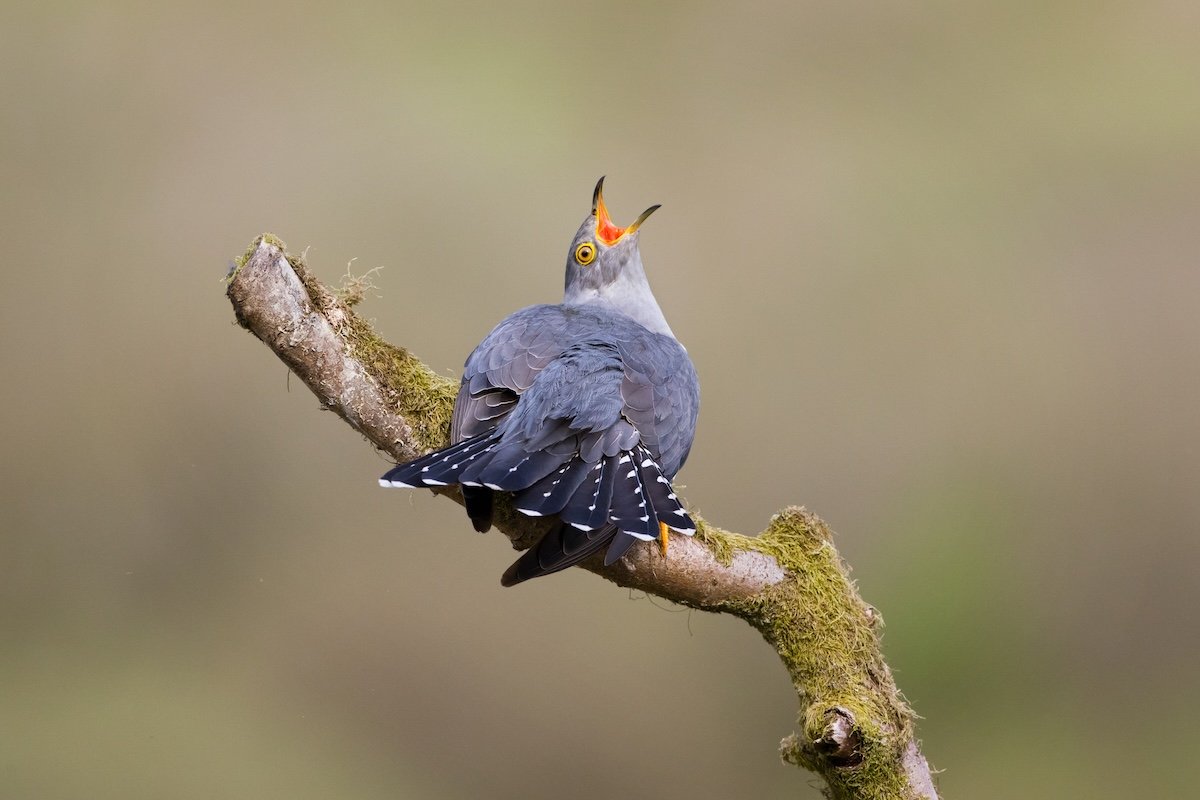
Cuckoos used to be a widespread and familiar bird across much of Britain and Ireland, with most people recognising their famous song. As we have lost more than a third of our breeding cuckoos during the last three decades, fewer of us than ever will get to hear that distinctive onomatopoeic cuckoo call, which is such a traditional signifier of spring.
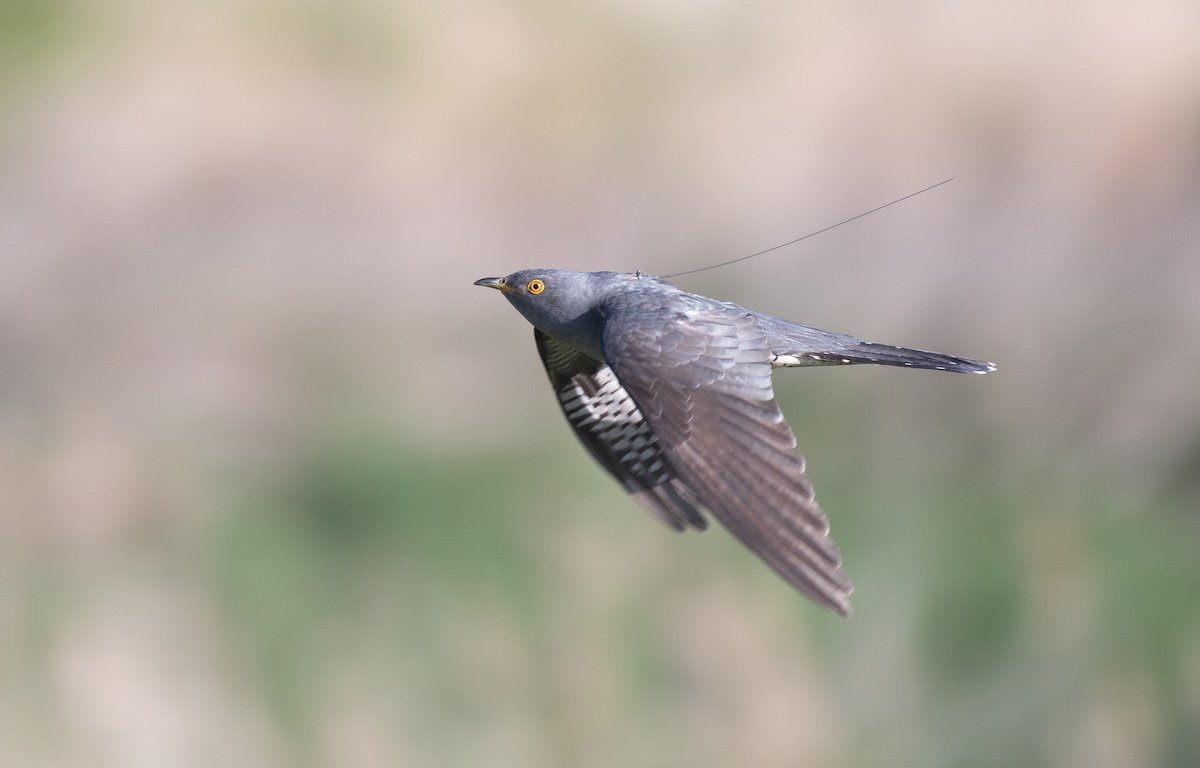
For the last 15 years, British Trust for Ornithology (BTO) researchers have been fitting state-of-the-art satellite tags to over 140 cuckoos around the British Isles. The aim is to investigate the many aspects of the lives of these intriguing birds, and to gain a better understanding of the causes behind their concerning ongoing decline.
This spring is no different, and BTO ornithologists have been busy catching and tagging cuckoos in Scotland and England. In Ireland, colleagues from the National Parks and Wildlife Service (NPWS) have been doing the same, as part of a project first launched in 2011.
Following progress with satellite and GPS tags
The tags are linked to satellite trackers, meaning that the birds’ routes on their annual migrations from the UK to central Africa and back, can be tracked in real time. This allows the BTO scientists to get a better understanding of the obstacles, challenges and pressures faced by these birds on their immensely long-distance intercontinental flights.
A further nine cuckoos have been fitted with highly accurate GPS tags that will allow the experts to see the birds’ routes and habitat use in even finer detail.
Dr Chris Hewson, lead scientist on the project, said: “It’s really great to see more cuckoos heading off with newly fitted satellite tags, in addition to those which have been fitted with GPS tags. These birds will help provide the information that we need to better understand the challenges these remarkable birds face, and how we may best help them to successfully complete their incredible and arduous migrations, in a rapidly changing world.”
New migration route data
Before this project, very little was known about the progress of cuckoo migration routes. Their destination wintering areas, south of the Sahara, were unknown. One of the many important findings so far has been the discovery that cuckoos use two different migration routes to get to the same wintering grounds which are in tropical Africa.
It turns out that all the cuckoos that have been tagged in Scotland and the uplands of Wales, take an easterly route via Italy when they head south after the breeding season. Interestingly, these birds have a significantly higher survival rate than those that take a more westerly route through Spain.
It seems that cuckoos from other places in the UK may take either route; but the research has also shown that cuckoos from lowland England taking the westerly route tend to have the lowest survival rates. This seems to apply particularly to those birds that leave their breeding grounds later in the year.
A brief annual visitor
Another fact that emerged from the project’s research was that cuckoos often leave the UK to start their migration much earlier than had previously been imagined. Many male cuckoos are now known to set off after a fairly short stay on these shores, setting off southwards by early- to mid-June, having spent sometimes as little as six weeks in their breeding areas.
At a time of year when the cuckoos are starting their migrations once again, it’s hoped that this year’s tagged birds will help to add to the bank of knowledge that’s been built up in recent years. Armed with greater insights on the life of the enigmatic cuckoo, conservationists hope they will be able to protect and safeguard this bird and its distinctive call for generations to come.
Follow the progress of the cuckoos and learn more about the individual birds of the 2026 cohort:
Cuckoo Crispin– tagged at High Lodge in Thetford Forest, funded by a generous BTO donor.
Cuckoo Rob– tagged in Kintail in the Scottish Highlands, named in memory of the tag funders’ late friend, Rob Watson.
Cuckoo Beech– tagged in Thetford Forest, named after one of the tag funder’s favourite tree species.
Cuckoo Thomas J– tagged in Kintail in the Scottish Highlands, named by the tag funder in memory of Thomas Joseph Paul; a well-travelled engineer and gentleman with a lifelong love for the Scottish hills.
Cuckoo 40926 (name tbc)– tagged in Kintail in the Scottish Highlands, awaiting a name, so if you’d like to fund his tag (£4,000) please get in touch with BTO!
Irish birds
Cuach Sean– tagged at Derrybawn in Wicklow National Park, named after the tag funder’s son.
Cuach Rua– funded by NPWS, named after Sliabh Rua, a hilltop in Burren National Park, close to where he was captured. Rua also means red in Irish.
Cuach Avalla– funded by NPWS, named after Lough Avalla close to where he was tagged in Burren National Park.
Adapted by Yorkshire Bylines from a BTO press release