



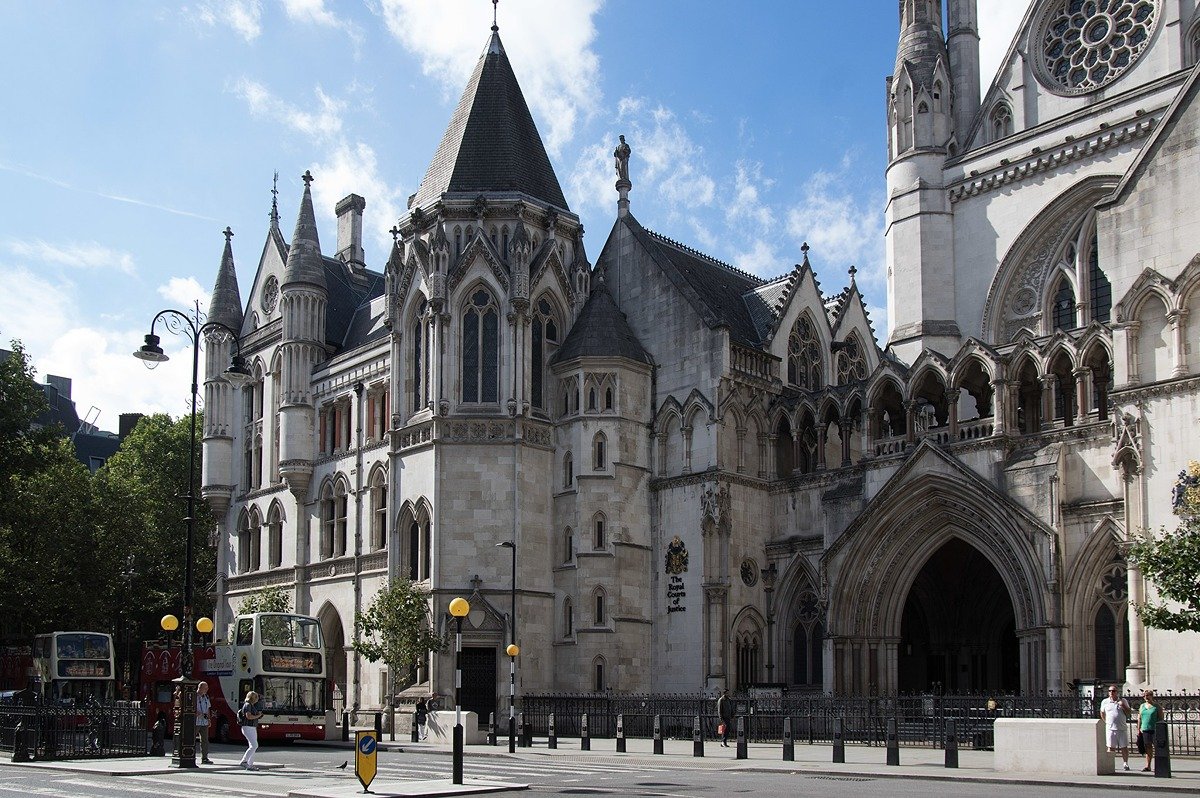
Windrush scandal, Hillsborough disaster, contaminated blood scandal, Post Office scandal, Volkswagen emissions scandal (‘Dieselgate’), 2016 Croydon tram derailment, Grenfell Tower fire … cases that immediately come to mind when questions about justice – and particularly delayed justice – are raised.
Despite being completely different incidents, these cases have something in common: they are all ‘David against Goliath’ cases where ‘normal’ people, who just want to lead a normal life, have to fight for justice against ‘giant’ organisations or companies. The original ‘David against Goliath’ story comes from the Bible, of course, but it still resonates today after more than 3,000 years, because we’re drawn to tales where the ‘underdog’ wins against all odds. But in matters of justice, that is not the usual outcome.
In all seven cases above, full justice has not yet been served many years after the incident. And most likely it will never be served, at least in some of the cases. Many people involved in these cases will not live long enough to see a satisfactory end and justice delivered.
What are the reasons why in such cases justice is not served? There are at least four: time, money, size and power.
The impact of time considerations on justice
Big cases are complex, and it can take time to find out what really happened and why. But the situation is usually made worse, because the big organisations and companies are often, to put it mildly, less than cooperative with official enquiries and attempts to find out the truth.
They have extensive legal departments at their disposal. And one of their tasks is to find ways of delaying the final outcome. Normal people caught up in litigation can usually not afford to spend too much time on it, because they are necessarily busy earning a living, and because quite often they don’t have the legal knowledge and skills to deal with it properly.
Big companies and organisations play on time, because they hope that members of the public will ‘throw in the towel’ before a result can be reached. And the longer a case goes on, the easier it is for the guilty actors to claim that they can’t remember the facts of the case. Another delaying tactic is to pass the buck around in circles.
But even when a court has decided that the organisation or company has to pay compensation, the delay is not over yet, and sometimes seriously starts at this point. The reason is simple: guilty organisations and companies speculate on as many people as possible dying before their compensation has been paid. Big companies and organisations don’t care about people; they only know numbers.
The Grenfell inquiry has just finished, more than seven years after the fire. And what has been achieved? Almost nothing. It has only confirmed what we already knew and suspected a few weeks after the fire. The only difference is that it is now well documented on several hundred pages of paper (actually 2,220 pages for phase 1 & 2 together). And the size of the reports will cause further delays, because reading and processing them will simply take time. The most optimistic prediction is that court cases may finally take place in 2027, 10 years after the disaster. And that is in line with other cases.
The impact of money considerations on justice
Time is money. Or at least they go hand in hand. The speculation mentioned above that the average person will give up before a result has been reached is partly based on money. Court cases not only take a long time, they are also extremely expensive, well beyond the means of most normal people. Avoiding or delaying the payment of compensation is the intention and playing with time is the method to achieve it.
This was very clear in the Post Office scandal. To avoid possible legal actions against the organisation, all subpostmasters were told wrongly that they were the only person who had reported problems with the Horizon software. Only when the subpostmasters came together as a group were they strong enough to take on the Post Office and Fujitsu.
But that was still not enough. It needed a dramatisation of the events to raise awareness and enforce some long overdue actions (and to raise some money to make it possible). Not to mention how much all these enquiries and court cases have cost so far, and what could have been done with this money.
The impact of size considerations on justice
If an individual doctor had (even unknowingly) infused a few doses of contaminated blood, they would have been taken to court for negligence and possibly manslaughter. And most likely their surgery would have been closed.
A single doctor can be accused of manslaughter and put in prison, but what about the thousands of doctors and medical staff who have dealt with contaminated blood over the years? Are they also accused of and punished for negligence and manslaughter? And the clerks in the administration who failed to implement proper tests or bought blood from untested sources? No, numbers matter. The question of guilt is reduced to inappropriate procedures and ‘unfortunate’ circumstances.
If a small company had been found out building gadgets into cars intended to deliberately give false readings of emission values, this company would have been closed down immediately and most likely the owner (and maybe some employees as well) would have ended up in prison. But Volkswagen – and other companies who did the same – are simply too big to be closed down.
No government would dare to accept the consequences: tens of thousands of jobless people, from surrounding businesses as well, from accessory companies to small garages to insurance agents; a significant drop in GDP and, with that, in tax; and a drop in customer confidence and reputation. These companies usually get only a small slap on the wrist and are told, ‘Please do not do this again’. Especially the top managers, who have approved the methods in question and who have earned an insane amount of money (partly based on this cheating) will never seriously be held to account. They will get another job in this or another company, and they will get substantial financial ‘compensation’ for their ‘sacrifice’.
It is therefore no wonder that more and more big companies are going to the legal limits or beyond, if they think that they can get away with it, or if they believe that in the end there’s still a profit in it. The business Goliaths are always likely to prevail over the customer Davids.
The impact of power considerations on justice
Power is usually quite closely linked to size. The kinds of large organisations involved in the seven scandals mentioned at the beginning are likely to get off with only minor consequences. And quite often recommendations for improvement listed in the associated inquiry reports are simply ignored and not implemented.
Big companies have the power to more or less force the government and politicians to make regulations in their favour or hand out big amounts of money by way of subsidies. And quite often this is not very different from blackmail, as we saw from the treatment of the subpostmasters, with many of them ‘forcefully urged’ to plead (wrongly) guilty in order to get a more lenient punishment. In the same way, these big organisations and companies have the power to force the public to do what they want. A good example are the banks.
Nowadays everybody needs a bank account; without it you can’t receive money and pay out money. They deal with your money, but they pretend that it is their money. They set the rules, but never in favour of the customer. You can change the account and go to another bank. But that is only a move from the frying pan into the fire, because all banks act in the same way. Of course, that is only true for the average customer. If you can bring some millions or billions to the bank, then you will get preferential treatment.
Justice as a commodity
Of course, there have been more cases than the seven mentioned above, where justice seems out-of-reach, not least people’s hard-fought battles for compensation after disasters such as storms or floods.
One I have a particular reason to remember is the case of the MS Herald of Free Enterprise, the RORO ferry which capsized leaving the port of Zeebrugge in Belgium in 1987, killing at least 193 people. I should have been on this ship. But I had to cancel and was saved because I had to work that weekend. The subsequently painted over but still visible name of the owner at the time, Townsend Thoresen, was like a symbolic cover-up of the disaster.
The next big scandal is already in the making. The UK Government refuses to give EU citizens a document in writing about their ‘settled status’, in other words, their right to live in the UK. In two years, maybe, or in ten, or in 30, this will with absolute certainty develop into a second Windrush. There is no way to avoid it as long as the government does not change its attitude. The question is not if, but when.
It seems that justice has become a commodity which can be bought by those who have money and power. Who has more will get more – in this case justice. Justitia is blindfolded, an apparent undertaking to treat everybody in the same way.
Justitia may well be blindfolded; but she can definitely smell money and at least sometimes seems to act accordingly.

CLICK HERE TO DONATE TO OUR CROWDFUNDER
HELP US BECOME STRONGER SO THAT WE CAN CONTINUE TO DELIVER POWERFUL CITIZEN JOURNALISM!