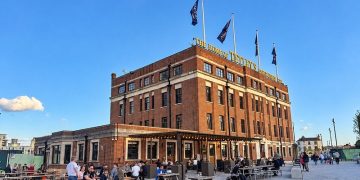
While the narrative of Sheffield’s modern history has largely been traced to a story of industrial decline and post-war reconstruction, for some the abandonment of steelworks provided unique cultural opportunities to explore growing avenues within the music industry.
Today, the city’s electronic music scene can be interpreted both through the financial struggle which has led to the widespread closure of music venues and the cautious hope which grassroots event spaces, radio stations and artists themselves provide.
Industrial decline, cultural resurgence
During the deindustrialisation that took place in the latter half of the 20th century, music became a means to maintain community spirit, an outlet for people who wanted to express their creative talents. Old warehouses were ideal spaces for these artists to develop their skills, inspiring a focus on electronic music, which reflected the metallic sounds that generations of steel workers would have recognised. Illegal raves, spread covertly, would then appear across the city, inviting fans to dance until the morning came.
Yet, although much of the growth of Sheffield’s electronic music was defined rebelliously against the boundaries of the law, as the genre became increasingly popular, more official establishments began to pop up throughout the city.
At some point between 1973 and 1974, a council-funded theatre workshop called Meatwhistle was opened by Chris and Veronika Wilkinson. Hugely popular bands such as The Human League, Heaven 17 and Clock DVA all began their first projects here before becoming influential forces within the wider music industry. In fact, it was the success of The Human League in the mainstream that brought Sheffield into the limelight on the international music stage.
In 1987, FON Records was opened on Division Street and became a primary hub for the future of electronic music. Far from simply being a commercial institution, it was intended as a collaborative, radical space (FON was an acronym for F*ck off Nazis) where ideas could be tested and new sounds introduced.
In 1989, from the back rooms of FON Records, owners Steve Beckett and Rob Mitchell officially launched what would become one of the most groundbreaking electronic music labels in the world: Warp Records. The label lists releases from huge groups such as Aphex Twin and influenced the IDM ‘intelligent dance music’ movement used by artists like Radiohead.
The birthplace of bassline
Bassline is a genre of electronic music especially important in Sheffield. It grew from a sound that was popularised within the city’s nightclubs. Niche nightclub was particularly notable, innovating on this by taking vocals out of speed garage and house music then pumping up the bass.
Following a stabbing in 2010, increased restrictions were placed on Niche and several police raids occurred, leading to its permanent closure, with any possible hope of reopening opposed by the local council.
The popularity of bassline has been largely attributed to its appeal across genders. In The Guardian, music journalist John McDonnell commented on its feminine appeal compared to other genres such as grime, making it a positive force in encouraging more women to explore electronic music. In fact, a notable Sheffield artist, Big Ang, has been hailed as the ‘queen of bassline’, gaining widespread popularity with songs such as It’s Over Now and Wifey.
The fight for survival
Sheffield’s electronic music scene has certainly experienced a noticeable decline since the 2000s. A lack of adequate funding in recent years has led to the closure of important venues such as Hope Works in 2025, reflecting a familiar pattern across British cultural institutions. This, however, has not deterred enthusiasts, as the people of Sheffield continue to fight for the survival of this genre. Below are some of the ventures keeping electronic music alive in the city.
Echoing the illegal rave spaces of the past, FORGE Warehouse is situated within a converted Victorian steel forge and hosts both global and local artists within multiple spaces catering for different types of events. In contrast to its predecessors, however, this is a fully licensed club space aiming to reignite Sheffield’s nightlife scene.
Gut Level is a not-for-profit venue space which visitors can access for just £2 per year. According to its website, the venue’s main aims are to encourage community engagement and inclusivity, with club nights funding activities, DJ equipment and workshops.
Grub Records is a vinyl shop and natural wine bar located within Haggler’s Corner, a grassroots space for community events and independent businesses. In a similar way to studios such as FON, a selection of DJs also plays electronic music sets within a booth expertly designed by the owners themselves.
Local electronic music fans have also found unique methods to promote their passion both in the creation of large-scale community projects and the utilisation of the internet.
One of those projects is the No Bounds Festival, founded in 2017, which acts as an annual celebration of experimentation and creativity in art with a particular focus on electronic and underground music. Previously held in Hope Works, this year (October 2026) the event will take place in 10 venues across Sheffield and Rotherham and will feature local talent as well as established collectives.
Gumbo FM is an online ‘pirate radio style outfit’ promoting diversity and community within Sheffield. It regularly seeks new talent, providing an inclusive platform for many to develop their skills. The word ‘gumbo’ refers to an American stew believed to be a mix of European and African origin – a perfect microcosm of the radio station itself.
The future of electronic music?
While the ‘golden age’ of Sheffield’s electronic music scene has certainly passed, individuals and organisations continue to develop the cultural scene. Through sets hosted in the city and beyond, artists make use of past influences to create new, unique sounds. For more information on those paving the way for the scene today, visit Welcome to Sheffield’s website.
More in Culture


Bylines Network Gazette is out!
The latest Bylines Network Gazette is out now. Become a Friend of Bylines Network or upgrade to a paid Substack subscription, and you will get access to a vital collection of citizen articles and stories.
Journalism by the people, for the people.